Visionary Leaders
They measure the business empire from the commanding heights of the era.
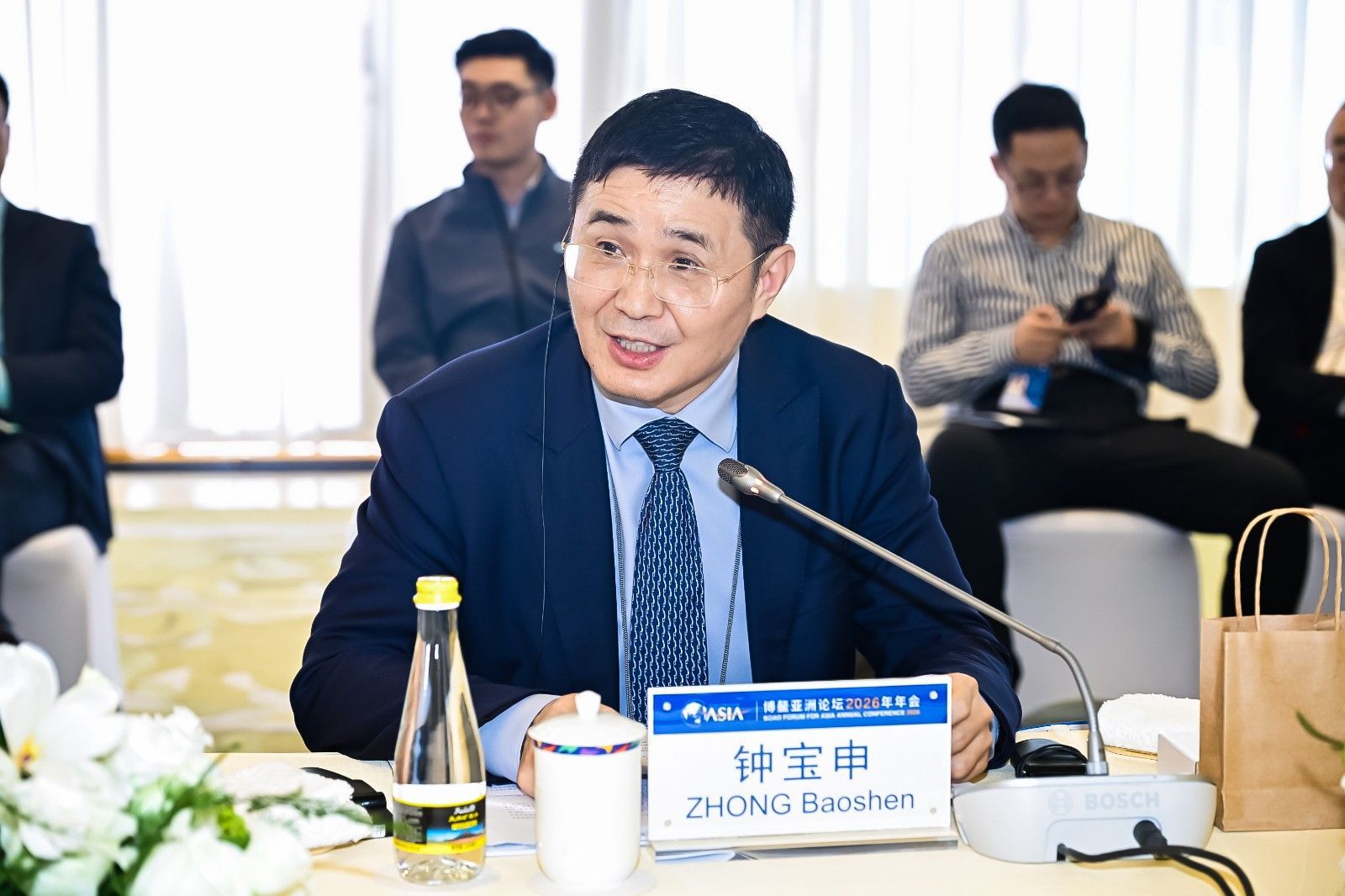
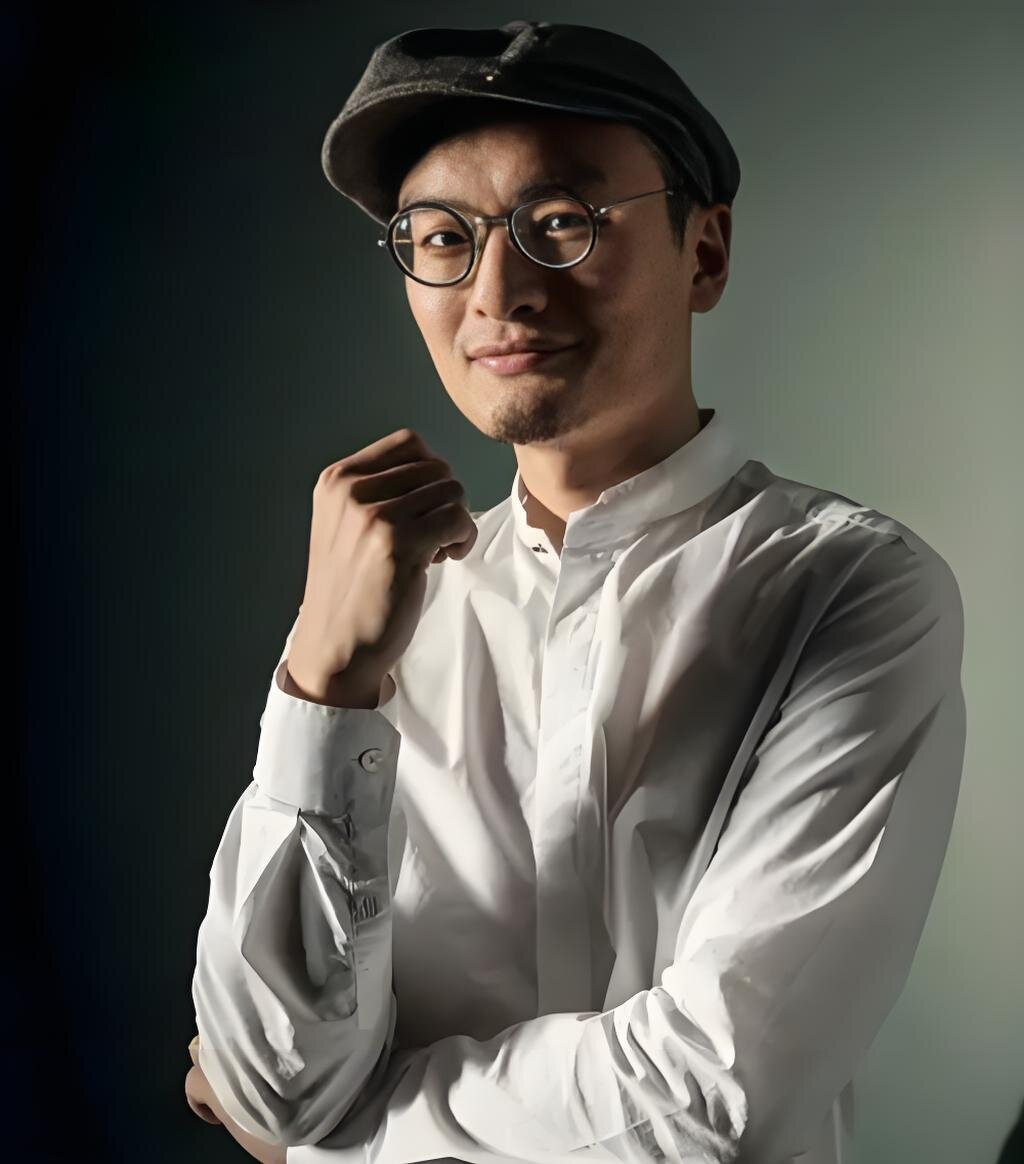
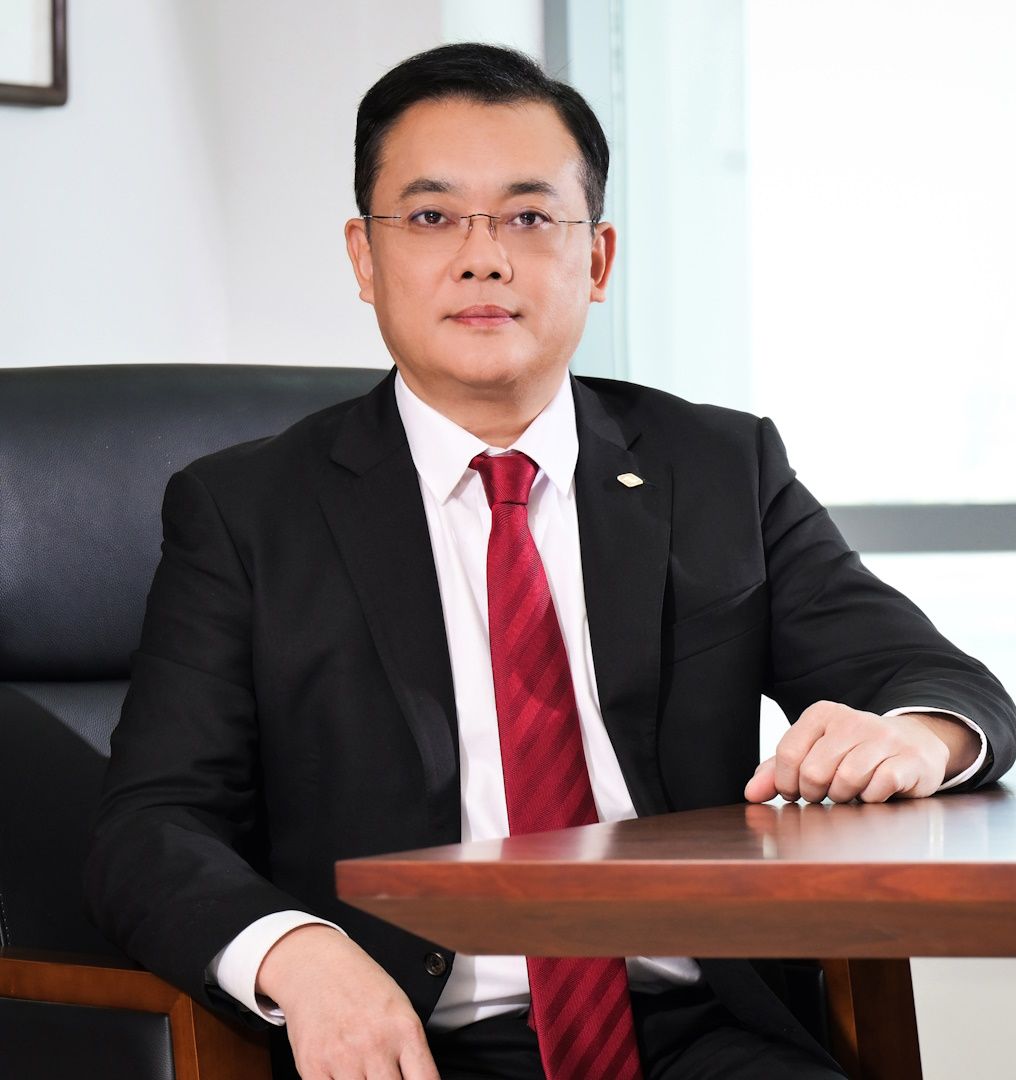
Zhong Baoshen
“The mission of photovoltaics is to make clean energy the main energy source for mankind, and this path must continue.”
When the photovoltaic industry was chasing the trend in the carnival of "polycrystalline", he went against the trend and chose the neglected "monocrystalline" technology. Zhong Baoshen has used nearly two decades of persistence to prove that the greatest business foresight is to dare to believe in the laws of physics rather than market sentiment. In the history of business, choosing to go against the trend of the entire industry requires not only courage, but also a kind of rationality that is almost paranoid. More than ten years ago, when China's photovoltaic industry was racing on the feverish track of "polycrystalline" technology, an engineer who had already had a successful career in other fields made an "abnormal" choice: to give up stability and devote himself to an "unpopular" direction that was generally looked down upon - monocrystalline. Zhong Baoshen, one of the core founders of LONGi Green Energy, has used a “countercurrent” experiment that lasted nearly two decades to rewrite the game rules of the global photovoltaic industry. His creed is: Don’t chase short-term trends, only do what is correct according to the laws of physics and inevitable in the long-term trend. 1. Countercurrent: In the hustle and bustle, hear the glimmer of "rationality". Around 2006, it was the "polycrystalline" era of China's photovoltaic industry. The technical route seems to have been chosen by the market, and huge production capacity and capital have built a noisy consensus. At that time, Zhong Baoshen had established his own solid business territory in the field of magnetoelectronics. What he faced was a classic multiple-choice question: on one side, he had comfort and stability within reach; on the other side, he entered a completely unfamiliar photovoltaic battlefield where the mainstream judgment was contrary to his inner deduction. Instead of following the market noise, he initiated the underlying thinking trained by the Department of Physics of Lanzhou University: returning to first principles. He judged that single crystal
Zhong Baoshen
Asian Cover Figure | Zhong Baoshen: The Quiet Engineer Who Lit Up China's Solar Empire
Asian "Cover Figure" Magazine · Vision
Issue No. 052-ACF-GJ-2026
While Elon Musk dominates global headlines with his solar ambitions, it is Zhong Baoshen — a soft-spoken engineer from Shaanxi Province — who has quietly built the world's most important solar energy company. As founder and longtime leader of LONGi Green Energy Technology, Zhong transformed a small silicon wafer manufacturer into the largest solar company on earth, accounting for roughly one-quarter of global monocrystalline silicon production.
His story is unusual in China's tech landscape: no viral personality, no political controversy, no flashy capital maneuvers. Instead, a relentless focus on manufacturing excellence, technological innovation, and long-term strategic patience — qualities that have made LONGi the backbone of the global energy transition, even as its founder remains virtually unknown outside industry circles.
I. From Shaanxi to Silicon
Zhong Baoshen was born in 1970 in Jingyang County, Shaanxi Province. His family was ordinary — his parents were farmers who valued education above all else. He excelled in school, particularly in physics and mathematics, and in 1988 he entered Lanzhou University to study radio physics. After graduation, he worked at a state-owned electronics factory, gaining hands-on experience with semiconductor manufacturing processes.
In 1998, at age 28, Zhong co-founded LONGi with several classmates. The company's initial focus was semiconductor silicon — not solar panels, but the raw silicon materials used in chips and other electronics. The choice was deliberate: Zhong had identified silicon processing as a core competency with applications across multiple industries, and he believed that mastery of silicon manufacturing would provide a durable competitive advantage.
The early years were difficult. The company operated out of a small factory in Xi'an, competing against established players in Japan, the United States, and Germany. Zhong's approach was characteristically methodical: rather than chasing short-term revenue, he invested heavily in process engineering, quality control, and cost reduction. He believed that if LONGi could produce silicon wafers more efficiently than anyone else, market share would follow.
II. The Solar Pivot
The critical strategic decision came in 2006-2007, when Zhong recognized that solar energy was about to undergo a fundamental transformation. Global climate concerns were intensifying, government subsidies were expanding, and the cost curve for solar panels was beginning to bend downward. Zhong made a bet that would define LONGi's future: the company would focus exclusively on monocrystalline silicon — the highest-quality, highest-efficiency, but historically most expensive type of solar silicon.
At the time, this was a contrarian position. Most Chinese solar manufacturers had chosen polycrystalline silicon, which was cheaper to produce and enjoyed larger market share. Multicrystalline was the pragmatic choice; monocrystalline was the premium play. Industry analysts questioned LONGi's decision, arguing that monocrystalline would remain too expensive for mass-market solar deployment.
Zhong disagreed. His reasoning was technical but profound: monocrystalline silicon's higher efficiency meant that, over the lifetime of a solar installation, the total cost per watt of electricity generated would be lower, even if the upfront cost was higher. As manufacturing processes improved and scale increased, he predicted, monocrystalline's cost advantage would become overwhelming. This prediction proved correct.
III. Becoming the World's Silicon King
Over the next decade, LONGi executed Zhong's monocrystalline strategy with remarkable precision. The company invested continuously in manufacturing technology, developing proprietary processes for crystal pulling, wafer slicing, and quality inspection. It built massive production facilities in Xi'an, Yinchuan, and other cities, scaling capacity while driving costs down.
By 2015, LONGi had become the world's largest monocrystalline silicon wafer manufacturer. By 2020, it had expanded vertically into solar cells and modules, becoming the first company to control the entire solar value chain from silicon to finished panel. In 2022, LONGi surpassed JinkoSolar to become the world's largest solar module manufacturer by shipments.
The numbers are staggering. LONGi's silicon wafer capacity exceeds 200 gigawatts per year — enough to power tens of millions of homes. The company employs over 60,000 people and operates factories across China, Vietnam, and Malaysia. Its revenue surpassed 100 billion yuan in 2023, making it one of the few solar companies to achieve profitability at scale.
IV. Innovation as Strategy
What distinguishes LONGi from competitors is not just scale, but technological leadership. Under Zhong's guidance, the company has consistently broken efficiency records for monocrystalline silicon cells, pushing the boundaries of what is physically possible with current technology. LONGi's R&D team holds thousands of patents, and the company regularly publishes research in leading scientific journals.
Zhong's approach to innovation is pragmatic rather than glamorous. He does not chase breakthrough technologies that might disrupt the industry — instead, he focuses on incremental improvements that compound over time. A 0.1% improvement in cell efficiency, multiplied across 200 gigawatts of production, translates into gigawatts of additional capacity and billions of yuan in additional revenue. This is the engineer's approach to innovation: slow, steady, and relentless.
In 2022, LONGi achieved a breakthrough in hybrid passivated back contact (HPBC) cell technology, setting a new efficiency record for monocrystalline silicon cells. The achievement was significant not just for LONGi, but for the entire solar industry — it demonstrated that monocrystalline silicon still had substantial room for improvement, extending the technology's competitive position for years to come.
V. The Global Energy Transition
Zhong Baoshen's vision extends beyond commercial success. He has positioned LONGi as a key enabler of the global energy transition, arguing that solar energy will become the dominant source of electricity worldwide within two decades. In a 2023 speech, he stated: "In the future, solar energy will be the most widely used energy source on earth. Our mission is to make this transition happen as quickly and cheaply as possible."
This vision has guided LONGi's international expansion. The company has established manufacturing operations in Southeast Asia to serve global markets, navigated complex trade regulations, and built relationships with utilities and developers worldwide. Despite challenges — including U.S. tariffs on Chinese solar products and European anti-dumping investigations — LONGi has maintained its position as the world's leading solar technology provider.
At 55, Zhong Baoshen remains characteristically understated. He rarely gives interviews, avoids industry conferences, and has never cultivated a public persona. Yet his company's products are installed on rooftops and in solar farms on every continent, quietly converting sunlight into electricity at a scale that would have seemed impossible just a decade ago.
The global energy transition will be remembered as one of humanity's greatest collective achievements. When that history is written, Zhong Baoshen's name may not be the most prominent — but his company's silicon wafers will be there, converting sunlight into power, quietly and efficiently, in every corner of the world.
Follow

Scan to follow for more stories
Cover ArchiveArchive
View archive file →Every cover publication is registered and kept in the ACF Cover Archive. The code is permanent.
Not Everyone Makes the Cover
Asia Cover Figure · Influencing Those Who Influence