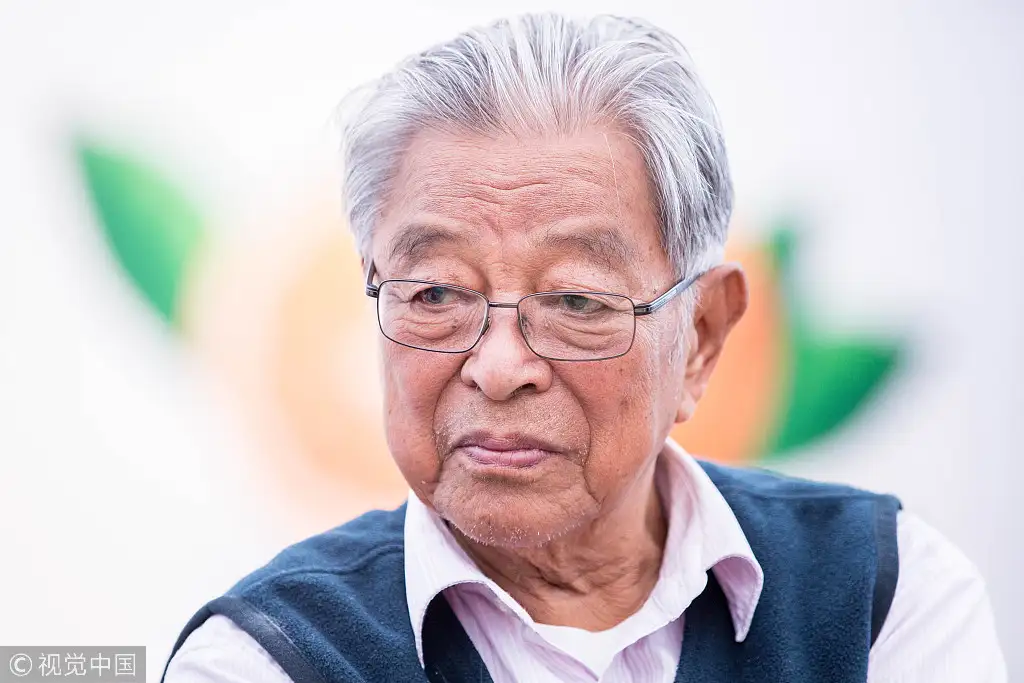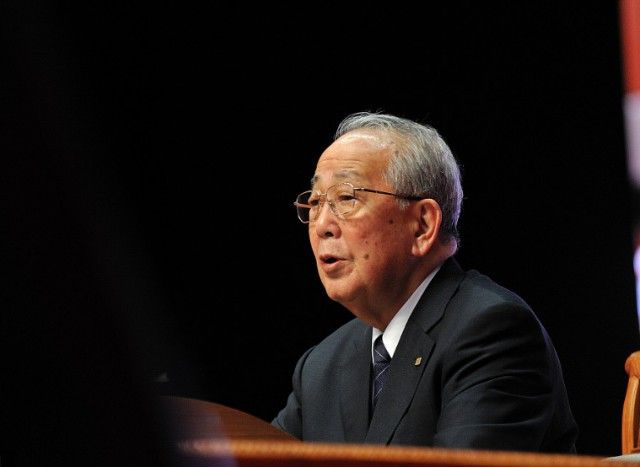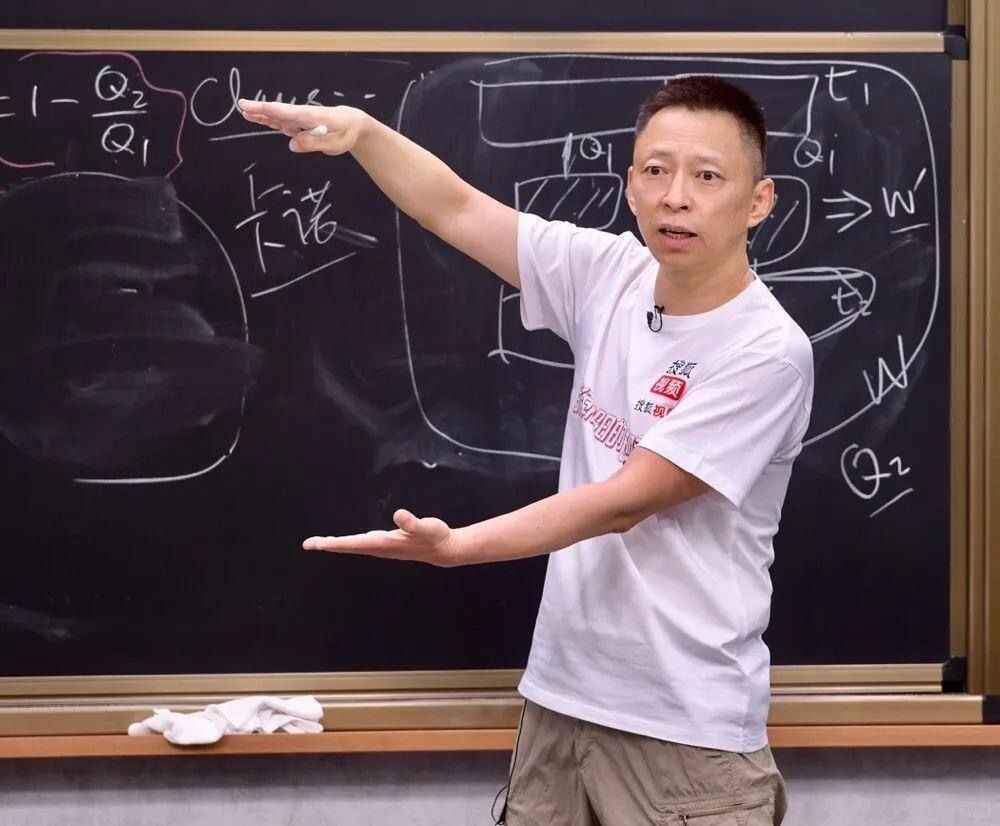
He was once the godfather of the Internet. He started from scratch at the age of 31. He was selected as a "Global Digital Hero" by Time Magazine at the age of 38. At the age of 44, he won Olympic sponsorship. Then I got lost at the peak, depressed and retreated, and watched Sohu fall from the first echelon. Zhang Chaoyang spent ten years proving that it is not terrible to be left behind, but the terrible thing is not to dare to start again. In 1998, Time Magazine listed Zhang Chaoyang as one of the "Global 50 Digital Heroes", alongside Bill Gates and Steve Jobs. That year, Jack Ma was still running business in Beijing, and Ma Huateng had just registered Tencent. Ten years later, he stood at Mount Everest Base Camp and interpreted Sohu's financial reports via video link. In Q1 of 2008, Sohu's revenue was US$84.8 million, a year-on-year increase of 156%, and its market value was US$2.68 billion, surpassing Sina for the first time. That was the peak moment for Zhang Chaoyang and Sohu. Then he dived into the deep sea. 1. Peak: The Golden Age of the Godfather of the Internet In 1996, 31-year-old Zhang Chaoyang received US$225,000 in venture capital and founded Atesin, the predecessor of Sohu, officially opening the door to China's Internet. With his advanced Internet thinking and overseas vision, he quickly established a portal model and was selected into Time Magazine's "Global 50 Digital Heroes" list in 1998, becoming the first internationally recognized Internet pioneer in China. In 2000, Sohu successfully listed on Nasdaq and became one of the first Chinese Internet companies to be listed in the United States. In 2003, the company's market value exceeded US$1 billion, and it was firmly established in the industry.
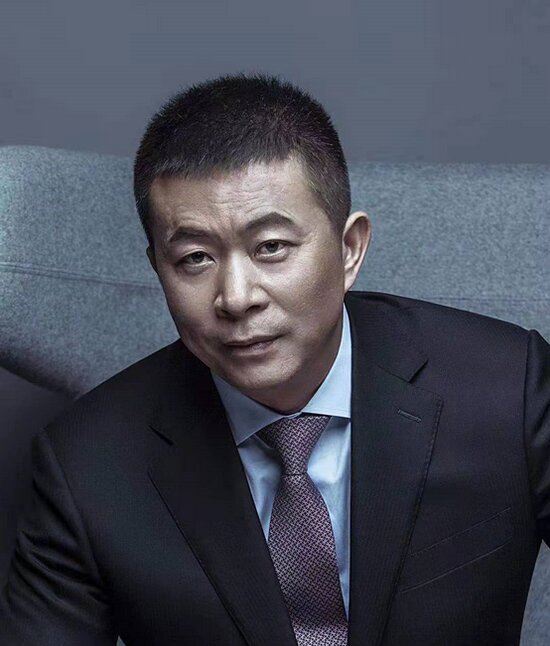
Zhang Chaoyang
Asian Cover Figure | Zhang Chaoyang: The Physicist Who Built China's First Internet Empire — And Walked Away
Asian "Cover Figure" Magazine · Vision
Issue No. 035-
Before Jack Ma became a household name, before Pony Ma built his messaging empire, before the Chinese internet had a face — there was Zhang Chaoyang. The founder of Sohu.com, Zhang was the undisputed king of China's early internet era, a Tsinghua-educated physicist who returned from MIT with a vision to build China's first comprehensive internet portal. For a brief moment in the late 1990s and early 2000s, he was the most influential tech figure in the country.
Today, at 60, Zhang Chaoyang occupies a peculiar position in Chinese business history: the pioneer who showed everyone else how it was done, then stepped aside as his disciples surpassed him. His story is not one of failure — Sohu remains a publicly traded company with significant media assets — but of a different kind of success: the success of someone who chose philosophy over profit, personal peace over corporate conquest.
I. From Tsinghua to MIT
Zhang Chaoyang was born in 1964 in Xi'an, Shaanxi Province. His father was a physician, his mother a teacher — a family of educated professionals in a city known more for its ancient history than its technological ambitions. Young Zhang showed early aptitude for science, particularly physics, and in 1981 he entered Tsinghua University to study modern applied physics.
At Tsinghua, he was known less for academic brilliance than for an unusual combination of intellectual curiosity and personal confidence. He played sports, organized activities, and maintained the kind of social ease that would later serve him well in Silicon Valley. After completing his undergraduate degree, he won a scholarship to the Massachusetts Institute of Technology, where he pursued a PhD in physics.
At MIT, Zhang Chaoyang encountered the early internet. The experience was transformative. He saw immediately that networked communication would reshape civilization, and he made a decision that would define his career: rather than pursuing academic physics, he would build internet companies in China.
II. Building Sohu
In 1996, Zhang Chaoyang returned to China with $50,000 in seed funding and a vision for a Chinese internet portal. He founded Sohu in 1998, modeling it loosely on Yahoo — a comprehensive portal offering news, email, search, and community features. The timing was perfect: China's internet population was growing exponentially, and there was virtually no competition for eyeballs.
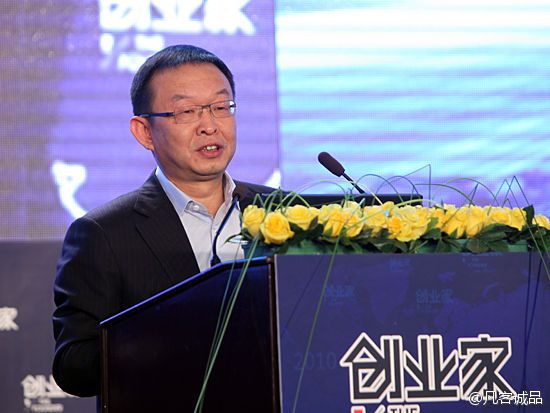
Sohu grew rapidly. By 2000, it was one of China's most visited websites, and Zhang Chaoyang was its most visible champion. He appeared on television, spoke at conferences, and cultivated relationships with government officials who were still figuring out how to regulate this strange new medium. His English-language skills, MIT pedigree, and personal charisma made him the ideal ambassador for China's internet industry to the world.
In 2000, Sohu listed on NASDAQ, joining Sina and NetEase as one of China's first three major internet companies. These "three giants" — Zhang Chaoyang, Wang Zhidong of Sina, and Ding Lei of NetEase — became the founding fathers of China's internet age.
III. The Mentor Who Lost His Company
What distinguishes Zhang Chaoyang from his peers is not what he built, but what happened afterward. While Jack Ma, Pony Ma, and Robin Li went on to build companies worth hundreds of billions, Zhang Chaoyang's Sohu gradually lost its competitive position. The portal model gave way to search (Baidu), social media (Tencent), and e-commerce (Alibaba, JD.com). Sohu, despite early advantages in every category, failed to maintain leadership in any of them.
The reasons are complex. Some analysts point to Zhang's management style, which emphasized personal brand over institutional building. Others cite his decision to focus on entertainment content — particularly online gaming and video — at a time when competitors were building more defensible businesses. Still others suggest that Zhang simply lost interest in the grind of running a public company.
The most dramatic chapter came in 2007, when Zhang's former assistant and protégé, Wang Xiaochuan, left Sohu to start his own company — Fenghuo (later renamed Sougou). With Zhang's blessing and Sohu's backing, Wang built a search engine that competed directly with Baidu. When the partnership soured, Wang bought out Sohu's stake with investment from Tencent, and Sougou eventually became one of China's most valuable tech companies before merging with Sogou's successor entity.
In a sense, Zhang Chaoyang's greatest contribution to China's internet may have been the people he trained. Wang Xiaochou went on to build one of China's most important search companies. Others who passed through Sohu's orbit founded their own successful ventures. Zhang was a better mentor than manager — a teacher whose students outperformed him.
IV. The Philosopher's Retreat
In recent years, Zhang Chaoyang has increasingly withdrawn from active management of Sohu to focus on personal interests, particularly philosophy and mountaineering. He has spoken publicly about his struggles with depression, his interest in mindfulness and meditation, and his belief that the pursuit of money and status is ultimately unsatisfying.
"I've realized that the most important thing is not how much money you make or how big your company is," he said in a 2019 interview. "It's whether you're at peace with yourself." This statement, remarkable coming from a tech CEO at any point in history, was especially striking in the context of China's hyper-competitive business culture.
He has taken up mountaineering seriously, climbing peaks in the Himalayas and elsewhere. He has studied Buddhist philosophy and spoken about the influence of Eastern thought on his worldview. He continues to serve as Sohu's chairman and largest shareholder, but the day-to-day operations are managed by others.
V. The Pioneer's Legacy
It would be easy to dismiss Zhang Chaoyang as a cautionary tale — the pioneer who opened the frontier but couldn't defend it. But this misses the point. His contribution to China's internet was not a single company or product, but an entire ecosystem. He trained the people who would go on to build the industry. He demonstrated that a Chinese internet company could succeed globally. He showed that an intellectual, a physicist, could be a successful entrepreneur.
At 60, Zhang Chaoyang has achieved something that eludes most tech billionaires: perspective. He has seen the industry he helped create grow from a novelty to a necessity, from a few million users to over a billion. He has watched his students become wealthier and more famous than him. And he has chosen, deliberately and publicly, to value something else: peace of mind.
In an era when Chinese tech founders are locked in relentless competition, Zhang Chaoyang's willingness to step back may be his most radical act. He built China's first internet empire — and then proved that walking away from it was not defeat, but victory of a different kind.