Visionary Leaders
They measure the business empire from the commanding heights of the era.
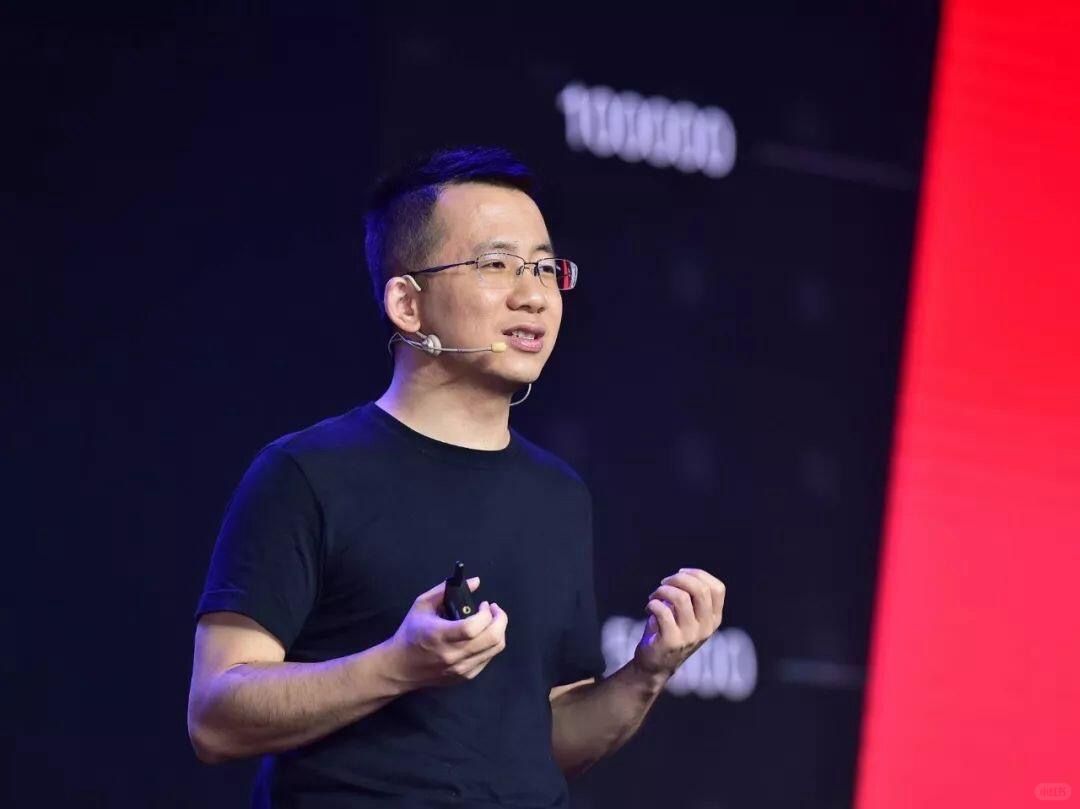
Zhang Yiming
“The most important thing in information distribution is to let high-quality content be seen by more people.”
It took him more than ten years to grow from a serial entrepreneur to one of the definers of the global technology landscape. With extreme sobriety and restraint, he wrote a rare pattern and realm for Chinese Internet entrepreneurs.
Zhang Yiming
Asian Cover Figure | Zhang Yiming: The Quiet Rebel Who Rewired the World's Attention Economy
Asian "Cover Figure" Magazine · Vision
Issue No. 038-ACF-GJ-2026
In an era when China's tech giants were founded on bold personalities and loud ambitions, Zhang Yiming built the most disruptive media company of the decade with almost no public presence. ByteDance, the parent of TikTok and Douyin, became the world's most valuable private company before its IPO, reshaping how billions consume information, entertainment, and commerce. Yet its founder remains famously elusive — a programmer-CEO who prefers algorithms to applause.
His journey from a modest upbringing in Longyan, Fujian Province, to the helm of a $300 billion-plus empire reads less like a traditional success story and more like an algorithm's optimization function made flesh: cold, precise, and relentlessly efficient.
I. The Coder from Longyan
Born in 1983 in Longyan, Fujian, Zhang Yiming grew up in an ordinary family. His father worked in the local science and technology bureau, exposing young Yiming to computers early. By middle school, he was already tinkering with programming, a pursuit that felt more like play than study. He entered Nankai University in 2001, initially studying electronics before shifting to software engineering — not out of passion for any particular field, but because he saw software as the highest-leverage tool for shaping the future.
At Nankai, he was neither the top student nor the most socially active. What set him apart was an unusual ability to delay gratification and a near-obsessive focus on efficiency. He would later describe his college years as spent "optimizing his own operating system" — reading widely, experimenting with code, and building mental models of how information flows through networks.
After graduation in 2005, he joined a travel startup as one of its earliest engineers. The experience taught him something crucial: the difference between a good product and a great one lies not in features, but in how efficiently it matches supply with demand. This insight would become the foundation of everything he built next.
II. The Algorithm That Ate the Media Industry
In 2012, at age 29, Zhang Yiming founded ByteDance in a Beijing apartment. His first product was Toutiao (Today's Headlines), a news aggregation app powered not by editors but by machine learning algorithms that analyzed user behavior and served personalized content. The concept was simple but radical: remove human judgment from content curation and let data decide what people should read.
The results were explosive. Within two years, Toutiao had tens of millions of daily active users. By 2016, it was reading 30 billion articles per day across China. Zhang Yiming had accidentally discovered something profound about human attention: people don't want to search for information — they want it delivered to them, perfectly tailored to their interests, without effort.
This insight led to Douyin (TikTok internationally) in 2016, a short-video platform that would become a global phenomenon. Unlike Instagram or YouTube, which relied on social graphs and subscriptions, Douyin's recommendation engine fed users an endless stream of algorithmically selected videos. The result was addictive: the average user spent over 100 minutes per day on the app, a figure that stunned even Zhang Yiming himself.
III. The Reluctant Celebrity
Despite building one of the world's most influential companies, Zhang Yiming has maintained an almost aggressive low profile. He rarely gives interviews, never cultivates a personal brand, and has publicly stated that he finds social interactions draining. In 2021, he announced his resignation as ByteDance CEO, handing the role to Liang Rubo, citing a desire to focus on long-term strategy and scientific research rather than day-to-day management.
This move puzzled many observers. Why would the founder of one of the world's most valuable companies step down at the peak of its powers? Zhang's explanation was characteristically analytical: he believed that a company's CEO should be someone who excels at management and operations, not someone who happens to be the founder. In his view, his comparative advantage lay in thinking about the future, not running a multinational corporation.
Yet even in semi-retirement, his influence on ByteDance remains absolute. He continues to shape the company's strategic direction, particularly in AI research and global expansion. His resignation was less a departure than a reconfiguration — the founder as algorithm, still running the system from the background.
IV. Global Ambition and Regulatory Reality
TikTok's global success has made Zhang Yiming both celebrated and scrutinized. In the United States, the app has faced repeated national security concerns, culminating in legislative threats to ban it unless its Chinese parent company divested. In Europe, regulators have investigated its data practices and content moderation policies. In India, the app was outright banned in 2020.
Zhang has navigated these challenges with characteristic pragmatism. ByteDance has invested heavily in local content moderation, data security infrastructure, and government relations. The company has also restructured its corporate governance, creating a complex holding structure designed to insulate TikTok from Chinese regulatory influence while maintaining operational control from Beijing.
The tension between global ambition and geopolitical reality has forced Zhang to confront questions that most tech founders never face: How do you build a global company when your home country is viewed as a strategic rival? How do you balance compliance with innovation? His answers — more local presence, more transparency, more investment in each market — reflect the same optimization mindset that drove his early product development.
V. The Philosopher-Engineer
What distinguishes Zhang Yiming from other Chinese tech billionaires is not just his wealth or his products, but his worldview. He describes himself as a "rationalist" in the philosophical sense — someone who believes that most human behavior can be understood and optimized through careful analysis. He reads extensively in cognitive science, behavioral economics, and organizational theory, and has written internal memos encouraging employees to "think like algorithms" — to treat decisions as experiments, emotions as data, and life as an optimization problem.
This philosophy extends to his management style. ByteDance is known for its radical transparency, internal information-sharing, and data-driven decision-making. Employees are encouraged to challenge superiors with evidence, not hierarchy. The company's internal tools treat every meeting, project, and document as data points to be analyzed and improved.
Whether this approach represents the future of work or its dystopian endpoint remains an open question. But one thing is certain: Zhang Yiming has built something that transcends any single product or market. He has created a new way of organizing human attention — and in doing so, he has changed how the world sees, thinks, and feels.
At 43, Zhang Yiming remains one of the most influential and least understood figures in global technology. He built an empire on the principle that algorithms know better than humans what they want to see — and then proved it by becoming the most watched-unseen man in the world.
Follow

Scan to follow for more stories
Cover ArchiveArchive
View archive file →Every cover publication is registered and kept in the ACF Cover Archive. The code is permanent.


Not Everyone Makes the Cover
Asia Cover Figure · Influencing Those Who Influence