Born in 1962, graduated from the Department of Mathematics, Nankai University, and is a postdoctoral fellow at Stanford. Founded Wumart in 1994 and became the first retail company in mainland China in 2003. He was taken away for investigation in 2006 and remained unjust for 7 years. In 2018, the Supreme People's Court changed the verdict to not guilty. After being released from prison, he started his second business and founded Duodian Dmall. Six years later, Wumart’s revenue exceeded 100 billion. Zhang Wenzhong: Delayed justice is extremely precious. On May 31, 2018, the Supreme People's Court announced the verdict in the retrial of Zhang Wenzhong's case: the original verdict was revoked and the verdict was changed to not guilty. On this day, 12 years have passed since he was taken away for investigation. He spent 7 years and 10 months in prison. After he was released from prison, he was not resentful or depressed. At the age of 59, he started over and founded Duodian Dmall. Six years later, Dmall has become China's largest retail digital service provider, and Wumart Group's revenue exceeded 100 billion. It took him 10 years to go from being a prisoner to being the helmsman of hundreds of billions of dollars. 1. Peak: From Stanford postdoc to No. 1 retail stock Zhang Wenzhong was born in Qingdao, Shandong in 1962. He was admitted to the Department of Mathematics of Nankai University in 1979. He later obtained a master's degree in economics from Nankai University and a doctorate in system science from the Chinese Academy of Sciences. He went to Stanford University to complete postdoctoral research. In 1994, in order to promote the self-developed POS cashier system, he opened the first Wumart supermarket in Beijing. At that time, domestic supermarkets generally used manual accounting, and product information and inventory management were all done manually. Suppliers are full of doubts about POS systems and do not believe that a machine can calculate accounts clearly. Zhang Wenzhong went from house to house, convincing them with data and cases: this
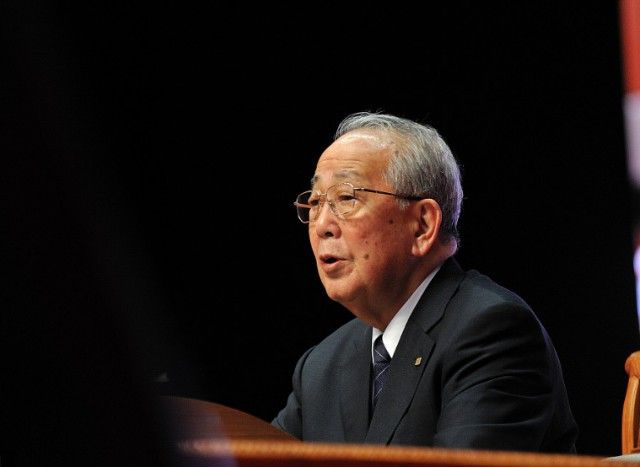
Zhang Wenzhong
Asian Cover Figure · The Business Contrarian | Zhang Wenzhong: From Prisoner to Helm of a Hundred-Billion Enterprise — He Waited 12 Years for Overdue Justice
Asian Cover Figure · The Business Contrarian
Issue No. 026-
[Summary]
Born in 1962, graduated from Nankai University's mathematics department, Stanford postdoctoral fellow. Founded Wumart in 1994; in 2003 it became mainland China's first retail IPO. Detained for investigation in 2006, wrongly imprisoned for 7 years. In 2018, the Supreme People's Court overturned the verdict and ruled him not guilty. After release, he launched a second venture, founding Dmall. Six years later, Wumart's revenue exceeded 100 billion yuan. Zhang Wenzhong: overdue justice is incomparably precious.
On May 31, 2018, the Supreme People's Court delivered its retrial verdict on the Zhang Wenzhong case: the original judgment was vacated, and he was acquitted.
By that day, 12 years had passed since he was detained, and he had spent 7 years and 10 months in prison.
After release, he harbored no resentment nor fell into despair. At age 59, he started anew, founding Dmall. Six years later, Dmall became China's largest retail digitalization service provider, and Wumart Group's revenue surpassed 100 billion yuan.
From prisoner to helm of a hundred-billion enterprise — it took him 10 years.
I. The Summit: From Stanford Postdoc to China's First Retail IPO
Zhang Wenzhong was born in Qingdao, Shandong in 1962. In 1979, he entered Nankai University's mathematics department, subsequently earning a master's in economics from Nankai and a doctorate in systems science from the Chinese Academy of Sciences, before completing postdoctoral research at Stanford University. In 1994, to promote his self-developed POS cashier system, he opened the first Wumart supermarket in Beijing.
At the time, domestic supermarkets universally relied on manual bookkeeping — product information and inventory management depended entirely on human labor. Suppliers were skeptical of POS systems, disbelieving that a machine could handle accounting correctly. Zhang Wenzhong went door to door, persuading them with data and case studies: this system would make inventory turnover faster and reconciliation more accurate.
In 1995, the Wumart Cuiwei Road single store achieved annual sales exceeding 100 million yuan, setting a growth record for domestic supermarkets. In 2003, Wumart listed on the Hong Kong Stock Exchange, becoming mainland China's first privately-owned retail IPO. By 2006, Wumart held 35% of Beijing's retail market, with stores covering core commercial districts and communities. Zhang Wenzhong was dubbed "the Father of Chinese Supermarkets" by the industry.
He didn't study business, but he used mathematical rigor to redefine Chinese retail.
II. The Abyss: 7 Years and 10 Months Behind Bars
In 2006, at the peak of his career, Zhang Wenzhong was suddenly detained for investigation. In 2008, he was sentenced to 18 years in the first trial, later reduced to 12 years, with charges including fraud, unit bribery, and misappropriation of funds.
With his freedom gone, Wumart — which he had built — descended into chaos. Senior executives departed one after another; suppliers, worried about payment security, began cutting shipments. Store traffic declined; revenue was halved. The retail giant that once commanded 35% of Beijing's market shook in the storm. He later recalled, "I felt the sky was collapsing. I was completely unprepared."
At his lowest point, he chose not to succumb. In a tiny cell, he imposed a strict daily schedule: after a cold-water bath at dawn, he read economics and management books. He wrote down his reflections on the retail industry, and even under limited conditions, derived four retail-related technology patents. He also voluntarily tutored a young cellmate with only a junior high education, starting from basic algebra — assigning homework, grading each problem — ultimately helping him pass the adult college entrance examination.
"In prison, facing the wall, working, reading, thinking — my inner world moved toward peace and fulfillment," he said. "The bone-chilling cold-water baths in winter made my will even stronger."
A person must have some faith. I believe in fairness and justice."
In the coldest winter, he read in prison. Not that it wasn't suffering — but he knew only reading could keep him alive to get out.
III. The Return: The Overdue Acquittal
In February 2013, Zhang Wenzhong was released early for good behavior. After release, he worked simultaneously on rebuilding Wumart and preparing appeal materials. Over three years, he repeatedly reviewed case files, examining each piece of evidence, seeking legal breakthroughs. In 2016, he formally submitted a retrial application to the Supreme People's Court.
In February 2018, the Supreme Court opened the retrial. He walked into the courtroom with steady steps and a calm expression. When the judge announced "the original judgment is vacated; the defendant is acquitted," his lawyers and family embraced each other in tears in the gallery.
The retrial verdict overturned all three original charges one by one: the alleged fraud was essentially a case of a private enterprise legitimately qualifying for government bond project applications; the alleged unit bribery lacked facts of seeking improper benefits; the alleged misappropriation of funds was normal inter-enterprise financial transactions. Upon hearing the acquittal in court, he admitted "tears were circling in my eyes."
This case became a landmark in domestic protection of private entrepreneurs' property rights. Related content was included in the 2018 Supreme People's Court Work Report.
Overdue justice is incomparably precious."
"When you walk out of that prison, wave your hand — it's all in the past. If you keep living in yesterday, then you're still in prison forever."
Twelve years — he waited for his innocence. Not for revenge, but for vindication.
IV. Second Venture: Dmall and the Digital Breakthrough
As early as 2015, while still in the appeals process, Zhang Wenzhong had already begun preparing his second venture. He approached an IDG Capital partner, who asked: "In your current situation, who dares to invest in you?" He didn't argue — he simply presented a detailed business plan, walking through page by page how digitalization could transform traditional retail.
With that plan and his profound understanding of the retail industry, he ultimately convinced IDG, Tencent, and Lenovo Capital. The project received multiple rounds of investment, with cumulative financing exceeding 700 million dollars.
When the Dmall system was first deployed, Wumart frontline workers strongly resisted. Staff accustomed to manual operations didn't want to learn a new system. Zhang Wenzhong went to stores personally, demonstrating to staff: scan a code and inventory updates automatically; tap a screen and orders aggregate automatically. "This system isn't here to replace you — it's here to help you."
At one traditional supermarket that adopted Dmall, pickers originally had to run through the store with paper orders, taking 20 minutes per order. After Dmall integration, the system automatically planned optimal picking routes, with handheld terminals displaying product locations in real time. Picking time dropped from 20 minutes to 5 minutes, and online order processing volume tripled.
Leveraging Dmall's technology, Wumart stores fully integrated "order online, pick up in-store / 1-hour delivery" services. In 2024, Wumart's online order share reached 32%, with instant delivery orders rising to 18%. By 2024, Dmall had provided digital enablement to over 100,000 physical stores nationwide, becoming China's largest retail digitalization service provider, with enterprise valuation exceeding 35 billion yuan. In December of that year, it officially listed on the Hong Kong Stock Exchange.
He missed the golden decade of e-commerce, but with digitalization, he clawed back the lost ten years.
V. The Rebound: Hundred-Billion Revenue and Restructuring the Map
After release, Wumart gradually resumed its M&A expansion. In 2014, Wumart spent 1.4 billion yuan acquiring 70% of B&Q China, entering the home improvement retail sector; in 2018, it spent 1.4 billion yuan acquiring 21 Lotte Mart stores in North China, filling regional gaps; in 2019, it participated in the Metro China bidding, further perfecting its multi-format retail landscape.
When acquiring B&Q, Zhang Wenzhong valued not just its store network but its supply chain capabilities in home improvement. The Lotte Mart acquisition filled North China store gaps. "We don't pursue being the largest — we aim to be the most efficient."
After these integrations, Wumart's total store count exceeded 1,800, covering North China, East China, and Northwest regions. In 2024, Wumart Group's total revenue surpassed 102.3 billion yuan, up 18.7% year-on-year, with net profit of 3.26 billion yuan, up 25.3% year-on-year. From less than 10 billion in revenue in 2018 to over 100 billion in 2024 — he took just 6 years.
That same year, the Wumart Qingdao Urban Renewal project topped out, introducing Wumart, Metro, and B&Q proprietary brands. He chose to return to his hometown to invest, giving back to his roots.
"Overdue justice is incomparably precious. But more importantly, we must look forward."
When acquitted in 2018, he was 59. Many thought his life was over. But in 6 years, he took Wumart from under 10 billion to 102.3 billion yuan. From prisoner to hundred-billion helm — 10 years. He wasn't seeking revenge; he was proving that an entrepreneur can be knocked down but never defeated.
He spent 10 years taking back everything he had lost.