Visionary Leaders
They measure the business empire from the commanding heights of the era.
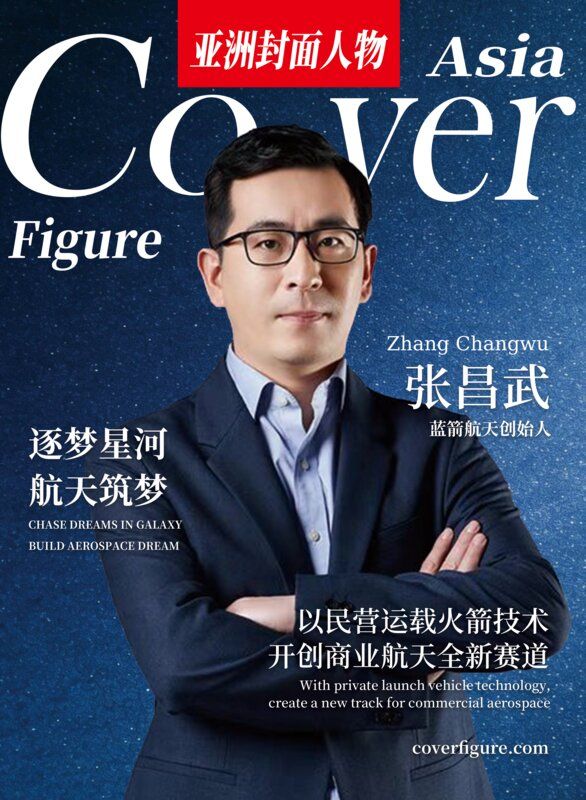
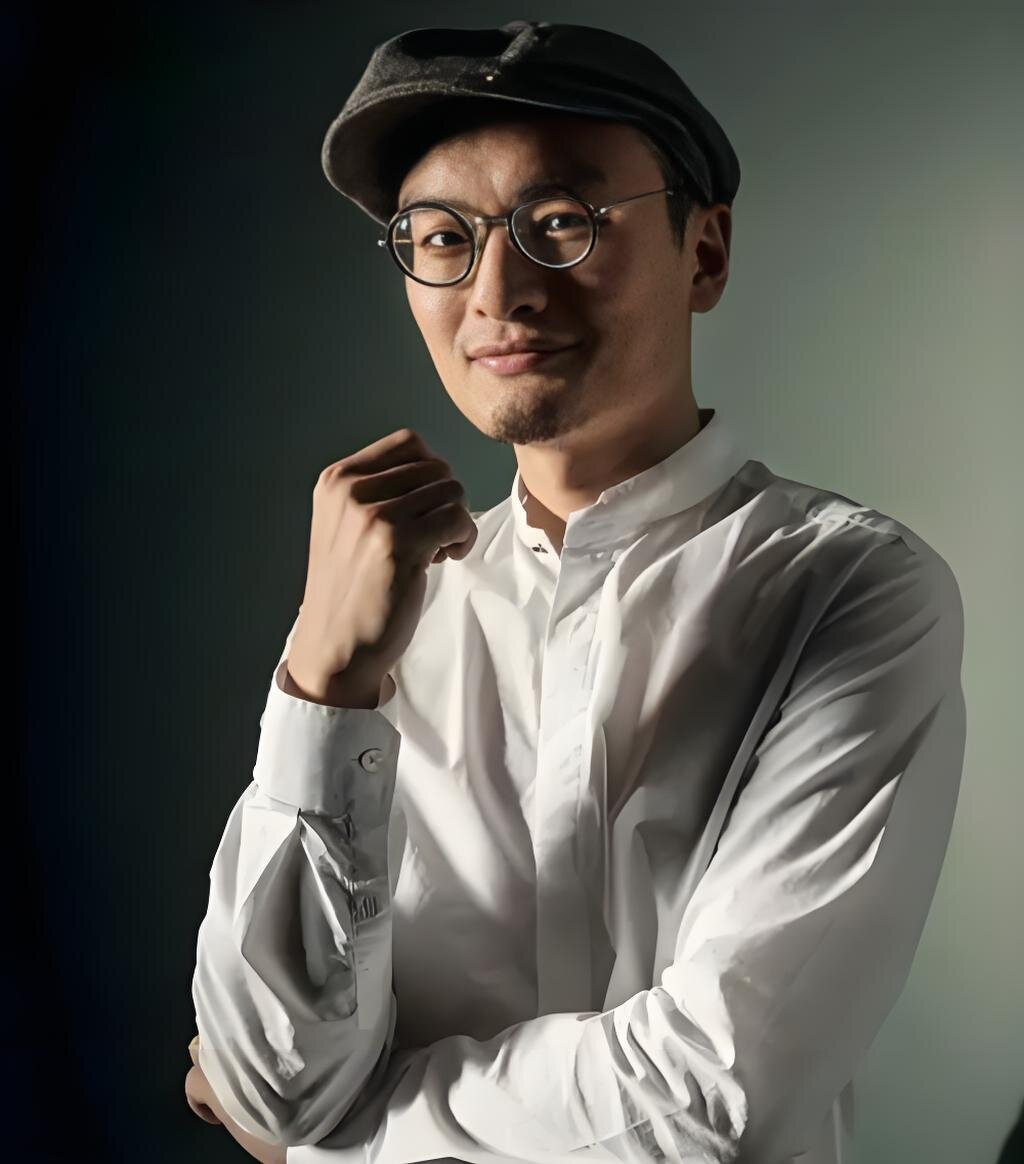
Zhang Changwu
“The starry sea of commercial aerospace requires solid engineering capabilities to be realized step by step.”
In the fierce competition in global commercial aerospace, Zhang Changwu is an extremely special existence. He did not come from an aerospace major, but was a financial elite who graduated from Tsinghua SEM and HSBC Bank. However, in his middle age, he resolutely crossed over and plunged into the extremely difficult field of launch vehicles. The Blue Arrow Aerospace he founded not only made Zhuque 2 the world's first liquid oxygen methane rocket to successfully enter orbit...
Zhang Changwu
ACF Cover Figure | Zhang Changwu: From Finance to Rockets — Putting China's Commercial Space in the World's Top 3 Recovery Track
Asia "Cover Figure" · Perspective
Issue No. 030 — ACF-GJ-2026
In the fierce global commercial space competition, Zhang Changwu is an exceptionally distinctive figure. Far from a space-industry veteran, he is a finance elite who emerged from Tsinghua SEM and HSBC — yet in middle age resolutely crossed over, plunging into the extremely challenging launch vehicle field. The LandSpace (Lanjian Hangtian) he founded not only made Zhuque-2 the world's first successfully orbiting liquid oxygen methane rocket, but through Zhuque-3's recovery technology verification, placed among the global top 3 in the rocket recovery track — for the first time positioning China's commercial space on the same competitive stage as the world's top giants. From finance career to stars and sea, Zhang Changwu has spent nearly a decade walking a pioneering path for China's private space industry.
From Finance Elite to Space Entrepreneur
Zhang Changwu graduated from Tsinghua University's School of Economics and Management, then joined HSBC, accumulating years of mature financial industry experience. For a long time, his life trajectory had zero intersection with space. To outsiders, he was a finance professional with clear prospects and solid expertise, living a stable, orderly life. But long immersion in finance gave him keener judgment of industrial trends, national strategy, and future opportunities — along with the courage to break through and pursue dreams.
In 2015, national policy encouraged private capital into the space sector. The commercial space curtain officially rose. Zhang Changwu keenly recognized: global satellite launch demand was enormous, market capacity was severely insufficient, and China's private space was virtually blank — both an era opportunity and one belonging to China. When everyone around him thought it unrealistic, he resolutely made a life-changing decision: abandon finance's stability and high pay, resign to build rockets. Facing skepticism, he didn't over-explain — simply holding one conviction: "What Musk can do, there's no reason Chinese people can't."
70-Square-Meter Office, Three Dreamers Form the Space Iron Triangle
Startup beginnings were far harder than imagined. Zhang Changwu rented a mere 70-square-meter office south of Beijing's Fifth Ring Road — no substantial funding, no mature team, no ready technology. Everything from zero. But his greatest strength was finding the right direction and the right partners, using vision and sincerity to unite people truly willing to do great things.
He successfully invited two heavyweight experts: Wang Jianmeng, with extensive launch command experience, and Wu Shufan, former ESA senior engineer. A 31-year-old finance founder, a 60-year-old launch expert, and a 50-year-old international space engineer — complementary strengths forming LandSpace's original core iron triangle, launching China's private space's difficult pioneering journey.
Early financing was extraordinarily rough. Investors universally doubted private companies could build rockets. But Zhang Changwu persisted in answering doubts with action. He promised to build a core team in three months — and indeed attracted top experts to abandon stable positions. When 10 million in angel investment arrived, LandSpace formally set course for space.
First Flight Failure Didn't Alter Direction: Choosing the Hardest Yet Most Correct Route
In October 2018, LandSpace's Zhuque-1 ignited at Jiuquan Satellite Launch Center — China's private space's first orbital attempt. But during flight, the rocket's attitude became unstable, and the launch failed. The atmosphere was heavy; the team bore enormous pressure.
In the low ebb, Zhang Changwu maintained unusual clarity. He told the team: failure is a required course in space. This time, though orbit wasn't achieved, the team completed the full process and identified improvement directions — experience more precious than momentary success.
After the failure, internal voices suggested switching to the mature, safe solid rocket route. But Zhang Changwu saw further ahead: solid rocket technology has a clear ceiling, unable to support future industrialization. Liquid oxygen methane engines — low-cost, cleaner, reusable — were commercial space's true future. Even though this route was extremely difficult and high-risk, he firmly decided: abandon solid, go all-in on liquid oxygen methane engine self-development. "If you're doing space, do technology that can put China a generation ahead."
Three Years of Darkness, Then the World's First LOX-Methane Rocket Reaches Orbit
After three years of darkest cultivation, in July 2023, Zhuque-2 successfully launched and entered orbit — becoming the world's first liquid oxygen methane rocket to achieve orbit. LandSpace proved China's private space could achieve world-first technical breakthroughs. Subsequently, Zhuque-3's vertical takeoff and horizontal landing (VTHL) recovery technology verification succeeded, placing LandSpace among the global top 3 in rocket recovery — alongside SpaceX and Blue Origin.
From finance to the stars, Zhang Changwu used nearly a decade to walk a pioneering path for China's private space — and showed the world the power and vision of China's commercial space.
Follow

Scan to follow for more stories
Cover ArchiveArchive
View archive file →Every cover publication is registered and kept in the ACF Cover Archive. The code is permanent.
Not Everyone Makes the Cover
Asia Cover Figure · Influencing Those Who Influence