Visionary Leaders
They measure the business empire from the commanding heights of the era.
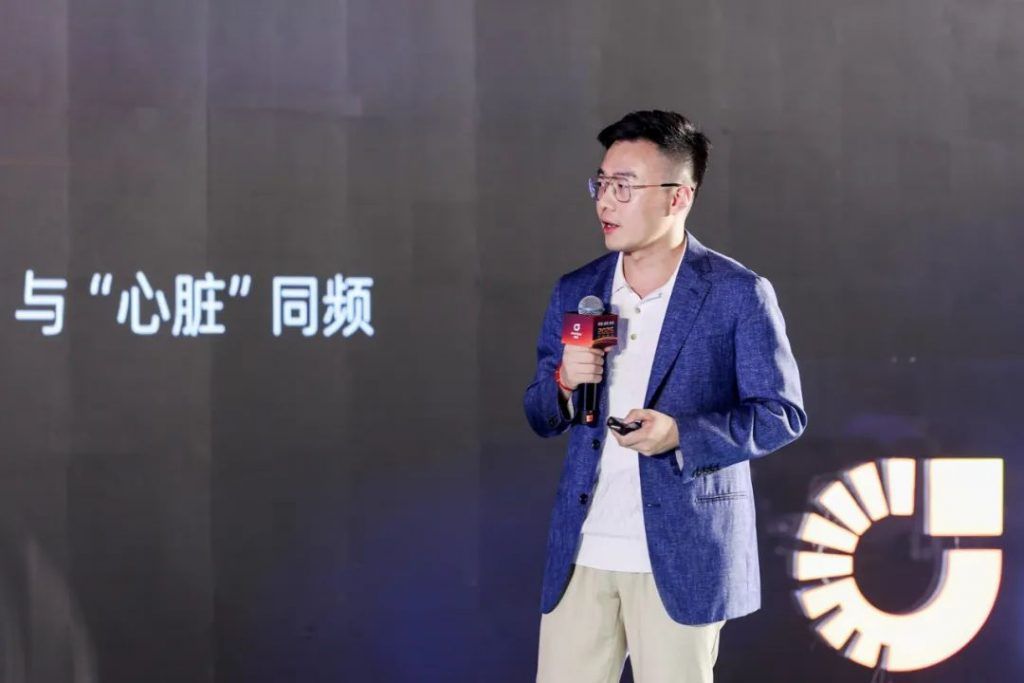
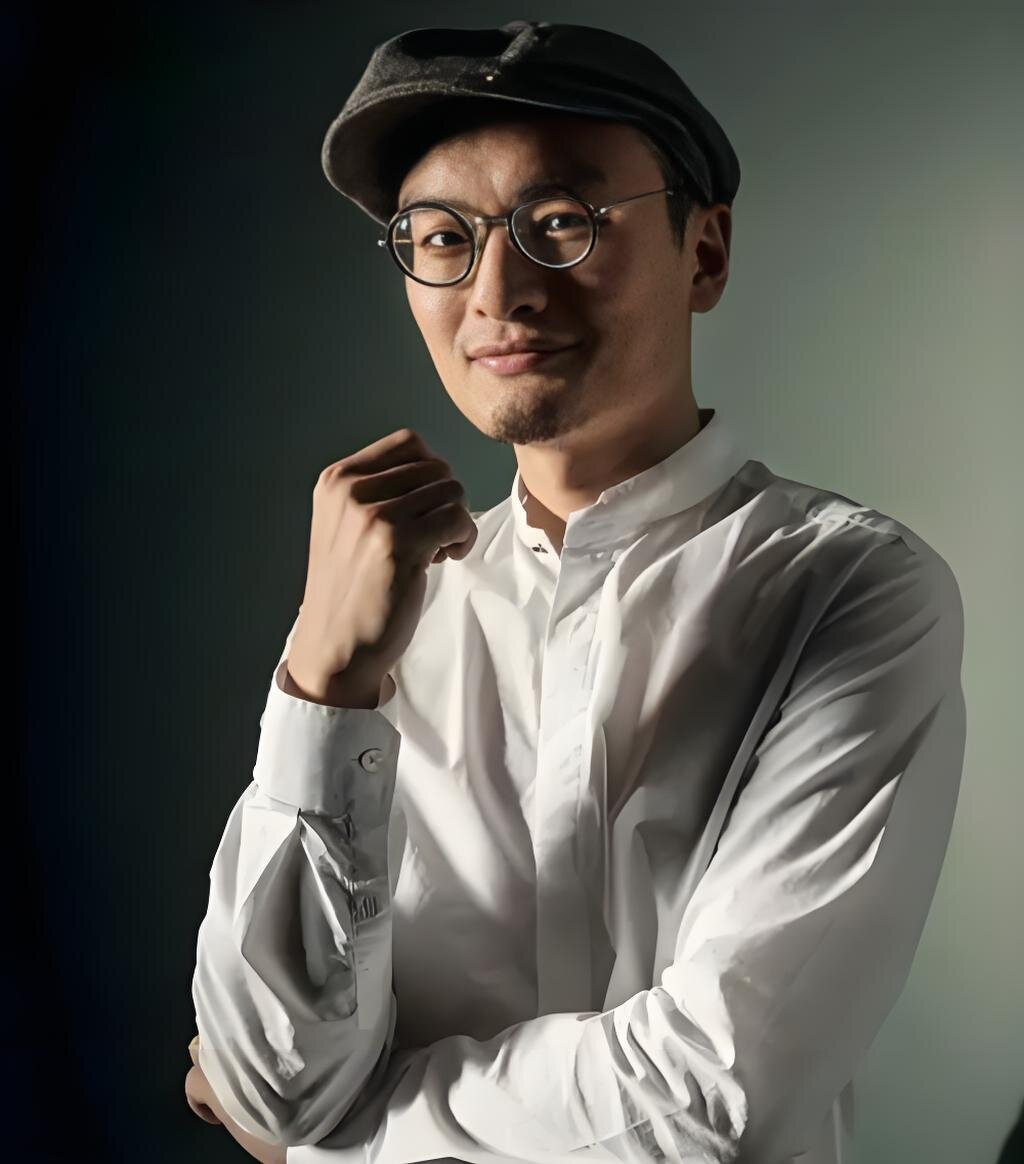
Xu Bing
“Art and technology are never contradictory. The best creation is to use new tools to express the old soul.”
Co-founder of SenseTime, managing the largest AI IPO in the world. However, he quit his job to make cores and focus on the reasoning track. His peers regarded his choice as "cutting off an arm", but he used a valuation of tens of billions to prove that a narrow road can also be widened. In 2026, the valuation of his company SiliconHope will exceed 10 billion, and the cost of chip tokens will drop by 90%. Xu Bing: Computing autonomy is the right to breathe in the AGI era. In 2025, Xu Bing, co-founder of SenseTime, made a choice that is difficult for the industry to understand. He resigned from his position as executive director, put aside the industry resources and capital base accumulated for many years, and started a new round of entrepreneurship independently. He has set clear business boundaries and is not involved in the research and development of training chips. He only focuses on the reasoning track. Peers commented that this move is equivalent to actively giving up half of the market space. A year later, SiliconHope, the company he founded, has grown into the first domestic unicorn company focusing on pure inference GPUs, with an overall valuation exceeding 10 billion. After the launch of its Qiwang S3 chip, the unit Token operating cost has been reduced by 90%. He responded to industry doubts with product implementation results. His choice was not to abandon the track, but to switch to a new development path. The literal meaning of Xiwang is the light of dawn, and the English name SiliconHope represents the hope of the silicon-based industry. Xu Bing’s entrepreneurial journey is exactly a dawn trip for the computing industry. 1. Peak: Co-founder of SenseTime and US$6.6 billion in financing Xu Bing studied at the Chinese University of Hong Kong in his early years and was a doctoral candidate in the Multimedia Laboratory
Xu Bing
ACF Cover Figure | Xu Bing: From SenseTime to SiliconHope — Forging Chips at Dawn
Asia "Cover Figure" · Perspective
Issue No. 057 — ACF-2026
[Summary] SenseTime co-founder, architect of the world's largest AI IPO. He resigned to build chips, focusing solely on the inference track. Peers called it "cutting off one arm." He proved with a hundred-billion valuation: even a narrow road can be widened. In 2026, his company SiliconHope exceeded 10 billion in valuation, with chip token costs dropping 90%. Xu Bing: "Computing autonomy is the breathing right of the AGI era."
In 2025, SenseTime co-founder Xu Bing made a choice the industry struggled to understand: he resigned as executive director, setting aside years of accumulated industry resources and capital foundation to independently launch a new entrepreneurial venture.
He drew clear business boundaries: no training chip R&D — only deep cultivation of the inference track. Peers assessed this as voluntarily surrendering half the market.
One year later, his founded SiliconHope (XiWang) grew into China's first pure-inference GPU unicorn, with overall valuation exceeding 10 billion RMB. Its QiWang S3 chip achieved a 90% reduction in per-token operating costs.
He answered industry doubts with product results: the choice wasn't abandoning a track — it was switching to an entirely new development path. "Xi" (the Chinese character) means dawn's light; the English name SiliconHope represents the hope of the silicon-based industry. Xu Bing's entrepreneurial journey is truly a dawn expedition for the computing power industry.
I. Summit: SenseTime Co-Founder and $6.6 Billion in Funding
Xu Bing studied at the Chinese University of Hong Kong as a PhD candidate in the Multimedia Lab, studying under Tang Xiaoou. In 2014, he followed his mentor to co-found SenseTime, becoming one of its co-founders.
Xu Bing primarily handled capital coordination and capital market operations, participating throughout in multiple large-scale financing rounds, helping SenseTime complete over $6.6 billion in cumulative funding — setting the then-current global AI funding record. He subsequently led the full HKEX IPO process, driving the world's largest-scale public AI listing.
At the industry's height, he did not rest on achievements. Through long-term business review and industry chain research, he detected a hidden computing supply shortfall in China's AI industry: dependence on overseas computing supply would continuously constrain domestic AI enterprises' long-term development.
He stood at AI's summit — yet saw the cliff. The "computing tax" was consuming China AI's lifeblood.
II. Pain Point: Hundred-Billion "Computing Tax" and the Self-Development Path
SenseTime has long held a leading position in computer vision and general AI algorithms, with technology applications spanning multiple industries. But the cost structure had a clear weakness: computing procurement consistently consumed a large share of expenditure, with most funds flowing to overseas chip manufacturers.
Industry-wide estimates showed domestic companies paying over 100 billion RMB annually for external computing — this continuous outflow constituted a hidden barrier constraining local AI industry self-development. In 2020, Xu Bing led the establishment of an independent chip R&D department within SenseTime, formally launching AI inference chip self-development.
Over five years, the chip division accumulated over 2 billion RMB in R&D investment, completing two generations of core product mass production: the S1 inference chip for visual scenarios and the S2 inference chip for large model scenarios. Self-developed chips alleviated external procurement pressure to some extent — but within the listed company system, the chip business still faced constraints in financing flexibility and high-end talent recruitment.
The computing tax is an invisible "chokehold." He decided to build chips himself — keeping the tax domestic.
III. Breakthrough: Spin-Off, Independence, and Core Team
Under the listed entity framework, the chip business couldn't gain independent development space. Capital allocation and talent incentives were constrained by group-wide rules. In late 2024, SenseTime implemented its "1+X" strategy, formally initiating the chip business spin-off.
In 2025, the chip division completed independent operation. The new company was named SiliconHope — "Xi" meaning dawn's light, "Wang" pointing to long-term industry aspiration. Xu Bing formally resigned as SenseTime executive director, devoting himself entirely to the new company.
He recruited two industry veterans: former AMD Global GPU Chief Architect Wang Yong to lead technical R&D, and Baidu founding team member Wang Zhan to oversee product deployment and commercialization. The three formed a clear division: technology, market, and overall strategy.
He gave up a mountain and chose an ocean. From "Xi" onward, he departs at dawn.
IV. Against the Current: All-In on Inference
The industry's standard approach is combined training-inference layout. Xu Bing made a differentiated strategic call: all resources toward inference.
Industry practitioners questioned: voluntarily abandoning training means giving up half the market. Xu Bing assessed based on industry cycle dynamics: training's leading players are consolidating, barriers rising, market converging rapidly. Inference demand spans all industries. Training determines AI's capability ceiling; inference determines how many people can use AI. Market capacity has no clear ceiling; the segment has independent growth space.
Clear positioning quickly earned capital recognition. In just over a year of independent operation, the company completed seven financing rounds totaling approximately 4 billion RMB. Sequoia China, Hillhouse Ventures, Matrix Partners, IDG Capital, Hangzhou Capital, and other top-tier firms invested. Overall valuation exceeded 10 billion RMB — China's first pure-inference GPU unicorn. Team size: approximately 400, with over 80% in R&D.
"Training is the giants' game — barriers keep rising, convergence is fast. But inference demand has no ceiling in sight."
Others do training; he does inference. Not because the market is small — but because others haven't seen it.
V. Explosion: QiWang S3 and Computing Democratization
In January 2026, SiliconHope released its flagship QiWang S3 inference GPU. The architecture natively adapts to large model inference scenarios, stripping redundant training modules and directing all hardware resources toward inference computation.
In tests with DeepSeek V3, R1, and other mainstream large models, QiWang S3 achieved approximately 90% reduction in per-token operating costs versus the previous generation. The long-term product target: compress inference costs to one fen per million tokens — making AI computing power like water and electricity, a universally accessible infrastructure for all industries.
The company has completed three generations of inference GPU product iteration, with cumulative chip deliveries reaching tens of thousands, covering chip self-R&D and industry-customized solution delivery — forming a complete commercial closed loop.
Xu Bing's "one fen per million tokens" target is not a low-price weapon — it's a restructuring of AI application economics. When inference costs approach baseline, many currently infeasible AI scenarios become commercially viable. SiliconHope's deployment expands the entire industry's AI application boundary.
Reviewing two entrepreneurial chapters: at SenseTime, he helped Chinese AI algorithms achieve 0-to-1; at SiliconHope, he plans to drive domestic AI computing from 1-to-N in scaled democratization.
"Computing autonomy is the breathing right of the AGI era." "Our goal is to reduce inference costs to 'one fen per million tokens,' making AI a universal infrastructure like water and electricity."
He transformed computing costs from luxury goods into daily necessities. The dawn light grows brighter.
Follow

Scan to follow for more stories
Cover ArchiveArchive
View archive file →Every cover publication is registered and kept in the ACF Cover Archive. The code is permanent.
Not Everyone Makes the Cover
Asia Cover Figure · Influencing Those Who Influence