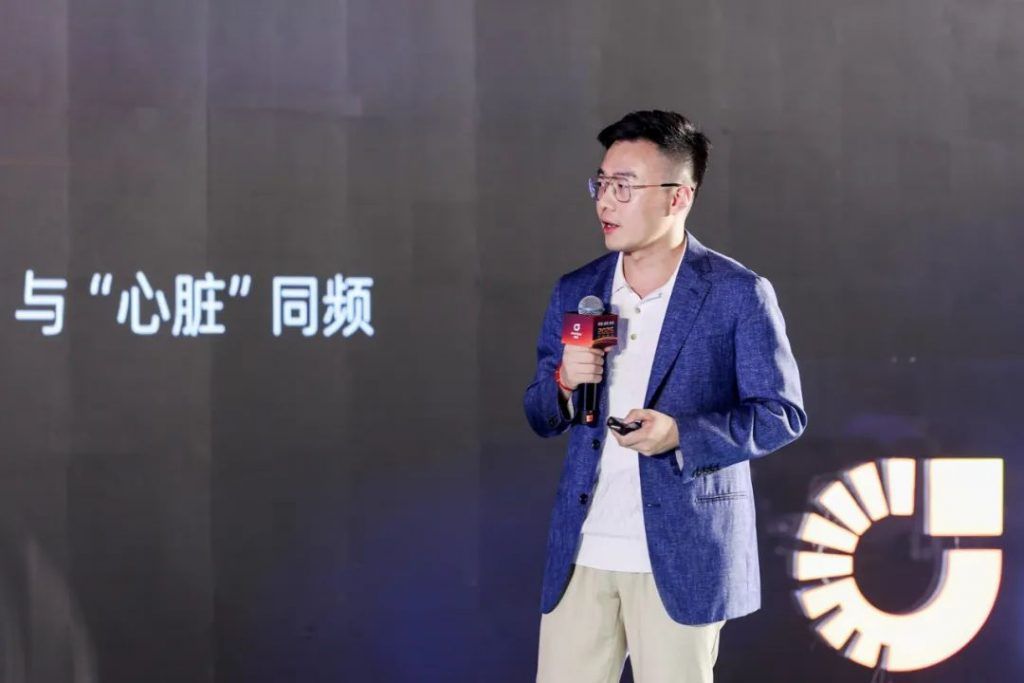
Xu Bing is included in the 'Perspective' section not because he is a SenseTime co-founder or led the world's largest AI IPO—those are credentials, not perspective. The true perspective lies in his seeing the cliff at the industry's peak: China's AI industry pays over 100 billion RMB annually in 'computing tax' to overseas suppliers, a dependency draining the industry's lifeblood. He chose to abandon the resources and status of a mature company, entering a narrow track that peers called 'cutting off an arm,' and within a year built SiliconHope into a pure-inference GPU unicorn. His choice was not risk-taking but a calculated bet based on industry endgame: training is a giant's game, while inference is the gateway to democratization. This industrial rationality of betting before the inflection point is the archival value this column seeks to preserve.
Xu Bing studied at the Multimedia Lab of CUHK under Tang Xiaoou, and co-founded SenseTime with his mentor in 2014, becoming one of its co-founders. [1] At SenseTime, he handled capital coordination and market operations, participating in multiple large financing rounds, helping SenseTime raise over $6.6 billion cumulatively, setting a global AI funding record at the time, and led the full HKEX IPO process, driving a leading global AI listing. [1] In 2020, Xu Bing led the establishment of an independent chip R&D department within SenseTime, initiating self-developed AI inference chips, with cumulative investment exceeding 2 billion RMB over five years, delivering two generations of products. [2] In late 2024, SenseTime implemented its '1+X' strategy, starting the chip business spin-off. [3] In 2025, the chip business became independent, named SiliconHope, and Xu Bing resigned as executive director of SenseTime to fully commit to the new company. [3] [4] He recruited former AMD global GPU chief architect Wang Yong for technology R&D and Baidu founding team member Wang Zhan for product and commercialization, forming a core management structure. [4] Within over a year of independent operation, SiliconHope completed seven funding rounds totaling about 4 billion RMB, with valuation exceeding 10 billion RMB, becoming China's first pure-inference GPU unicorn. [5]
Xu Bing made a differentiated strategic decision to allocate all resources to the inference track, avoiding training chip R&D. [4] The industry commonly adopts a train-infer integrated approach, and peers viewed this as voluntarily giving up half the market. [4] Based on industry cycle analysis, Xu Bing argued that the training track is consolidating with rising barriers, while inference demand spans all industries with no clear ceiling. [4] He predicted: 'Training determines the upper limit of AI capability, while inference determines how many people can use AI.' [4] SiliconHope focuses deeply on inference, aiming to establish a new industry division of labor and business logic, proving that specialized players can be competitive as the competition logic shifts. [4] In January 2026, SiliconHope released its flagship QiWang S3 inference GPU, natively designed for LLM inference, removing redundant training functions, cutting per-token costs by about 90% versus the previous generation. [6] Xu Bing set a long-term goal: to reduce inference costs to 'one cent per million tokens,' making AI as ubiquitous as water and electricity. [6] He believes that when inference costs approach low levels, many currently infeasible AI applications will become commercially viable, expanding the industry's development boundaries. [6]
Xu Bing's entrepreneurial choice was seen by peers as 'cutting off an arm,' but he answered with product results. [4] The establishment and growth of SiliconHope represent a key step for China's AI industry to reduce dependence on overseas computing supply and build an autonomous computing system. [6] For the global computing industry, SiliconHope breaks the train-infer integrated mindset, opening a path for specialized segmentation. [6] For AI application developers, low-cost and accessible inference computing will unleash innovation. [6] Xu Bing advocates that 'computing autonomy is the breathing right of the AGI era,' emphasizing its fundamental importance. [6] Reflecting on his two entrepreneurial journeys, at SenseTime he helped China's AI algorithms achieve a breakthrough from zero to one; at SiliconHope, he plans to drive the scale-up and democratization of domestic AI computing from one to N. [6] His dawn layout carries the expectation of autonomous and controllable domestic AI computing, exploring a new global computing industry landscape. [6]
Xu Bing's two entrepreneurial journeys, from SenseTime to SiliconHope, span from algorithms to computing power. The business proposition he leaves is: in an era where computing power is the infrastructure of AI, how can autonomy be achieved? His answer is to focus on inference, reducing costs to 'one cent per million tokens,' making AI as ubiquitous as water and electricity. This is not just a company's strategy but a rethinking of the global computing landscape. His choice proves that a narrow road can be widened, and specialized division of labor can break monopolies. Xu Bing's archival value lies in demonstrating how to forge a new path before an industry inflection point, with clear boundaries and extreme focus.