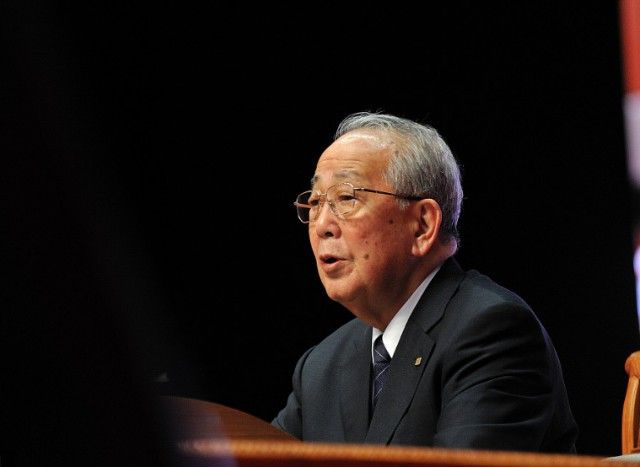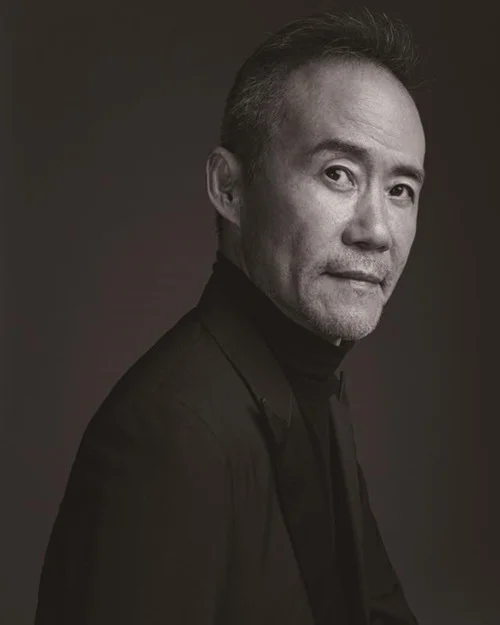
Wang Shi is one of the very few Chinese entrepreneurs who took the initiative to leave the business at the peak and found his direction again after leaving. It took him thirty-three years to build Vanke into an industry benchmark. He experienced the harshest capital game in the Bao-Wan dispute and finally chose to let go. After his sixtieth birthday, he did not stay with the label of "Godfather of Real Estate", but turned to carbon neutrality, founded a business school, and climbed to the Pearl River again...
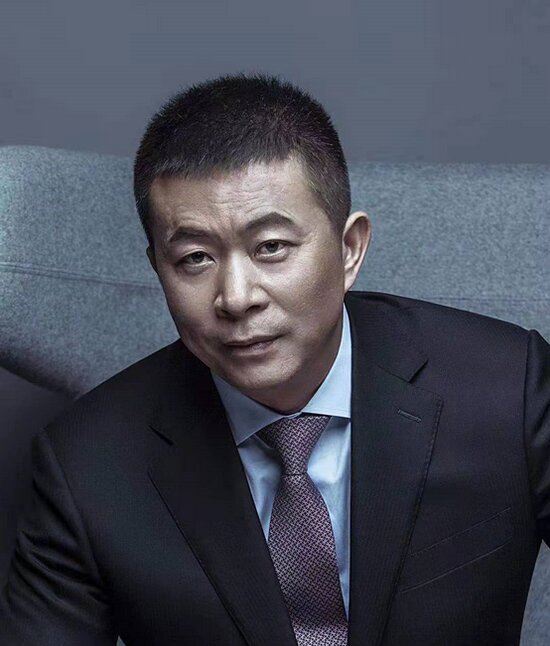
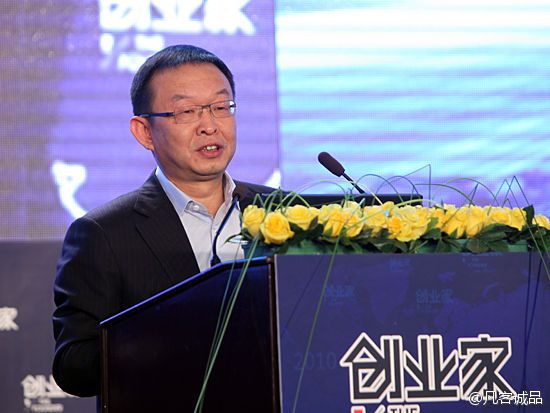
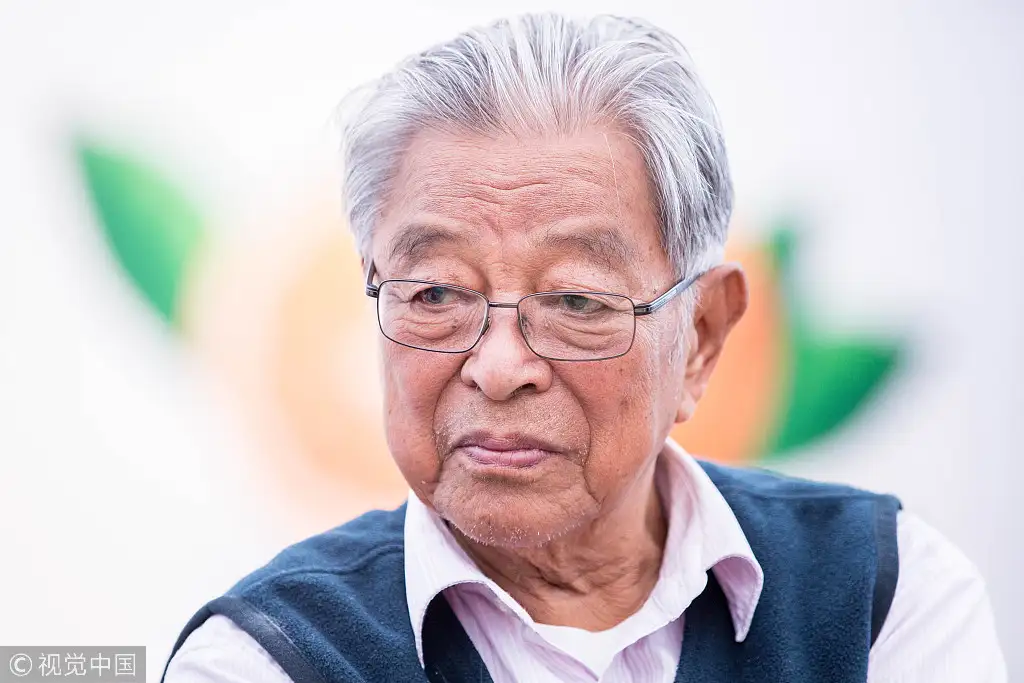
Wang Shi
ACF Cover Figure · Business Maverick | Wang Shi: Handing Over the Real Estate Era, Scaling New Peaks in His Sixties
Asia "Cover Figure" · Business Maverick
Issue No. 011 —
Wang Shi is one of the extremely rare Chinese entrepreneurs who voluntarily stepped away from the summit — and then found direction again after leaving. He spent thirty-three years turning Vanke into an industry benchmark, endured the harshest capital battle during the "Bao-Vanke War," and ultimately chose to let go. Past sixty, he did not linger in the "real estate godfather" label, but turned to carbon neutrality, founded a business school, and climbed Everest again. This is not a story of a hero's curtain call — it is a process of an entrepreneur continuously redefining his own possibilities.
I. Shenzhen Startup: From Trade Origins to Building a Real Estate Benchmark
The starting point of Wang Shi and Vanke was not real estate, but an unremarkable trading company in 1984 Shenzhen. The turning point came from his judgment on urbanization: housing reform would be the largest structural opportunity in China's economy. But what truly distinguished him was not choosing the right track — it was imposing rules on himself in an industry that relied on connections, leverage, and speed.
In 1984, Vanke was formally established, initially focused on trade, spanning electronics, retail, investment, and more. Through continuous experimentation and adjustment, Wang Shi keenly captured the enormous opportunity of China's urbanization and housing reform, decisively leading Vanke's pivot to real estate development. In an era of rapid industry expansion and incomplete regulations, many enterprises pursued high turnover, high leverage, and high profits — yet Wang Shi established clear operational bottom lines for Vanke: standardized operations, transparent governance, no bribery, no land hoarding, product and reputation priority.
He insisted on implementing modern enterprise systems, building a professional manager management framework, weakening personal authority, and strengthening organizational capability and institutional building. In an era when the industry universally relied on personal resources and relationship networks, Vanke forged a path of professionalism, standardization, and long-termism. With stable operational strategy, continuous product iteration, and strict risk control, Vanke gradually grew from a regional enterprise to a national industry leader, with scale and reputation consistently ranking at the top — becoming China's most representative benchmark enterprise in real estate. At the time, land acquisition depended on connections, development relied on high leverage, and expansion depended on land hoarding as industry norm. Vanke's eccentricity lay not in being the largest, but in being the earliest to try playing by rules.
II. Summit Meets Upheaval: Holding Firm Through the Game, Stepping Away at the Right Time
Vanke's long-term development produced a dispersed-shareholding, governance-first structure. This architecture protected management team independence and decision-making efficiency, enabling the enterprise to resist short-term capital pressure and focus on long-term value. But dispersed shareholding also exposed the company to potential risk of hostile takeover and restructuring in capital markets. Wang Shi always valued the long-term power of management, culture, and brand, yet somewhat underestimated capital markets' "equity is king" underlying logic — planting seeds for the subsequent ownership battle.
In 2015, the "Bao-Vanke War" suddenly erupted. Baoneng Group continuously increased holdings through secondary market purchases, spending hundreds of billions to become Vanke's largest shareholder, and publicly proposing to restructure the board and remove core management. This earthshaking battle between capital and real estate pushed the 64-year-old Wang Shi to his career's most severe test. Facing aggressive capital assault, he neither capitulated nor fought emotionally. Instead, he insisted on defending Vanke's long-established governance structure, corporate culture, and team stability, emphasizing enterprise value, social trust, and brand reputation.
Dispersed shareholding had given Vanke management independence, but also left it without a stable defense line in capital markets. Baoneng's continuous accumulation pushed the 64-year-old Wang Shi into a protracted war of attrition.
For those two years, his personal energy and reputation were continuously eroded in the battle, while Vanke fell into strategic passivity during a critical industry transformation window.
In 2017, after the storm subsided, the 66-year-old Wang Shi chose to step down, handing Vanke to Yu Liang's team. This was both voluntary release and a realistic choice after a long campaign.
Throughout nearly two years of confrontation, Wang Shi maintained rationality and restraint, using rules as the bottom line and enterprise interests as the core, making every effort to avoid internal damage and turbulence. Ultimately, through multi-party coordination and market forces, Shenzhen Metro became a major shareholder, the shareholding structure was restructured, and the storm was resolved peacefully.
In his view, an entrepreneur's true achievement lies not merely in building a commercial empire, but in enabling the enterprise to advance independently. Being able to found, to persist, and to let go at the appropriate moment — these are necessary choices for long-term enterprise development.
III. Life's Second Half: Crossing into Carbon Neutrality with Long-Termism
After leaving Vanke, Wang Shi did not choose retirement but swiftly launched a new chapter. In 2017, he founded Deep Stone Group (Shenshi Group), shifting his focus to carbon neutrality and green industry. This was no impulsive pivot — rather, it was a continuation and upgrade of the green building, low-carbon development, and energy-efficient community concepts he had long promoted at Vanke. During his Vanke tenure, he had vigorously advocated sustainable development and promoted low-carbon technology applications in construction. After leaving the platform, he further systematized and industrialized these concepts.
Deep Stone Group's zero-carbon industrial parks and cooperation with LONGi Green Energy remain in early-stage model validation and scenario deployment. The carbon neutrality track has clear prospects but immature profitability models. Climbing Everest again at 72 was primarily a personal expression of will, not a business narrative. He attempts to prove that an entrepreneur's environmental philosophy can transform into a sustainable business — but this proof remains incomplete.
Meanwhile, Wang Shi maintained his habit of self-challenge. As an avid mountaineer, he had previously summited Everest. At 72, he successfully climbed it again, completing personal breakthrough through action. From real estate leader to green industry entrepreneur — the identity changed, but the qualities of persistence, pragmatism, daring to break through, and pursuing long-term value remained constant.
IV. From Operator to Transmitter: Focusing on Practical Business Experience Sharing
In recent years, Wang Shi has invested more energy in experience transmission and thought exchange. In 2024, he co-founded Canal Business School with Feng Lun, gathering over fifty prominent entrepreneurs and industry leaders including Zhou Hongyi, Dong Mingzhu, and Yu Chengdong, creating a high-end business learning and thought exchange platform.
He personally participates in curriculum design and takes the lecture stage, sharing real insights from entrepreneurship, governance, crisis management, and life choices — courses that are neither empty nor motivational-speak, but entirely drawn from decades of practical experience. He focuses on how enterprises maintain bottom lines in storms, preserve conviction in complex environments, and make correct choices at critical nodes — using his own experience as reference for the new generation of entrepreneurs.
From operating one enterprise to building a business experience exchange platform, Wang Shi completed a role transition from commercial practitioner to industry experience transmitter. Its value will depend on whether the practical experience of China's first-generation entrepreneurs can truly be systematically passed to successors.
V. Maverick's Lessons: Daring to Choose, Also Daring to Bear Consequences
Wang Shi's experience provides an exceptionally valuable reference for Chinese entrepreneurs. For too long, the outside world has defined success by scale, power, and control. Wang Shi broke this single standard through his choices. He proved that an entrepreneur's maturity is reflected in respect for cycles, reverence for rules, and mastery of advance and retreat; that an excellent enterprise's vitality should never depend on a single individual.
He held bottom lines during the industry's wild growth, maintained principles amid capital waves, gracefully handed the baton at career's peak, and crossed into new territory past sixty. He received praise, faced controversy; stood center stage, and voluntarily returned to quiet. But through favorable and adverse conditions alike, he maintained independent judgment and capacity for action, unbound by external evaluation.
Wang Shi's experience suggests a possibility: an entrepreneur's value lies not in forever standing at the summit, but in having the courage to choose anew at every important stage — and bearing the consequences.