Women of Influence
Their strength, resilient and resolute.
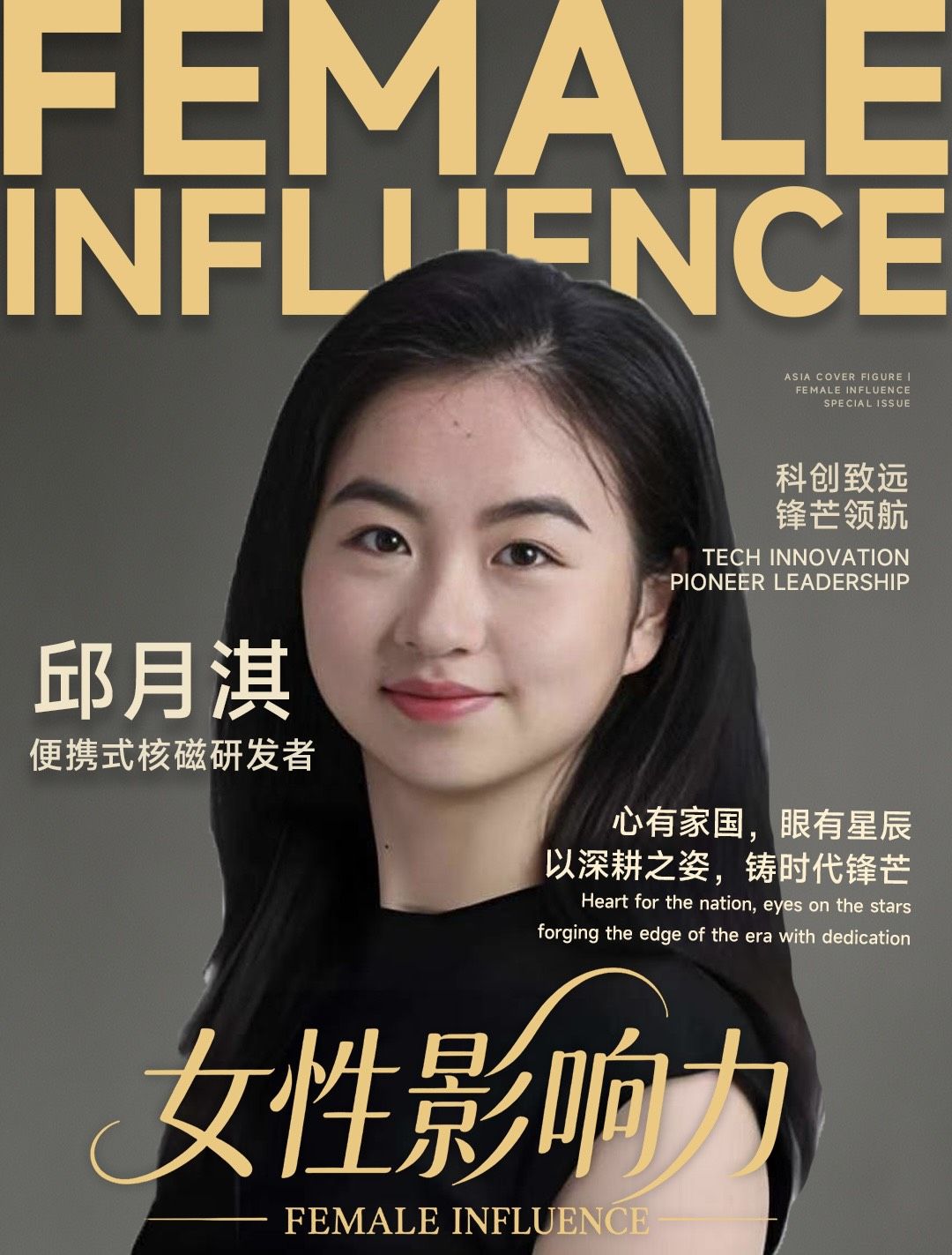
Qiu Yueqi
“The ultimate answer to retail is to make consumers happy and make them feel like every penny spent is worth it.”
On the stage where global magnetic resonance technology has been monopolized by foreign countries for a long time, a post-2000 female doctor from China single-handedly broke the deadlock and rewrote the history of the industry with original technology. She is Qiu Yueqi, a doctoral student in biomedical engineering at Shanghai Jiao Tong University. She won the world's highest award in the field of magnetic resonance at the age of 25, becoming the first Chinese researcher to win this honor. From the day of the underground laboratory...
Qiu Yueqi
ACF Cover Figure | Qiu Yueqi: Post-2000 PhD Breaks Global Technology Monopoly, Bringing Chinese MRI to Grassroots Healthcare
"Cover Figure" is an international premium business figure media platform published by Asia Cover Figure Magazine, rooted in Asia with a global reach.
Asia "Cover Figure" · Perspective
Issue No. 016 — ACF-2026
On the global stage where magnetic resonance technology has long been monopolized by foreign players, a post-2000 Chinese woman PhD has single-handedly broken the deadlock, rewriting industry history with original technology. She is Qiu Yueqi, a Biomedical Engineering PhD at Shanghai Jiao Tong University. At 25, she won the highest global award in the MRI field — the first Chinese researcher to receive this honor. From day-and-night dedication in an underground laboratory to glory on the international stage; from solving a decades-old unsolved problem to bringing portable equipment to township clinics — Qiu Yueqi, with the power of youth, shoulders the mission of China's medical technology breakthrough, showing the world the strength and responsibility of China's young researchers.
A Post-2000 PhD's Conviction: Witnessing Grassroots Suffering, Resolving to Tackle the "Hard Problem"
Born in 1999, Qiu Yueqi grew up in an era that values technology and people's livelihoods. From a young age she was deeply interested in biomedical engineering. Through outstanding academic performance, she gained admission to Shanghai Jiao Tong University, progressing all the way to doctoral studies, focusing her research on magnetic resonance imaging — a core medical technology domain.
Through years of study and field research, Qiu Yueqi clearly saw that high-end medical equipment had long been monopolized by foreign technology. In grassroots medical settings especially, multiple challenges converged: equipment shortages, expensive examinations, and inconvenient access. Many patients in remote areas had to cross mountains and travel great distances for a single accurate MRI scan. Numerous township health centers lacked professional equipment, forcing doctors to rely on experience alone — often missing critical treatment windows.
Meanwhile, the low-field portable MRI track has been globally recognized as a "hard problem nobody wants to chew." The industry consensus held that low-field equipment suffered fatal flaws — non-uniform magnetic fields, imaging distortion rates as high as 15% — making it entirely unsuitable for clinical use. Faced with authoritative conclusions and industry inertia, virtually no one was willing to invest time and effort in breaking this deadlock.
But Qiu Yueqi refused to accept it. The grassroots people's longing for accessible medical care became the driving force pushing her to challenge this seemingly impossible barrier. She was determined to prove: Chinese researchers could use original technology to rewrite the rules of the global MRI field.
The Hard Road of Original Innovation: A Thousand Experiments for Every Parameter
To achieve her goal, Qiu Yueqi threw herself entirely into research. The laboratory became her second home. From theoretical derivation to simulation experiments, from equipment debugging to data verification, every step demanded near-perfect precision.
Low-field MRI's core challenge lies in non-uniform magnetic fields causing severe image distortion. The global consensus held this as an insurmountable barrier. But Qiu Yueqi and her team chose to confront it directly. They redesigned the hardware architecture, innovated algorithm models, and attempted correction after correction — validating each parameter one by one.
The lab lights often burned until dawn. When hungry, they gnawed on bread; when exhausted, they napped beside the experiment bench. What sustained these young researchers was not honors or awards, but the hopeful eyes of grassroots patients and doctors, and a firm belief that Chinese technology could break through.
Chinese Original Breakthrough: Distortion Reduced to 0.7%, Technology Shocks the World
Persistence paid off. After countless trials and refinements, Qiu Yueqi's team successfully developed the pioneering SPEN spatiotemporal encoding technology, completely shattering the constraints of traditional approaches. When the first clear, distortion-free MRI image appeared on screen, the entire lab erupted — all exhaustion, pressure, and anguish found their finest reward in that moment.
This disruptive technology reduced low-field MRI geometric distortion from 15% to just 0.7%, improving anti-distortion capability by over 20 times. A full-brain 3D scan could be completed in just 3 minutes, with imaging resolution approaching top international equipment. This achievement not only filled a domestic technology gap, but sent shockwaves through the global MRI community, demonstrating to the world the capability of China's post-2000 researchers.
In 2025, at the international academic awards ceremony in Hawaii, Qiu Yueqi stepped onto the stage with characteristic ease, becoming the first Chinese researcher to receive the Prince-Meaney Award for Translational Science. Faced with foreign experts' questions, she did not dwell on technical glory, but calmly and firmly stated her original aspiration: to ensure Chinese grassroots citizens can access MRI technology at their doorstep.
In that moment, she represented not just herself and her team, but the countless Chinese researchers steadfast in core technology fields.
From Lab to World Stage: Bringing Technology to the People
Honors were never Qiu Yueqi's endpoint. Returning from the international stage, she immediately immersed herself in technology transfer, determined to bring cutting-edge technology truly to grassroots communities.
She led her team in continuously optimizing equipment, transforming what was originally a 10-ton-plus, multi-million-yuan large MRI device into a portable MRI the size of a carry-on suitcase, costing only 130,000 RMB. This domestic device requires no dedicated machine room — plug it into a standard 220V outlet and it's operational. Lightweight, portable, and easy to use, even non-specialists can operate it — perfectly suited to township health center scenarios.
To ensure the technology truly took root at the grassroots level, Qiu Yueqi's team compiled simple operation manuals, organized on-site training, and taught township doctors hands-on. Today, this Chinese original technology has been deployed in Yunnan, Guizhou, Gansu, and other regions, entering 23 township health centers, completing large-scale screenings for grassroots communities and successfully detecting over 3,000 cases of major diseases including cerebral infarction and brain tumors.
Among these, 87 early-stage cerebral infarction patients, through early detection and diagnosis, seized the "golden 6-hour" treatment window, avoiding severe after-effects. Children in remote areas no longer require anesthesia for MRI examinations, significantly reducing procedural risk.
A small portable device protects the health of countless families; a technology rooted in its founding purpose warms the hearts of innumerable grassroots citizens.
Follow

Scan to follow for more stories
Cover ArchiveArchive
View archive file →Every cover publication is registered and kept in the ACF Cover Archive. The code is permanent.
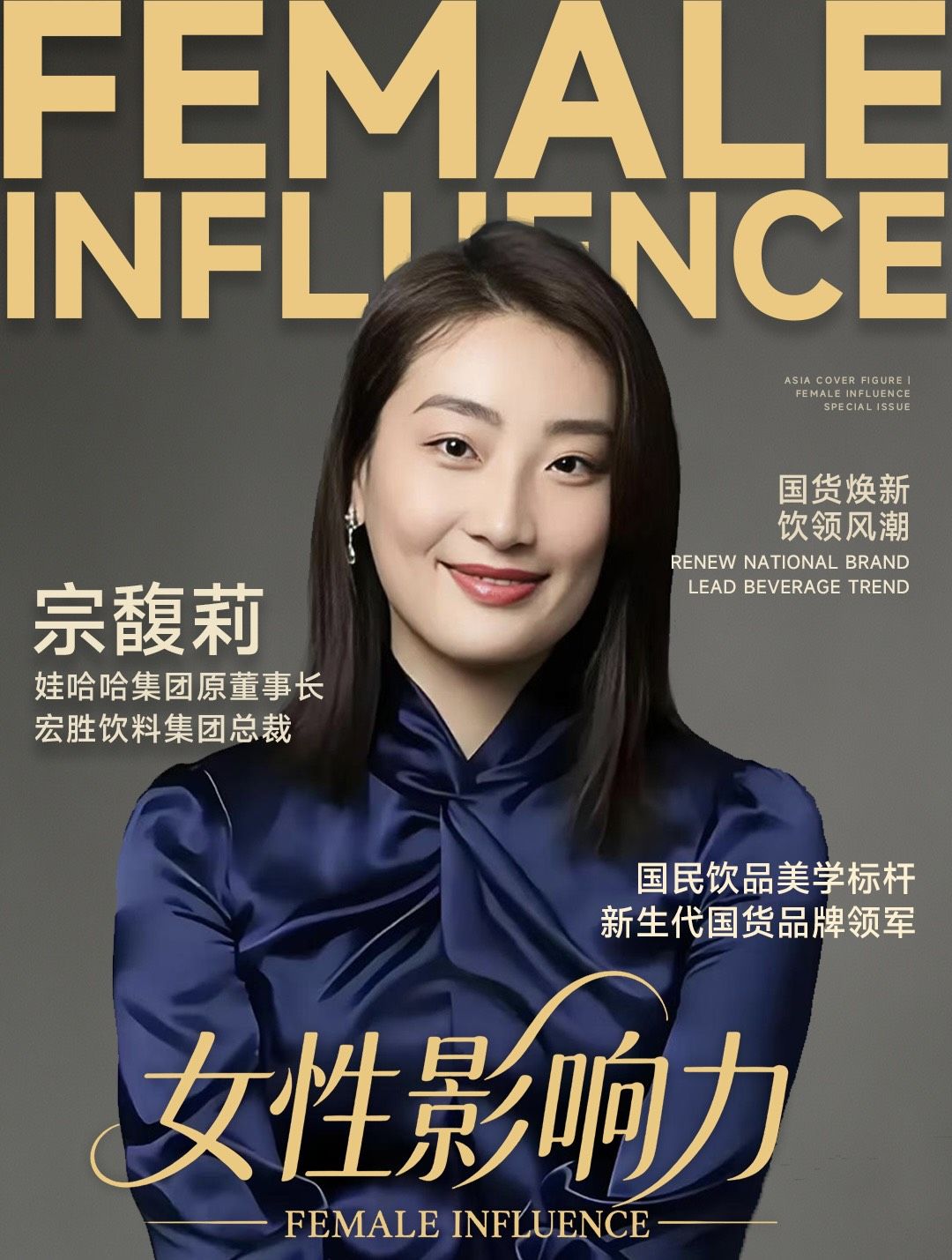
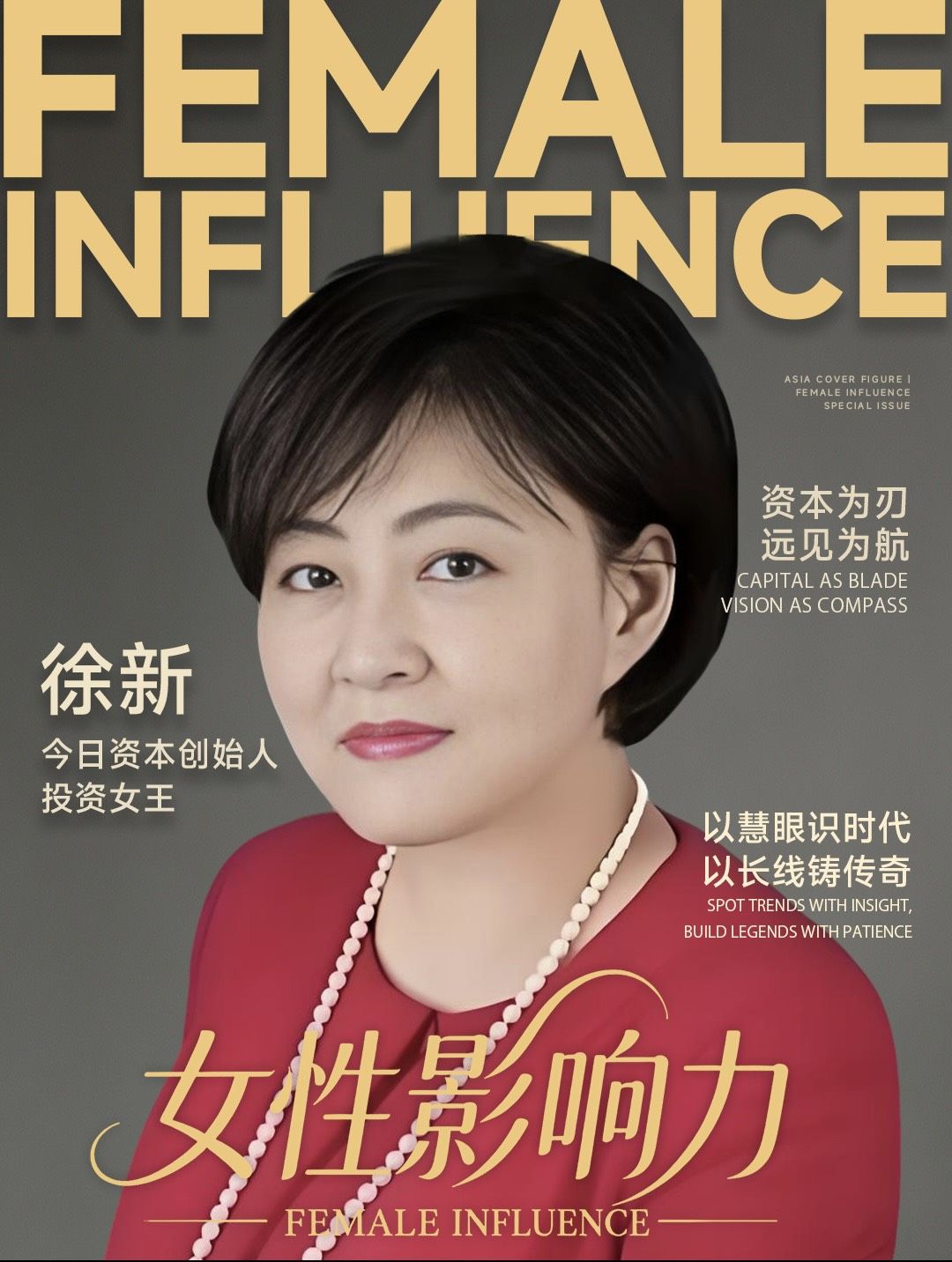
Not Everyone Makes the Cover
Asia Cover Figure · Influencing Those Who Influence