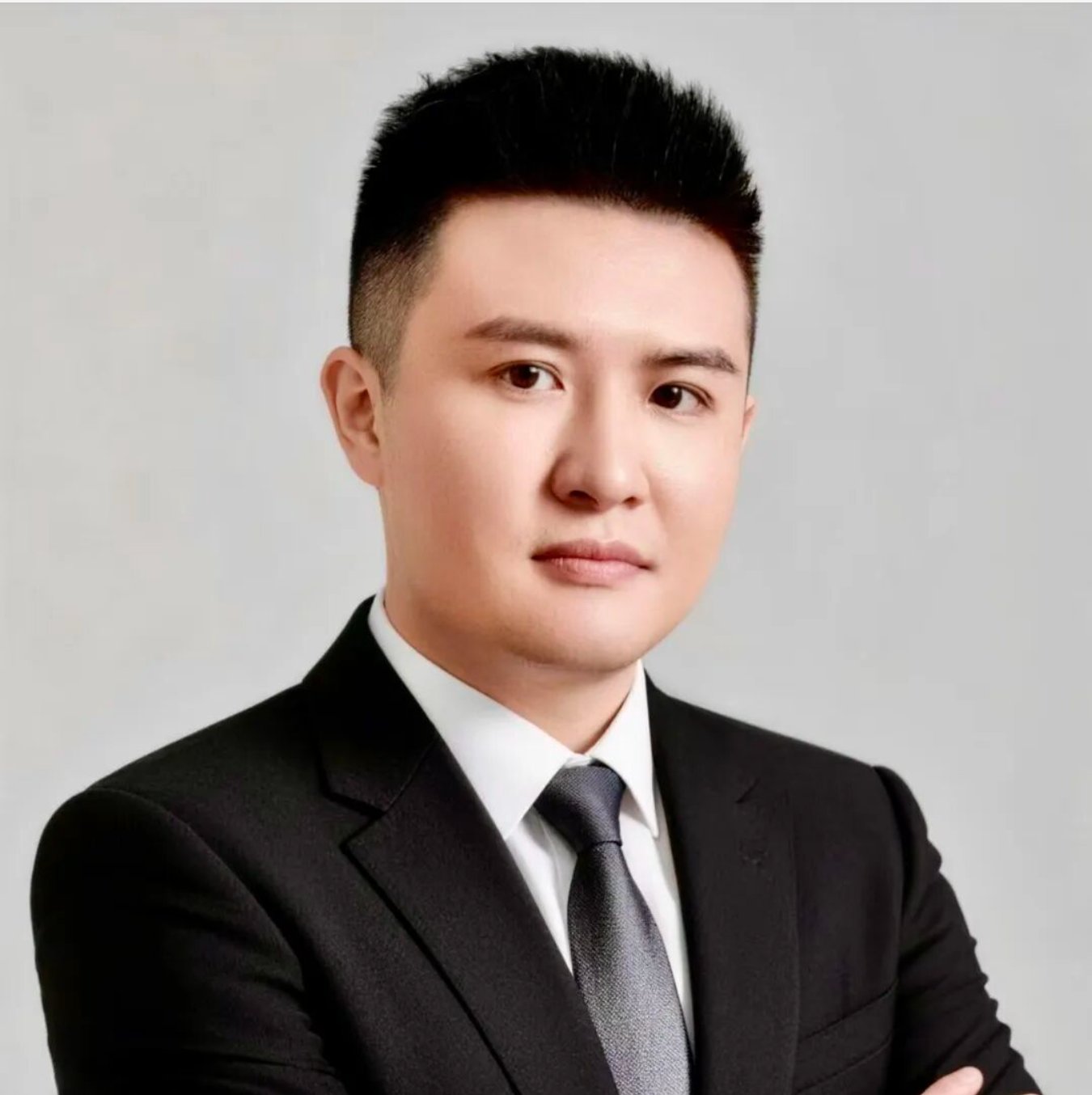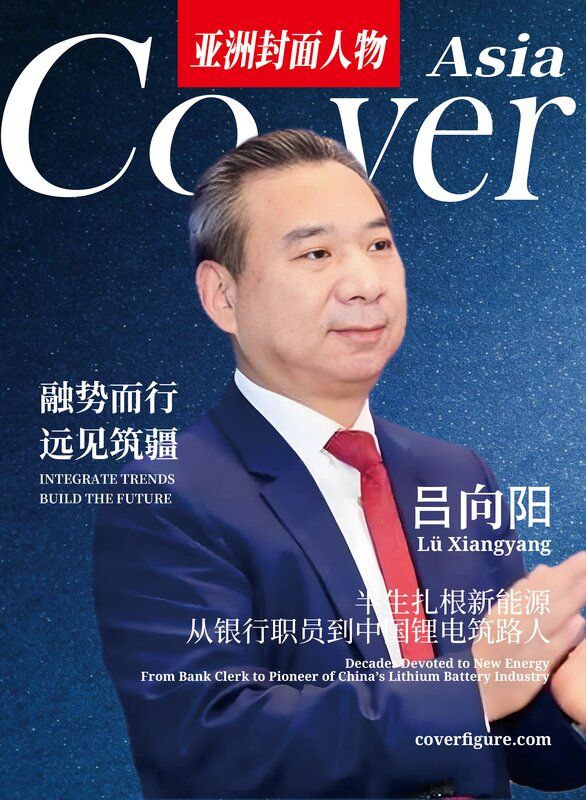
64-year-old Lu Xiangyang is the chairman of Rongjie Group and an indispensable key figure in BYD's development. The outside world often labels him as "Cousin Wang Chuanfu" and "angel investor who has won hundreds of billions", but few people understand the choice and persistence behind him: he invested 2.5 million yuan in BYD, and after he succeeded, he turned around to delve into the no-man's land of lithium mines, and twice broke the boat...
WeChat Official Account AsiaCoverFigure
ACF Cover Figure | Lu Xiangyang: Half a Lifetime Rooted in New Energy — From Bank Clerk to the Road-Builder of China's Lithium Battery Industry
"Cover Figure" is an international premium business figure media platform published by Asia Cover Figure Magazine, rooted in Asia with a global reach.
Asia "Cover Figure" · Perspective
Issue No. 020 — ACF-2026
At 64, Lu Xiangyang is chairman of Rongje Group and an indispensable figure in BYD's development. The public often labels him "Wang Chuanfu's cousin" or "the angel investor who lounged his way to billions," yet few grasp the choices and convictions behind those tags: wagering his entire 2.5 million RMB fortune on BYD, then stepping away after success to develop lithium mines in uncharted territory — two gambles, half a lifetime of hands-on industrial work. He has consistently stood at the critical nodes of China's new energy industry, anchoring solid upstream foundations for China's lithium battery sector through pragmatic perseverance.
A Humble Youth's Pragmatic Quest: Industrial Aspiration Hidden in a "Iron Rice Bowl"
Born into an ordinary rural family in Wuwei, Anhui, Lu Xiangyang learned the value of diligence and hard work from an early age. In an era that prized stability, at sixteen he secured a bank position through his own effort — the coveted "iron rice bowl." For a rural youth of that time, this was already the best outcome achievable through sheer effort.
During his eight years at the bank, Lu Xiangyang lived a stable nine-to-five existence on a fixed salary. Everyone around him assumed his life was set. Yet within him burned a quiet discontent — unwilling to spend a lifetime confined by cubicle rules, he yearned to create genuine value in the real market. Leveraging the bank's market exposure, he excelled at his day job while silently observing market dynamics and seeking opportunities. Through daily accumulation, he saved his first stake for entrepreneurship.
In 1992, at age 30, Lu Xiangyang made a bold decision: he resigned from the bank and headed south to Guangzhou. Starting with textile trade and real estate, his keen market sense and down-to-earth style allowed him to gain a foothold within just a few years, amassing 2.5 million RMB — a fortune by that era's standards — for what lay ahead.
1995: All-In — 2.5 Million to Launch BYD
In 1995, his cousin Wang Chuanfu came to Lu Xiangyang with lithium battery technical materials, declaring his intention to build batteries that were truly Chinese — breaking Japanese technological monopoly. At the time, this sounded like fantasy. Lithium batteries were a cold sector domestically, core technology was tightly locked by foreign firms, and industry insiders steered clear. Capital fled; relatives and friends pleaded with him not to take the risk.
Yet Lu Xiangyang saw in Wang Chuanfu's materials the future of the lithium industry — and the possibility of China's national industries breaking through technological barriers. He made an all-or-nothing decision on the spot: he invested his entire 2.5 million RMB into BYD, becoming the second-largest shareholder and co-founding the company with Wang Chuanfu, determined to forge a path for China's lithium battery industry together.
BYD's early days were grueling. Dozens of people crammed into a small workshop, working day and night on R&D and production trials. Beyond tight funding, technical barriers loomed at every turn. Products weren't accepted by the market; partnership rejections were routine. Lu Xiangyang was never the type to invest and step back. He dove in fully, working alongside the team on production, market outreach, and supply chain negotiations. When problems arose, he shouldered them together with everyone. For six full years, he devoted virtually all his time and energy to BYD's growth, driven by an abiding belief: Chinese people would ultimately create their own core technology.
At the Peak, a Decisive Turn: Leaving BYD to Pioneer the Lithium Mine Frontier
Through relentless persistence, BYD gradually established itself, eventually rising to become a global new energy vehicle leader. Lu Xiangyang, as an early investor and core partner, could have comfortably remained as second shareholder, reaping the industry's dividends.
Instead, he made a decision that surprised everyone: he stepped away from BYD's core management, focused on running Rongje Group, and plunged into the lithium mining sector — a domain no one dared to enter at the time. When outsiders asked why he would forsake comfortable dividends to suffer through lithium mining, Lu Xiangyang knew better than anyone: he had to completely separate the identities of "BYD investor" and "Lu Xiangyang." More importantly, he understood lithium's core significance for China's new energy industry.
In his view, without lithium, there are no power batteries; without power batteries, new energy vehicles are just talk. At the time, domestic high-quality lithium resources were minimally developed, with core resources largely controlled by foreign companies. Prices were inflated, and the industry was perpetually vulnerable. The slightest misstep could let others seize the lifeline of China's entire new energy sector. Lu Xiangyang didn't want to be merely an investor watching BYD grow — he wanted to personally plant upstream roots for China's new energy industry, ensuring the nation's development would never be "choked" by foreign resources.
Ten Years on the Plateau: Chewing Through Hard Problems to Fortify the Upstream Lithium Battery Chain
Armed with this conviction, Lu Xiangyang led the Rongje Group team into the mountains of Ganzi Prefecture, Sichuan, securing development rights to the Jiajika lithium spodumene mine — one of China's rare high-quality large-scale lithium mines, dubbed "Asia's No.1, the world's No.2" super-large solid lithium spodumene deposit. But the real challenges had just begun.
Ganzi's highland region suffers year-round oxygen deprivation, frigid temperatures, and inconvenient transportation. Each trip to the mine required days of recovery. Lithium mining brought one obstacle after another — extraction technology, environmental standards, regulatory compliance — and the industry endured a devastating lithium price crash. Countless voices urged him to quit. Lu Xiangyang never wavered.
From exploration to extraction to fine refining, he personally oversaw every critical stage. He made countless round trips between the plateau mine and group headquarters, leading his team through iterative trial and error. Over ten full years, he built a complete industrial chain from lithium mining to fine refining in these mountains. When the industry needed it most, he had solidly filled the gap in China's upstream new energy supply chain — ensuring the nation's new energy development would no longer be held back by foreign resource control.
Behind a Hundred-Billion Fortune: Mutual Achievement and the Aspiration of Serving the Nation Through Industry
Over the years, some have calculated: the 2.5 million RMB Lu Xiangyang invested in BYD has multiplied tens of thousands of times. He and his wife Zhang Changhong have topped the Guangzhou richest list for consecutive years with a fortune exceeding 100 billion RMB. To outsiders, he appears to be the lucky one who struck gold with a single bet. Yet only Lu Xiangyang himself knows that his relationship with BYD was never one of dependence — it was mutual achievement and support.
He gave BYD the courage of its beginning with his entire fortune, giving the company a chance to break through in lithium batteries. BYD's growth, in turn, gave him a clearer vision of China's new energy future, reinforcing his determination to develop lithium mining and deepening Rongje Group's industrial foundation. Even when Rongje faced bottlenecks, BYD extended a helping hand — the two became the most solid partners on the new energy path.
Even now at 64, with a hundred-billion fortune, Lu Xiangyang maintains his hands-on habits, personally traveling to the Ganzi mine frontlines year after year. In his eyes, the massive wealth the world sees is merely the product of the courage that once made him resign his iron rice bowl, the accumulation of ten years in remote mountains, the result of step-by-step hard work — never mere luck.
Half a Lifetime of Industry, Aspiration Fulfilled: Finding Peace in New Energy
From rural boy in Wuwei, Anhui, to bank clerk with an iron rice bowl, to southern pioneer, early BYD investor, and Rongje Group helmsman — Lu Xiangyang's life has always accompanied real industry. Every critical choice he made carried the courage of burning bridges, and the devotion to China's national industries.
He has never regretted that all-in 2.5 million RMB bet on BYD, nor regretted turning away after success to walk into the mountains and develop lithium mines. A life tempered by trials and storms — from 2.5 million in entrepreneurial confidence to hundred-billion industrial achievement, from silent cultivation in lithium to building a complete lithium mine industrial chain — Lu Xiangyang has always held fast to his industrial aspiration, never wavering.
His life's journey embodies the essence of industry: choose a path, and devote half a lifetime to it. To have genuinely contributed to China's new energy industry, to have ensured that China's lithium batteries and new energy development took root on its own terms — for him, that is peace beyond regret.