Visionary Leaders
They measure the business empire from the commanding heights of the era.
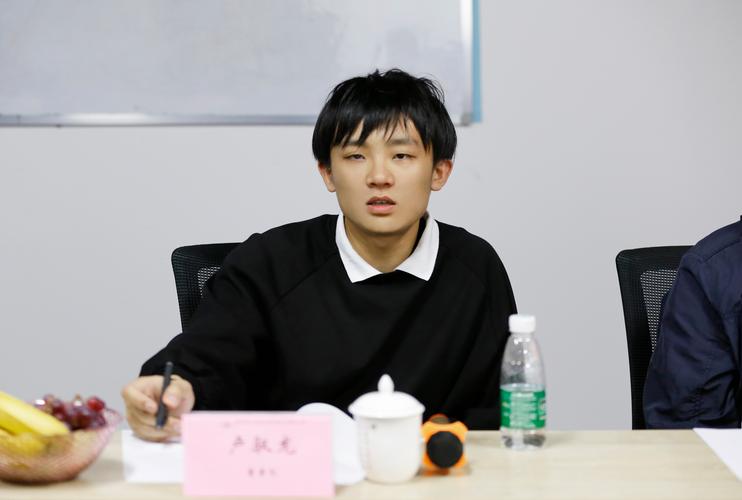
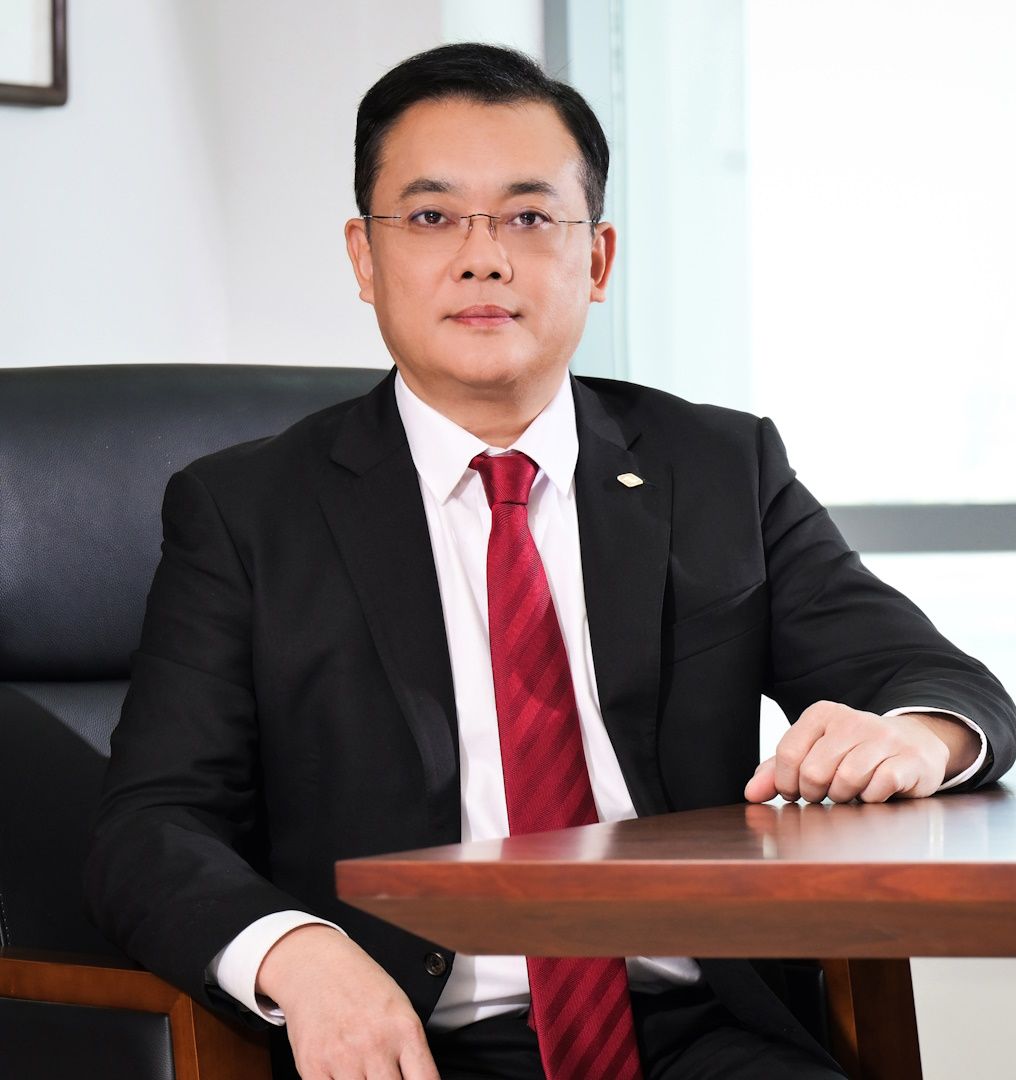
Lu Yulong
“Young scientists should dare to think and do, as the boundaries of science are meant to be broken through.”
When "reducing costs and increasing efficiency" has become the only consensus in the business world, when "light assets" and "fast iteration" are regarded as the bible of innovation, a figure is swimming upstream, on an unhardened dirt floor in Longgang, Shenzhen, making the most "heavy" investment of this era - with a stubbornness that is close to that of a manual workshop, challenging the most complex machinery on the throne of industry: the liquid rocket engine.
Lu Yulong
ACF Cover Figure | Lu Yulong: Building China's "Wild" Survival Zone for Hardcore Innovation Beyond Institutional Worship
ACF · Perspective
Issue No. 047 — ACF-GJ-2026
Summary: In a dilapidated courtyard in Longgang, Shenzhen — where even the ground hasn't been paved — a post-95 young man who was once rejected by Tsinghua and Peking University builds rockets with the budget for building a stove. He has proven that true passion can transcend poverty, prejudice, and physical pain.
When "cost reduction and efficiency gain" becomes the sole consensus of the business world, when "asset-light" and "fast iteration" are enshrined as the gospel of innovation, one figure rows against the current. On unpaved mud in Longgang, Shenzhen, he makes this era's "heaviest" investment — with near-artisanal stubbornness, challenging the most complex machinery on industry's throne: the liquid rocket engine.
Here there are no trends, only blowers; no valuation games, only metal, flame, and the unforgiving reality of zero margin for error. Lu Yulong, this "folk genius" rejected by Tsinghua and PKU, and his "Courtyard Aerospace," constitute a glaring "anti-consensus" case study.
How stark is the contrast?
In Shenzhen, building drones can attract billions in funding. Building rockets? You can't even afford social insurance.
I. Scars: The Only Credential for a Grassroots Genius
The narrative of genius often has two sides. Side A: the "Lightning Boy" under the spotlight. Side B: the body stitched with 400 sutures on a surgery table. Lu Yulong's Side B is unbearably heavy.
At six, severe acid burns. At twelve, a self-developed hazardous chemical explosion sent him to the gates of death. Two brushes with mortality — most would have retreated. But true obsession transforms the body into a "letter of introduction" into the hardcore world. Scars are not medals — they are the entry pass he wrote for himself, unrecognized by the mainstream academic system. Behind this lies an absolute conviction: on the road to the stars, theoretical knowledge is freely available, but the courage to face explosions and danger cannot be taught in a classroom.
II. Finding Another Path Beyond the Wall
At sixteen, he held admission recommendations for both Tsinghua University and Peking University, standing at the gateway that Chinese students dream of. Then he turned and walked away.
"True knowledge is not within walls. The core is the ability to execute hands-on."
This was not adolescent rebellion, but a strategic choice based on cold calculation. The reality he perceived: in "temple industries" like aerospace, the walls offer safety, but processes also mean slowness and compromise. What he needed was not the shelter of a diploma, but a wilderness where he could "fail freely — all the way to explosion." Rejecting Tsinghua and PKU was, in essence, rejecting being "planned" into a known growth track, choosing instead a path of "self-legislated" wild growth.
A Tsinghua or PKU admission letter cannot compare to the ignition sound of an engine test.
III. Funding Rockets with Stoves
He founded an aerospace company at seventeen, but ideals quickly succumbed to gravity. Capital shunned this "unorthodox path." Cash flow was burning.
In desperation, he devised a "reverse-feed survival model": in civilian domains close to money (plasma electric flame stoves), using hardcore technology to generate cash flow; in aerospace, the domain furthest from money, burning all profits. The former is the latter's "blood bank"; the latter is the former's "totem of meaning." This forms a dangerous business paradox — yet it is the only viable survival strategy for countless grassroots hard-innovators in China, in an era lacking patient capital.
Using stove-making money to build rockets — that is his financial model and his survival logic.
IV. When "Understanding" Matters More Than "Believing"
While all investors scrutinized his balance sheets and teams, one industrialist saw something else. He visited that dilapidated courtyard and saw not crudeness, but an "engineering intelligence" of systematic innovation under extreme constraints. He understood Lu Yulong's cost insight in replacing aerospace-grade custom components with commercial-standard parts; he grasped the disruptive potential of "inverted ignition" technology for infrastructure costs.
That investment was not a bet on a sector, but a bet on a fundamental capability — "finding oasis in resource deserts." It proved that in highly uncertain innovation, the depth of "being understood" matters far more than the frequency of "being believed in."
What capital couldn't understand, an industrialist comprehended.
V. From "Handmade" to "Courtyard Standards"
Measuring Lu Yulong's success by conventional business metrics no longer works. His achievements follow a different standard:
1. Cost restructuring: He invented the liquid engine inverted ignition technique, reducing billion-yuan infrastructure costs to the millions — providing a Chinese civilian model for "low-cost aerospace."
2. Pathway validation: From electric flame stoves to rocket engines, he proved that the "commercial-funds-R&D, civilian-supports-advanced" technology transfer pathway works in specific domains.
3. Ecological niche positioning: His multiple mass-produced engines cover thrust from 30 kg to 20 tons, serving universities and research institutes over the long term. This means that between the national team and commercial giants, a flexible, agile "innovation tributary" niche is being carved out by his own hands.
This courtyard constrains his living radius, but not his thrust.
Lu Yulong's story is far more than an inspirational tale of genius. Like a probe, it pierces into a deeper structural issue in China's innovation ecosystem: how do we evaluate and sustain grassroots hard-innovation that has "no cost-effectiveness" and "cannot be planned"?
When the engine in the "courtyard" ignites successfully, it illuminates not just a space dream, but those corners overlooked by mainstream narratives. There, a rough, tenacious wisdom — entirely rooted in passion and engineering intuition — is filling in a crucial piece of this nation's innovation map, in its own way.
The courtyard is the same courtyard. But what's in the sky has changed.
Where will the next Lu Yulong emerge? And how will they be "seen"?
Follow


Scan to follow for more stories
Cover ArchiveArchive
View archive file →Every cover publication is registered and kept in the ACF Cover Archive. The code is permanent.
Not Everyone Makes the Cover
Asia Cover Figure · Influencing Those Who Influence