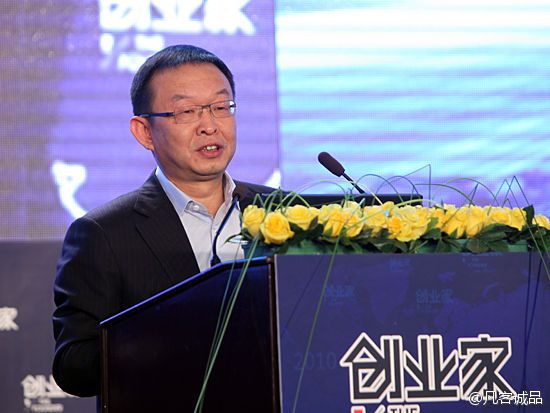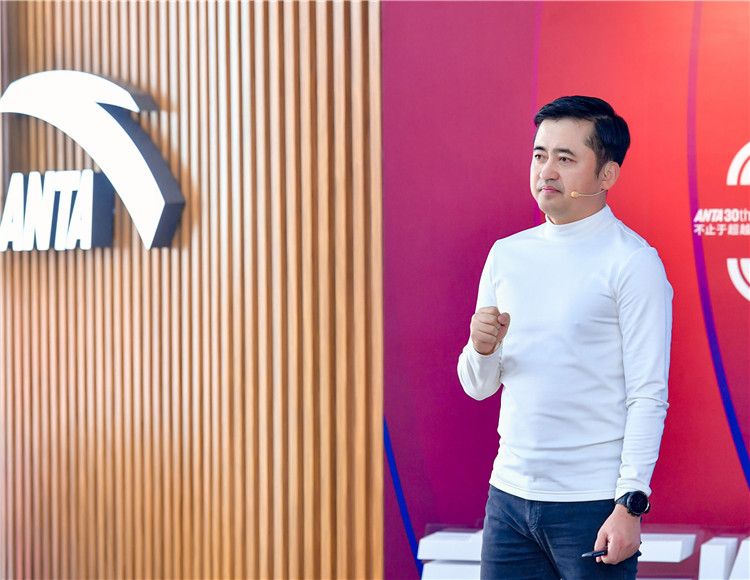
In 2022, Anta Sports' overall market value will surpass Adidas and officially become the world's second largest sportswear group. In the same year, the group handed over a revenue report card of 53.65 billion yuan, and its overall performance exceeded Adidas's performance in the Chinese market.
Ding Shizhong
Asia Cover Man·Rebel in the Business World|Ding Shizhong: At the age of 17, he sold shoes in Beipiao. After closing 600 stores, he made Anta the second largest company in the world.
Asia Cover Figure·Business Rebel
In 2022, Anta Sports' overall market value will surpass Adidas and officially become the world's second largest sportswear group. In the same year, the group handed over a revenue report card of 53.65 billion yuan, and its overall performance exceeded Adidas's performance in the Chinese market.
Looking back, the starting point of this achievement is very simple. 37 years ago, Ding Shizhong, who was only 17 years old, was just a teenager from Jinjiang, Fujian Province, carrying goods on his back and selling shoes in the streets of Beijing. From a humble beginning of 600 pairs of shoes, it took him thirty-five years to build the world's second-largest sportswear company. The experience of selling shoes in Beipiao as a young boy has also become a core imprint throughout his entrepreneurial career.
1. Beidiao: The starting point of 600 pairs of shoes
Ding Shizhong was born in Jinjiang, Fujian Province in 1970. The local shoe industry has a strong atmosphere. His father ran a small shoe processing workshop all year round, and the family relied on OEM production to make a living. In the 1980s, most shoe factories in Jinjiang relied on overseas orders for OEM production, with slim profit margins and no independent say. In 1987, 17-year-old Ding Shizhong did not want to be stuck in the OEM process, so he came up with the idea of building a local own brand.
With a capital of 10,000 yuan put together by his family and 600 pairs of ready-made shoes, Ding Shizhong boarded the train to Beijing alone to start his sales journey in Beidiao. When he first arrived in Beijing, he chose the lowest-priced hotel to stay. Carrying a heavy shoebox every day, he shuttled between major shopping malls and wholesale markets, negotiating cooperation one by one. The unfamiliar environment and conservative merchants made him repeatedly run into obstacles. Many merchants even directly refused him to enter the store for communication.
Being rejected again and again did not make him choose to turn back. For four years, Ding Shizhong took root in the Beijing market, gradually figured out the logic of offline sales, accumulated customer sources and industry experience, and finally established a foothold in Beijing. After four years of hard work, he made a total profit of 200,000 yuan. In 1991, with the funds and experience gained in Beijing, Ding Shizhong returned to Jinjiang and officially founded ANTA with his father. Adhering to the concept of "starting a business with peace of mind and being a down-to-earth person", Ding Shizhong officially embarked on the road to brand development.
600 pairs of shoes, 10,000 yuan, a 17-year-old boy, a strange city. The starting point of the North Drift later became the second destination in the world.
2. OEM and brand: Anta’s first turn
In the 1990s, Jinjiang's footwear industry formed a large-scale industrial cluster, with numerous large and small factories in the region. The mainstream model of the industry is still OEM. Each factory accepts external orders, produces finished products as required, and earns basic processing fees based on volume. No one is willing to invest in building their own brand. In the view of most practitioners, the OEM model is stable and has lower risks.
Ding Shizhong insisted on taking a differentiated route. From the beginning of Anta's establishment, he focused his development on the construction of his own brand. In 1999, Anta's annual revenue reached 50 million yuan. After comprehensive consideration, Ding Shizhong decided to spend one-third of the annual profit and spend 800,000 yuan to invite table tennis player Kong Linghui to be the brand spokesperson. In the industry environment at the time, this investment seemed extremely radical, and many colleagues around him thought his decision was irrational.
In 2000, Kong Linghui won the championship at the Sydney Olympics. His outstanding performance on the field, coupled with the brand slogan broadcast on CCTV, quickly spread Anta's popularity. Market feedback is intuitively reflected in the operating data. This year, Anta's annual revenue exceeded 200 million yuan, completely standing out from the other OEM shoe factories in Jinjiang, and completing the initial leap from a local small factory to a national brand.
Relying on the market advantages accumulated through brand operations, Anta has steadily expanded its scale, improved its corporate structure, and its development momentum continues to improve. In 2007, ANTA Sports was successfully listed on the Hong Kong Stock Exchange, and the company's development entered a new stage of standardization and capitalization.
While others do OEM work, he does branding. When others save money, he throws it away. A huge gamble of 800,000 yuan resulted in Anta going from Jinjiang to the whole country.
3. The darkest moment: Inventory tsunami and 600 store closures
With the 2008 Beijing Olympics held, the country's national enthusiasm for sports increased, and the sportswear industry ushered in a growth boom. Taking advantage of market trends, major sports brands including Anta have collectively accelerated the expansion of offline stores. Data show that in 2007, the number of Anta stores nationwide was more than 4,000. By 2011, the number of stores soared to more than 9,000, and the channel scale doubled.
After the Olympic dividends faded, hidden problems in the industry broke out. In 2012, the entire sportswear industry encountered a serious inventory crisis. A large number of unsaleable goods were backlogged in warehouses across the country. The industry called it an "inventory tsunami." At that time, mainstream domestic brands such as Li Ning, Xtep, and 361° were all suffering from inventory turnover difficulties.
In response to the crisis, the entire industry launched a wave of store closures. Anta took the initiative to close nearly 600 stores that year. The pressure on the operating side is directly reflected in the financial data. In 2011, Anta's net profit was 1.73 billion yuan. In 2012, the net profit fell to 1.36 billion yuan. This was the first time that the company's revenue and profits dropped significantly in many years of development.
Negative market sentiment has spread, and the outside world has been pessimistic about the entire domestic sportswear track. Many comments have concluded that Anta will not be able to get out of the predicament. Faced with the industry's collective trough, Ding Shizhong's attitude was clear: "We can't sit here and wait for death." At a stage when the industry was generally confused, he did not choose to wait and see, but faced the crisis head-on and began to sort out the core problems of the enterprise.
Everyone is there for the Olympic carnival. After the tide goes out, we find out who is swimming naked. 600 stores were closed, but he didn't run away. He chose to stay and clean up the mess.
4. PlayerUnknown’s Battlegrounds: The life-and-death change from wholesale to retail
At the end of 2012, in order to find out the root cause of the crisis, Ding Shizhong personally led a team to visit more than 500 prefecture-level cities in the country. He went deep into offline physical stores and warehouses, communicated face-to-face with dealers in various places, and learned about the real situation of terminal sales, goods circulation, cooperation models, etc.
After extensive field research, the team found the crux of the problem. At that time, Anta had long adopted the traditional wholesale model. After the brand sold the goods in batches to dealers, it was no longer deeply involved in terminal operations. Dealers set their own prices and promote their own products. After the goods are overstocked, they can only sell them at low prices. In a vicious circle, the price system of the entire industry is chaotic and the market order collapses.
In response to the existing shortcomings, Ding Shizhong finalized the core reform direction: the company's operating model will be fully shifted from traditional wholesale to terminal retail, and the brand's direct control over offline channels will be strengthened. During the reform process, Anta has gradually cut off redundant intermediate links, and at the same time provided cooperative dealers with all-round support such as store management, digital system construction, and daily operation guidance to help terminals improve their operating capabilities.
After the pain of reform, the results gradually emerged. Anta has become the first company in the industry to get out of the inventory crisis, and its operating data continues to recover. In 2014, Anta's annual revenue reached 8.92 billion yuan, a year-on-year increase of 22.5%; net profit was 1.7 billion yuan, a year-on-year increase of 29.3%. The company returned to the track of steady growth, and this channel change, which was related to the company's life and death, was successfully implemented.
It’s not that the dealer is bad, it’s that the rules of the game are wrong. He comes to change the rules. When it was most difficult, he chose to stand in the store instead of the office.
5. Climb to the top: from first in China to second in the world
After completing the channel reform and consolidating the basic market, Ding Shizhong began to lay out a multi-brand development strategy and explore market segment opportunities. In 2009, Anta acquired the Chinese business of the FILA brand for HK$650 million. At the beginning of the acquisition, FILA's development in the domestic market was weak and it was in a state of loss all year round. The number of stores nationwide was less than 50. Ding Shizhong judged that the size of the domestic middle class group will continue to expand, and the high-end sports fashion market has huge potential. This is also the core logic of his taking over FILA.
Relying on Anta's channel, operation and supply chain capabilities to re-polish the operating system, in ten years, FILA China achieved leapfrog development, with annual revenue exceeding 20 billion yuan, becoming an important growth pole of Anta Group. On this basis, Anta continues to promote overseas brand acquisitions, acquiring AmerSports, the parent company of well-known outdoor brands such as Arc'teryx and Salomon, and gradually building a complete multi-brand matrix covering mass sports, high-end fashion, and professional outdoor.
In 2022, Anta ushered in a development milestone. The group's market value officially surpassed Adidas and secured its position as the world's second largest sportswear group. In the same year, the group's total revenue was 53.65 billion yuan, and its performance scale led Adidas in the Chinese market. The subsequent growth momentum will continue. Data in 2024 shows that the annual revenue of Anta's main brand will exceed 40 billion yuan, FILA's revenue will exceed 30 billion yuan, and the total revenue of other newly acquired brands will also exceed 10 billion yuan. The multi-brand collaborative development pattern is fully formed.
By 2026, Ding Shizhong will be 56 years old, and the Anta brand will celebrate its 35th anniversary. At 17 years old and with 600 pairs of shoes, he was running alone through the streets of Beijing carrying a shoe box; thirty-five years later, the company he heads ranks second in the global industry. Along the way, we have experienced the passivity of the OEM era, the testing of brand transformation, the inventory crisis after the Olympic boom, the choice of closing more than 600 stores, the challenge of channel reform, and the strategic layout of acquiring overseas brands. He is not a talented entrepreneur, but a doer who came from a shoe workshop in Jinjiang. From a humble starting point of 600 pairs of shoes, it eventually reached the second place in the world step by step.
Data source
Regarding Ding Shizhong, who was born in 1970, drifted to Beijing at the age of 17, 600 pairs of shoes, and a capital of 10,000 yuan: public reports.
About the founding of ANTA in 1991 and "starting a business with peace of mind and being a down-to-earth person": the official development history of the company.
Regarding the 800,000 yuan signing with Kong Linghui in 1999 and the revenue exceeding 200 million after winning the Olympic Games in 2000: public reports.
Regarding listing on the Hong Kong Stock Exchange in 2007: public information.
Regarding the industry inventory crisis from 2008 to 2012, Anta closed nearly 600 stores and revenue declined for the first time: public financial report.
Regarding the drop in net profit from 1.73 billion to 1.36 billion in 2012: Anta's 2012 annual report.
About Ding Shizhong leading a team to visit 500 prefecture-level cities and channel retail reform: public reports.
Regarding revenue of 8.92 billion and net profit of 1.7 billion in 2014: Anta's 2014 annual report.
Regarding the HK$650 million acquisition of FILA’s Chinese business in 2009: public reports.
Regarding FILA China’s annual revenue exceeding 20 billion: Anta financial report.
Regarding Anta’s market value exceeding Adidas in 2022, with revenue of 53.65 billion: Securities Times, public reports.
Regarding Anta’s main brand revenue exceeding 40 billion and FILA exceeding 30 billion in 2024: Anta’s financial report.