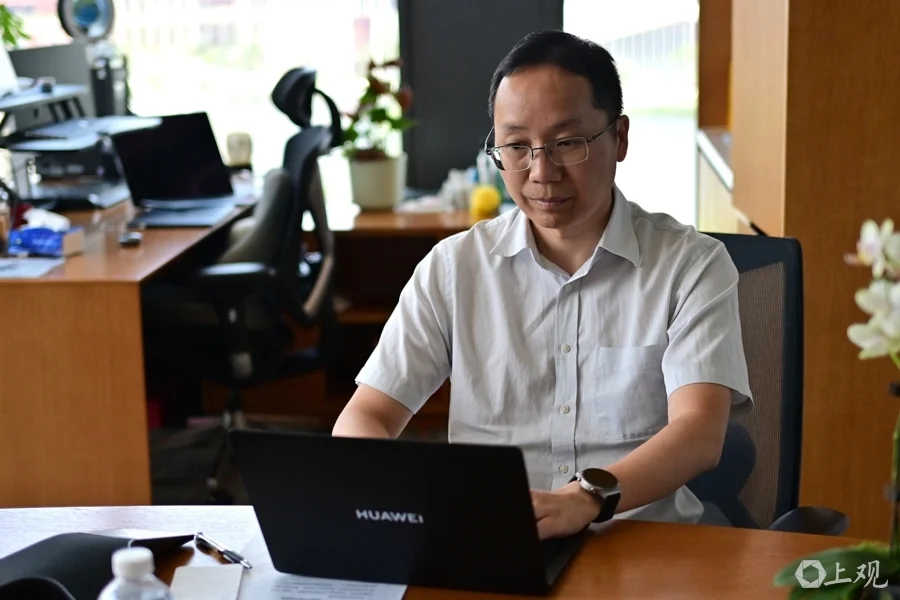
In 2003, a "shock wave" virus caused his computer to restart repeatedly and paralyzed the system. At that time, there was no independent and controllable operating system in China, and all equipment relied on foreign closed-source systems. Twenty years later, he became the chairman of the technical steering committee of the OpenHarmony project group, with more than 110 million lines of operating system code and more than 395 ecological partners. Chen Haibo: From being defeated by the virus to building a wall for the country. In the summer of 2003, Fudan University student Chen Haibo’s computer suddenly began to restart intermittently. A countdown popped up on the screen, and he was unable to do anything, almost in a state of collapse. Later he learned that it was the "Shock Wave" virus. At that time, a "shock wave" swept across the country's Internet, paralyzing countless equipment systems. At that time, there was no independent and controllable underlying operating system in China, and all equipment relied on foreign closed-source systems. This deep sense of powerlessness changed the trajectory of his life. 1. Seed: The night defeated by the virus. The shock wave virus that broke out in 2003 intruded into civilian computers on a large scale. Chen Haibo’s personal equipment continued to malfunction due to the virus, and the system was not under human control. Due to the current status of the industry, there is a lack of self-developed underlying operating systems in China, and terminal operations all rely on overseas closed-source products. There is no localized system solution as an alternative when a failure occurs. The powerless experience brought about by his personal encounter made Chen Haibo determine his long-term research direction in the field of operating systems. Since then, he has completed his bachelor's, master's and doctoral studies in systematization at Fudan University, steadily consolidating his theoretical foundation in underlying systems. In 2011, his doctoral thesis was awarded the National Excellent Doctoral Thesis
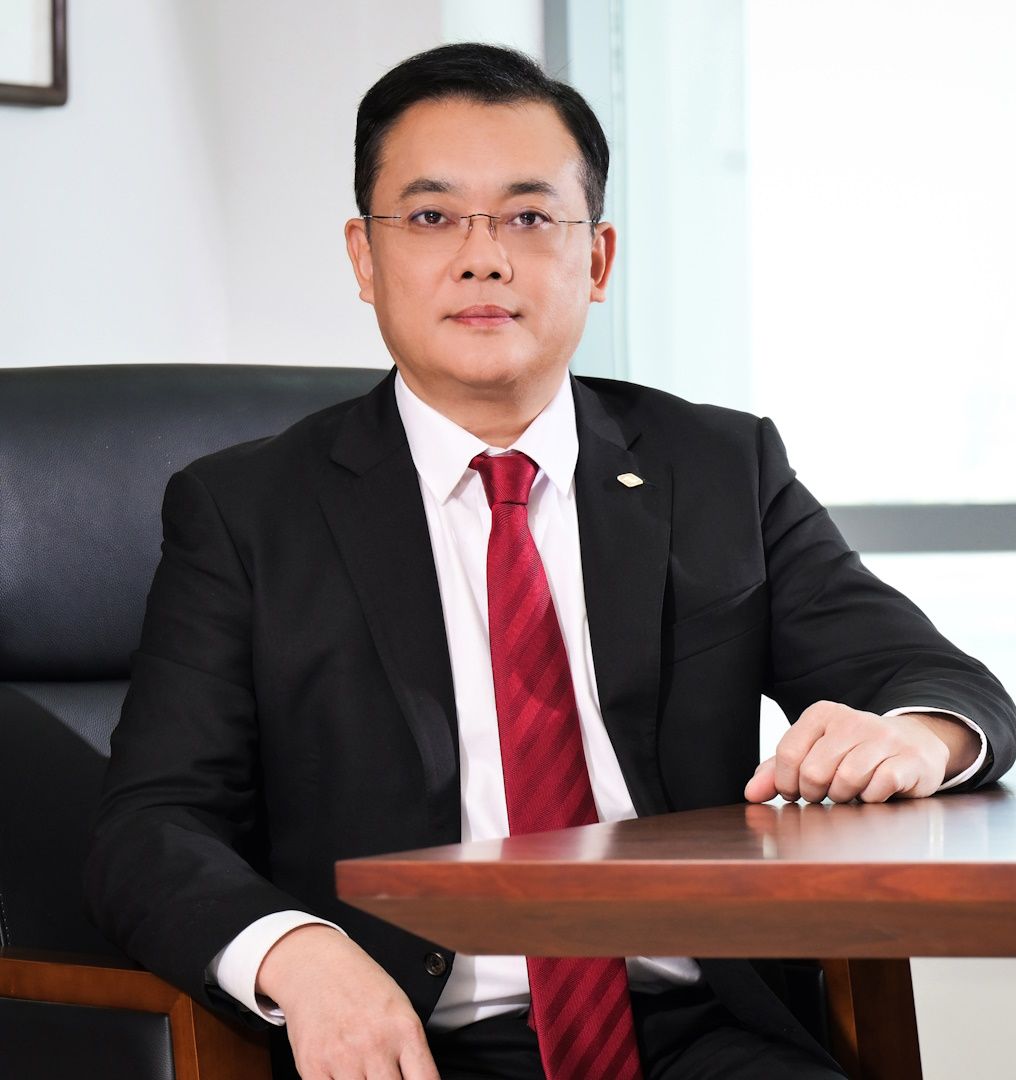
Chen Haibo
Asia Cover Character|Chen Haibo: A "shock wave" virus changed his life and also changed the domestic operating system
Asia's "Cover Man" Magazine·Pattern
Total Issue 063-ACF-2026
【Abstract】
In 2003, a "shock wave" virus caused his computer to restart repeatedly and paralyzed the system. At that time, there was no independent and controllable operating system in China, and all equipment relied on foreign closed-source systems. Twenty years later, he became the chairman of the technical steering committee of the OpenHarmony project group, with more than 110 million lines of operating system code and more than 395 ecological partners. Chen Haibo: From being defeated by the virus to building a wall for the country.
In the summer of 2003, Fudan University student Chen Haibo’s computer suddenly began to restart intermittently.
A countdown popped up on the screen, and he was unable to do anything, almost in a state of collapse.
Later he learned that it was the "Shock Wave" virus. At that time, a "shock wave" swept across the country's Internet, paralyzing countless equipment systems. At that time, there was no independent and controllable underlying operating system in China, and all equipment relied on foreign closed-source systems.
This deep sense of powerlessness changed the trajectory of his life.
1. Seed: The night defeated by the virus
The shock wave virus that broke out in 2003 intruded into civilian computers on a large scale. Chen Haibo's personal equipment continued to malfunction due to the virus, and the system was not under human control. Due to the current status of the industry, there is a lack of self-developed underlying operating systems in China, and terminal operations all rely on overseas closed-source products. There is no localized system solution as an alternative when a failure occurs. The powerless experience brought about by his personal encounter made Chen Haibo determine his long-term research direction in the field of operating systems.
Since then, he has completed his bachelor's, master's and doctoral studies in systematization at Fudan University, steadily consolidating his theoretical foundation in underlying systems. In 2011, his doctoral thesis was awarded the National Excellent Doctoral Thesis. In the same year, he joined Shanghai Jiao Tong University and was awarded the title of professor and doctoral supervisor based on his periodic scientific research achievements, officially entering the university scientific research system. An unexpected failure in 2003 became the starting point of its academic and industrial journey.
A virus destroyed his computer and his determination to delve deeper into the operating system.
The name of the seed is "autonomous and controllable".
2. Academic: Breaking the 40-year monopoly of Europe and the United States
SOSP is recognized as the top academic conference in the global operating system field. It benchmarks against the standards of top academic halls in the industry. For decades, the paper collection resources have been occupied by European and American researchers. In 2011, Chen Haibo's research paper was officially accepted by SOSP, marking a breakthrough for more than 40 years for Asian researchers to publish papers at this conference.
Relying on continuous research on key topics, Chen Haibo has published a cumulative number of papers at two major conferences, SOSP and OSDI, ranking among the top researchers in the same field in the world. In 2017, he served as the chairman of the SOSP annual conference, becoming the first conference chairman from China since the conference was founded. In the same year, he was elected chairman of the ACMSIGOPS committee. He was the first non-North American scholar to serve since the establishment of this academic institution in 1965. The successive career breakthroughs mark that domestic operating system research results have been systematically recognized by international academic circles.
He planted the Chinese flag in the academic highlands monopolized by Europe and the United States.
It's not an accident, it's a fate.
3. Turn around: from academic peak to industrial implementation
In 2017, Chen Haibo, who had completed many years of intensive work in universities, joined Huawei as the director of the operating system kernel laboratory, officially shifting from basic academic research to industrial-level system research and development. In 2020, Huawei donated the underlying architecture of Hongmeng to the Open Atom Open Source Foundation, and the OpenHarmony open source project was put into operation. Chen Haibo was hired as the chairman of the Technical Steering Committee of the OpenHarmony project group.
During daily science popularization and project advancement, Chen Haibo continued to clarify the positioning differences between the two sets of Hongmeng products. The consumer-oriented Hongmeng mobile phone is a commercial finished system polished for end users, while OpenHarmony is positioned as a localized universal underlying digital base for the entire industry and can be adapted downwards to multiple categories of hardware. Relying on this underlying base, multiple categories of hardware such as smart water meters, charging piles, industrial production equipment, smart mining equipment, and government intelligent facilities can be adapted and transformed.
"OpenHarmony is not an operating system, but a collection of operating system capabilities that can be combined into various operating systems for various scenarios."
From the academic ivory tower, he entered the main battlefield of localization.
The purpose of turning around is to allow the technology to truly come to fruition.
4. Ecology: 110 million lines of code and 395 partners
As of October 2024, the total cumulative code written in the OpenHarmony open source project has exceeded 110 million lines, and the number of full-link developer contributors to the platform has exceeded 8,200. The self-developed microkernel of the project successfully passed the CCEAL6+ security certification, which is the highest certification standard in the global operating system security level.
At the level of industry-university-research cooperation, more than 50 OpenHarmony technology clubs have been established in universities across the country, covering seven major regions in China and universities in Hong Kong, Macao and Taiwan. The industrial side has successively attracted more than 70 co-construction units to settle in the project, and the number of upstream and downstream ecological partners has reached 395. More than 980 software and hardware products in the entire chain have passed the official compatibility evaluation of the project, and the product landing scenarios cover multiple tracks such as people's livelihood, industry, and the Internet of Things.
What he built is not only a system, but an ecology.
One flower blooming alone is not spring, but a hundred flowers blooming together fills the garden.
5. Commercialization: Opening up the entire link from technology to industry
Chen Haibo also serves as the CEO of Shenzhen Kaihong. The company uses the open source Hongmeng secure digital base as its core business line to promote the marketization of technological achievements. In June 2024, the Guangdong Intelligent Internet of Things Operating System Industry Association was unveiled. Shenzhen Kaihong participated in the preparation and operation as the core sponsor to build a regional industry collaboration platform.
In July 2024, Qihong Yuyuan Special Fund was officially launched. It is the first domestic science and technology investment fund focusing on the open source Hongmeng industry chain, empowering small and medium-sized supporting enterprises from the capital side for research and development. In August of the same year, Shenzhen Kaihong and Zhiwei Intelligent reached a strategic cooperation, and the two parties jointly carried out customized research and development and mass production of localized IoT terminal hardware. Industry associations, special industry funds, and hardware strategic cooperation have been implemented one after another, and OpenHarmony has gradually formed a complete closed-loop commercialization system from open source technology.
"The intelligent terminal operating system is like the human central nervous system. It drives the semiconductor industry chain downwards and serves end users and developers upwards."
He changed from a code writer to an ecosystem builder.
For technology to be implemented, there must be commercial soil.
ending
In 2026, twenty-three years have passed since the 2003 shock wave virus incident. The school students who were passive due to system failures are now in charge of the ecological construction of OpenHarmony and leading the industrialization of domestic operating systems.
From academic papers that fill the gaps in Asia's SOSP, to open source code with a volume of more than 110 million lines; from university professors who are deeply involved in laboratories, to industry leaders who coordinate the layout of the entire industry chain.
After more than 20 years of hard work, he relied on OpenHarmony to build a protective barrier for domestic operating systems and achieve the independent and controllable goals he set back then.
Viruses can defeat a computer, but they cannot defeat a determination.
The real guardian is not one who has never experienced collapse, but one who stands up from the collapse and builds walls for others.
Data source
Regarding encountering the "Shock Wave" virus in 2003 and stimulating interest in operating systems: Gezhi Lundao Chen Haibo gave a speech on "Building an Operating System for the Era of Intelligent Connectivity of Everything" in December 2023.
Regarding Asia’s first SOSP paper in 2011, ending a gap of more than 40 years: Chen Haibo’s speech in December 2023.
About becoming the first Chinese chairman of SOSP and the first non-North American chairman of ACMSIGOPS in 2017: Webmaster's Home profile.
Regarding joining Huawei as the director of the OS Kernel Laboratory in 2017 and the chairman of OpenHarmonyTSC in 2020: Titanium Media reported on October 13, 2024.
Regarding OpenHarmony’s code exceeding 110 million lines and its contributors exceeding 8,200 in October 2024: Titanium Media reported on October 13, 2024; Xinhuanet reported in July 2025.
Regarding Hongmeng microkernel passing CCEAL6+ certification: Titanium Media reported on October 13, 2024.
Regarding more than 70 co-construction units, 395 ecological partners, and more than 980 products passing the compatibility evaluation: Xinhuanet reported in July 2025; China Development Network reported in February 2025.
Regarding the establishment of OpenHarmony technology clubs in more than 50 universities: China Development Network reported in February 2025.
Regarding the establishment of the Guangdong Intelligent Internet of Things Operating System Industry Association in June 2024: Oriental Fortune reported on June 20, 2024.
Regarding the launch of the "Qihong Yuyuan Fund" in July 2024: reported by the investment community on July 25, 2024.
Regarding the signing of a strategic cooperation agreement between Shenzhen Kaihong and Zhiwei Intelligence in August 2024: China Securities News reported on August 7, 2024.
[1] OpenHarmony official website, www.openharmony.cn
[2] "Chen Haibo: In-depth analysis of industries related to OpenHarmony", OpenHarmony open source project technology development report
[3] Collection of Chen Haibo’s public speeches and media interviews