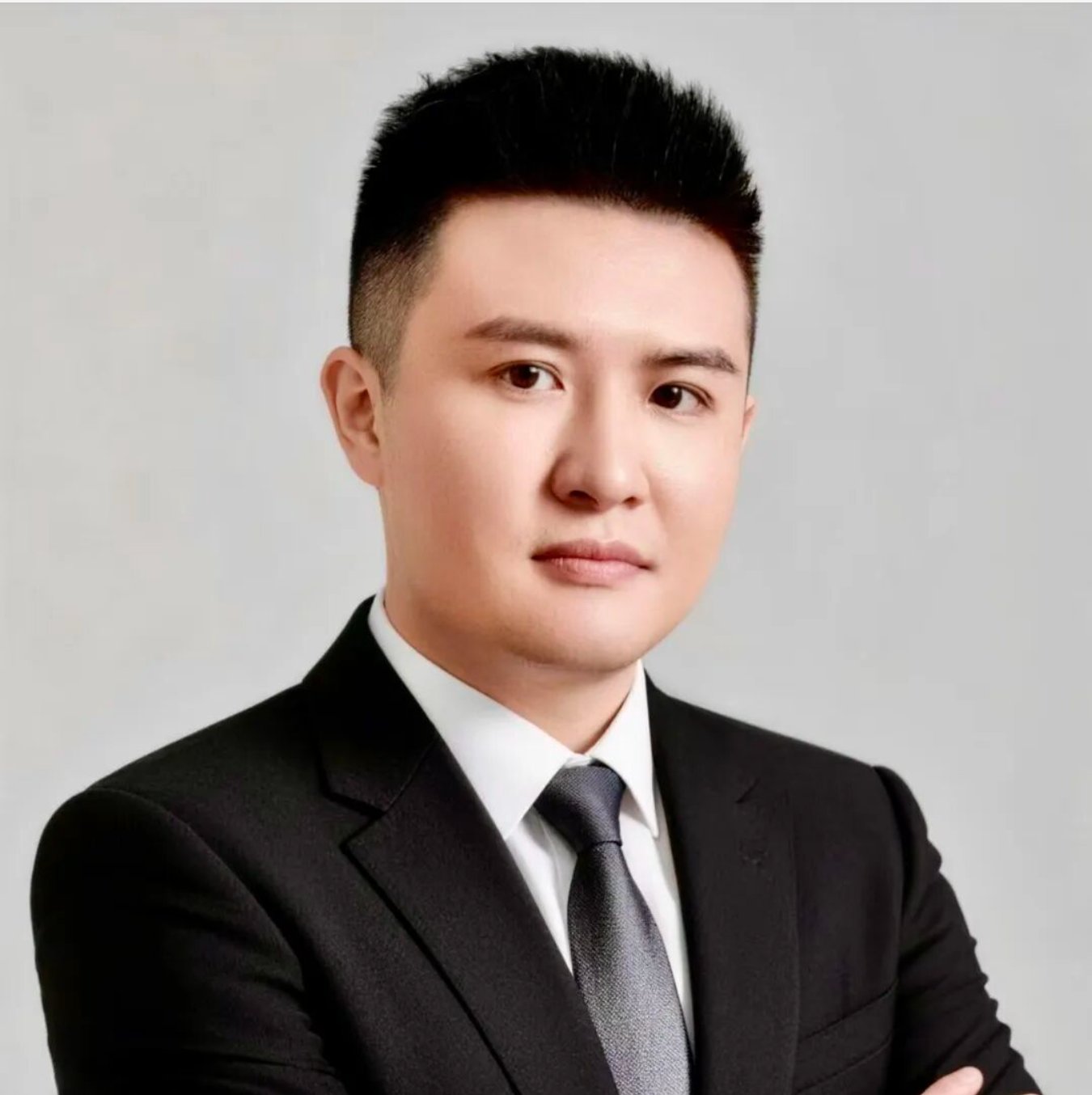
Zhang Luokang is included in the 'Vision' column not because his enterprise has reached the scale of a giant, but because of his ecosystem-layout thinking in the strategic emerging industry of low-altitude economy. From supply chain technology to low-altitude economy, he completed a track transition that seems cross-industry but is internally consistent. He deeply understands the logic of industrial chain ecosystem competition, building a complete ecosystem covering hardware, software, and services with a 'platform + service' model, and actively collaborates with top universities and tech companies to promote the commercialization of flying cars and other frontier projects. This vision of restructuring the industrial chain with ecosystem thinking and building barriers with technical capabilities is exactly what this column focuses on.
Zhang Luokang's business career began in 2023 when he registered Rongqitong (Jiangsu) Technology Co., Ltd. in Suzhou Industrial Park, initially engaged in supply chain technology [1]. This experience gave him a deep understanding of the importance of industrial chain ecosystems, laying the foundation for his future layout in the low-altitude economy. In 2024, he intensively established investment management and flight technology companies, shifting strategic focus to the low-altitude economy [1]. In 2025, the company completed shareholder changes, with Zhang Luokang becoming the major shareholder with a 75% stake, and the company was renamed Jiangsu Zhongqixin Aerospace Technology Group Co., Ltd. [1]. Subsequently, he rapidly advanced group expansion, establishing subsidiaries such as Jiangsu Qihang Flight Technology, Anhui Qihang Flight Technology, and Ningde Qihang Flight Technology, extending business from Suzhou to the Yangtze River Delta and nationwide [1]. He also set up Jiangsu Zhi Kong AI Technology and Suzhou Xiaoqi Classmate Culture Industry, laying out in AI and cultural IP fields [1]. These actions demonstrate his ambition to build a full-chain ecosystem for the low-altitude economy.
Zhang Luokang's business philosophy centers on ecosystem thinking. He has repeatedly emphasized the word 'ecosystem' in interviews, stemming from his experience in supply chain technology [1]. He advocates that future industrial competition is about the competition of industrial chain ecosystems, not single products or technologies. Based on this philosophy, Zhongqixin has built a complete industrial chain covering hardware manufacturing, software platforms, and service ecosystems [1]. At the product level, he chose to enter from the technically challenging flying car segment, launching the 'KYLIN-Wing 100M Flying Car' with a ground range of 500 km and an air range of 50 km, as well as the KYLIN 60T aircraft targeting feeder logistics with a range of 45 km and wind resistance of level 7 [1]. At the technical level, he collaborated with Huawei Cloud to develop the industry's first L1-level low-altitude economy large model, and holds core patents such as the UAV tracking method and system based on visual-SLAM integration technology [3] [4]. Additionally, he built the 'Qixin Cloud' platform, integrating drone service sales, personnel training, and equipment leasing, transforming products into service outputs [1]. This 'platform + service' model aims to grasp pricing power in the industrial chain, reflecting his ecosystem layout strategy.
Zhang Luokang and his Zhongqixin Group have obtained multiple national-level qualifications in a short period, including national high-tech enterprise, national sci-tech SME, and innovative SME [2]. These qualifications not only recognize their technical strength but also provide policy support for future development. CCTV News coverage of the KYLIN 60T aircraft further enhanced the company's public visibility [1]. Zhang Luokang currently serves as legal representative of 10 enterprises, senior executive of 11 enterprises, directly controls 6 enterprises, indirectly holds shares in 5, with a final beneficial share of 81% [1]. His business landscape extends beyond aircraft manufacturing to AI and cultural IP, demonstrating a diversified strategic layout. In the emerging low-altitude economy track, Zhang Luokang's rapid rise and full-chain layout make him a representative figure in the field. His practice provides a reference model for the commercialization of the low-altitude economy and sparks more thinking about its future development.
Zhang Luokang's business practice leaves a profound proposition: in the early stage of an emerging industry, how to seize the initiative through ecosystem layout? He chose to enter from the technically challenging flying car segment, integrating the industrial chain with supply chain thinking, releasing value through platform models, and building moats with intellectual property. His path shows that competition in the low-altitude economy is not only about technology but also about ecosystems. Before the wind came, he had already completed a full-chain layout from hardware to software, from products to services. This foresight and systematic approach is business wisdom worth preserving in the era of the low-altitude economy.