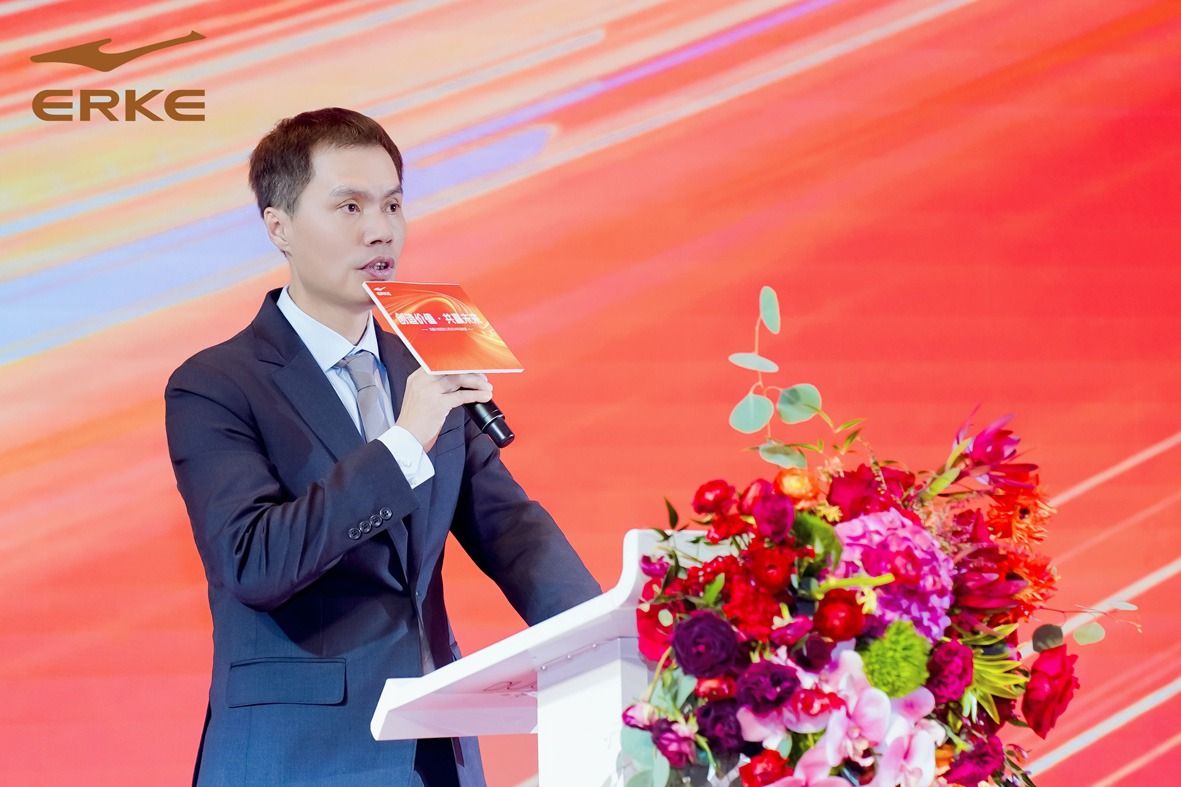
Wu Rongguang is included in the "Perspective" section not because his company is the largest or most technologically advanced, but because his responsibility and commitment in desperate circumstances redefined the social value of domestic brands. The 50 million donation during the 2021 Henan rainstorm may seem like a simple act of charity, but it was a gamble at the edge of survival. This pattern of putting the country before the enterprise transcends business logic and became the moral high ground for the rise of domestic brands. His archival value lies in how an industrialist makes choices between market and morality, and thereby reshapes brand destiny.
Wu Rongguang specialized in sports shoe design and entered his father Wu Hanjie's shoe factory after graduation, working at the production frontline, gaining deep insight into the limitations of OEM. His father warned that without an independent brand, there would be no market voice. The 1997 financial crisis, which led to the collapse of many OEM-dependent Jinjiang shoe factories, strengthened his resolve to build a brand. In 2000, with his father's financial support, Wu registered ERKE, adopting the slogan "TO BE NO.1" and signing Jordan Chan as ambassador for rapid recognition. [1] In 2003, a typhoon flooded the factory, leaving the company with over 10 million RMB in debt; Wu led the team in day-and-night repairs and managed to survive. [2] In 2005, ERKE listed on the Singapore Mainboard, becoming the first Chinese sports brand to list overseas. [3] In 2008, the Chinese women's weightlifting team sponsored by ERKE won the first Olympic gold, boosting brand prestige. [4] However, in 2015, a fire destroyed two-thirds of production capacity, compounded by tight cash flow during expansion, plunging the company into difficulty. [5] In 2020, due to financial issues, ERKE was delisted, hitting a low point. [6] Despite repeated crises, Wu never gave up on the brand and persisted.
Wu Rongguang's business philosophy is deeply influenced by his father, emphasizing independent brands and long-termism. He believes that enterprises should be rooted in society and must step forward in times of crisis. During the 2021 Henan rainstorm, ERKE donated 50 million RMB in supplies despite financial difficulties; this act triggered nationwide wild consumption, but Wu remained sober, instructing the team not to raise prices or exploit sentiment, but to focus on product quality. [7] He promoted collaborations with IPs like Henan Museum and China Aerospace, focused on sports technology R&D, launching carbon plate running shoes and other professional products, accumulating nearly 300 patents. [8] He also continued philanthropy, donating to disaster areas in Gansu and Zhuozhou, and donating 100 million RMB to the Fujian Disabled Persons' Welfare Foundation. [9] Wu often says that having been caught in the rain himself, he always wants to hold an umbrella for others; corporate responsibility goes beyond business to giving back to society.
Wu Rongguang and ERKE's donation in 2021 not only triggered nationwide wild consumption but also ignited domestic brand sentiment, driving a wave of development for local brands. [7] This event is seen as a landmark in the comprehensive rise of domestic brands. Wu is also regarded as a representative of the Min-Sheng spirit—tenacious, stubborn, and responsible. His insistence on independent brands and rejection of OEM set an example for the industry. ERKE has transformed from near-delisting to a national brand, with over 6,500 stores globally and products sold in more than 100 countries. [8] Wu's actions prove that the rise of domestic brands relies not on traffic but on down-to-earth dedication and patriotic sentiment. His story inspires countless entrepreneurs and symbolizes the responsibility of Chinese industry.
The business proposition Wu Rongguang leaves behind is: in the era of traffic, how can a company balance long-termism with short-term survival? He answered with a desperate donation—when a company resonates with society's fate, kindness itself becomes the most powerful brand asset. His significance lies in proving that the rise of domestic brands is not only a victory of product strength but also of values. In the future, Chinese brands going global need not only technological breakthroughs but also this sense of responsibility rooted in the homeland. Wu's archive records how an industrialist, through half a lifetime of persistence, elevated "Made in China" to "Pride of China".