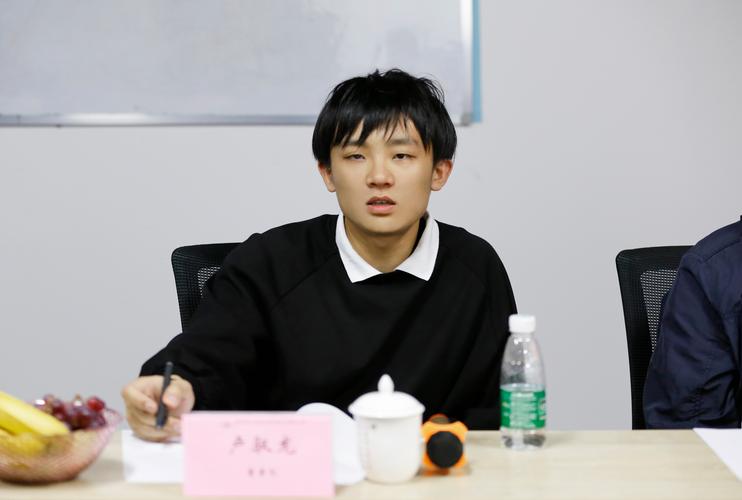
While the business world is obsessed with asset-light and fast iteration, Lu Yulong chose the heaviest path—challenging liquid rocket engines with artisanal stubbornness on the mud of Longgang, Shenzhen. Rejected by Tsinghua and PKU, he proved his worth through scars and flames. His story is not inspirational chicken soup but a probe into the innovation ecosystem: how do we evaluate grassroots hardcore innovation that cannot be planned? Lu's archival value lies in providing an anti-consensus case, showing how passion and engineering intuition can create an oasis in a resource desert. By rejecting institutional worship and choosing self-legislation, his vision is precisely what this column aims to record.
Lu Yulong's entrepreneurial path began with extreme experiments in his youth. At six, he suffered severe acid burns; at twelve, a chemical explosion required nearly 400 stitches. These experiences did not deter him but shaped his obsession with hardcore science. In 2011, at 16, he appeared on China's Got Talent to demonstrate high-voltage experiments, gaining widespread attention. Subsequently, he won national science innovation awards and recommendations to Tsinghua and Peking University, but surprisingly chose to give them up and founded Deep Blue Aerospace in 2013. This decision stemmed from his clear understanding of institutional research pace: he needed space for free trial and error, not the step-by-step process within walls. In the early days, with limited funds, he developed civilian products like plasma electric stoves to generate cash flow, supporting his aerospace dream. This model of 'building rockets with stove money' became his unique survival strategy. [1]
Lu Yulong's business philosophy is centered on 'anti-consensus.' In an era where capital chases asset-light and fast iteration, he chose the heaviest field—liquid rocket engines. His pioneering inverted ignition technology disrupted traditional infrastructure models, reducing costs from hundreds of millions to millions, demonstrating extreme cost restructuring. He adheres to the path of 'supporting research with commerce, promoting military with civilian,' using profits from civilian products to fund aerospace R&D, forming a unique financial model. Under extreme resource constraints, he adopted civilian standard parts instead of aerospace custom parts, showcasing engineering wisdom under constraints. He believes true innovation often emerges in the wilderness, not within institutions. This philosophy not only sustains his career but also opens new possibilities for China's private aerospace. [1]
Lu Yulong's impact transcends the commercial sphere. He has proven that in an era lacking patient capital, grassroots hardcore innovators can survive and achieve breakthroughs through 'supporting research with commerce.' His mass-produced engines, with thrust ranging from 30kg to 20 tons, serve universities and research institutes, carving out a flexible and agile 'innovation tributary' niche between national aerospace forces and commercial giants. His story prompts deep reflection on China's innovation ecosystem: how to evaluate and support 'cost-ineffective' grassroots hardcore innovation? His practice shows that folk wisdom can become a vital piece of the national innovation map. Despite multiple challenges in funding, technology, and institutions, he persists in igniting engines in his 'courtyard,' providing a replicable path for future innovators. [1]
Lu Yulong leaves behind a business proposition: in an era of short-term capital, how can grassroots hardcore innovation survive and break through? He provided an answer with the 'supporting research with commerce' model, but its sustainability remains to be tested. His significance lies in proving that folk wisdom can touch the jewel on industry's crown, filling a key piece of China's innovation map. His story reminds us that true innovation often emerges from the margins, not the center. When the engine ignites in the 'courtyard,' it illuminates not only the aerospace dream but also the corners ignored by mainstream narratives. The next Lu Yulong needs to be seen, and more importantly, understood.