Missing Weibo and WeChat was like being slapped on both cheeks.
This issue of 'Business Contrarians' focuses on those who chose to go against the tide after reaching the peak. Zhang Chaoyang, China's earliest internet godfather, lost his way at the height of his success, secluded himself for a year, and re-emerged with his physics classes. His archival value lies in how a man at the top of the wave faced his inner abyss and reconciled with his own arrogance. His story is not a triumphant comeback but a sample of self-redemption. We document him not only for his success but also for his failure and rebirth, offering dual lessons on business and life.
Zhang Chaoyang was born in Xi'an in 1964, graduated from Tsinghua in 1986, and earned a PhD in physics from MIT [1]. In 1996, he returned to China with $225,000 in venture capital and founded ITC, the predecessor of Sohu [2]. With his forward-thinking internet vision, he quickly built a portal model and was named a 'Global Digital Hero' by Time in 1998, becoming one of the first internationally recognized internet pioneers in China [2]. In 2000, Sohu listed on Nasdaq, becoming one of the first Chinese internet companies to go public in the US [3]. In 2008, Sohu secured exclusive internet sponsorship for the Beijing Olympics, with Q1 revenue of $84.8 million and a market cap of $2.68 billion, surpassing Sina for the first time—its peak [4].
After the peak, Zhang gradually let his guard down, focusing on social life and neglecting product iteration, missing key opportunities like Weibo and WeChat [5]. He admitted: 'Missing Weibo and WeChat was like being slapped on both cheeks.' [5] In 2012, he entered seclusion, seeking psychological help in the US and studying psychology and Eastern philosophy [5]. During this period, he painfully reflected: 'I am so rich, yet so miserable.' [5] After returning, he streamlined operations, stabilizing gaming and media, and continued his English classes for years [6]. Facing video business losses, he said: 'We are bleeding and losing money to broadcast for everyone.' [6] He no longer pursued expansion but defended Sohu with a long-term approach.
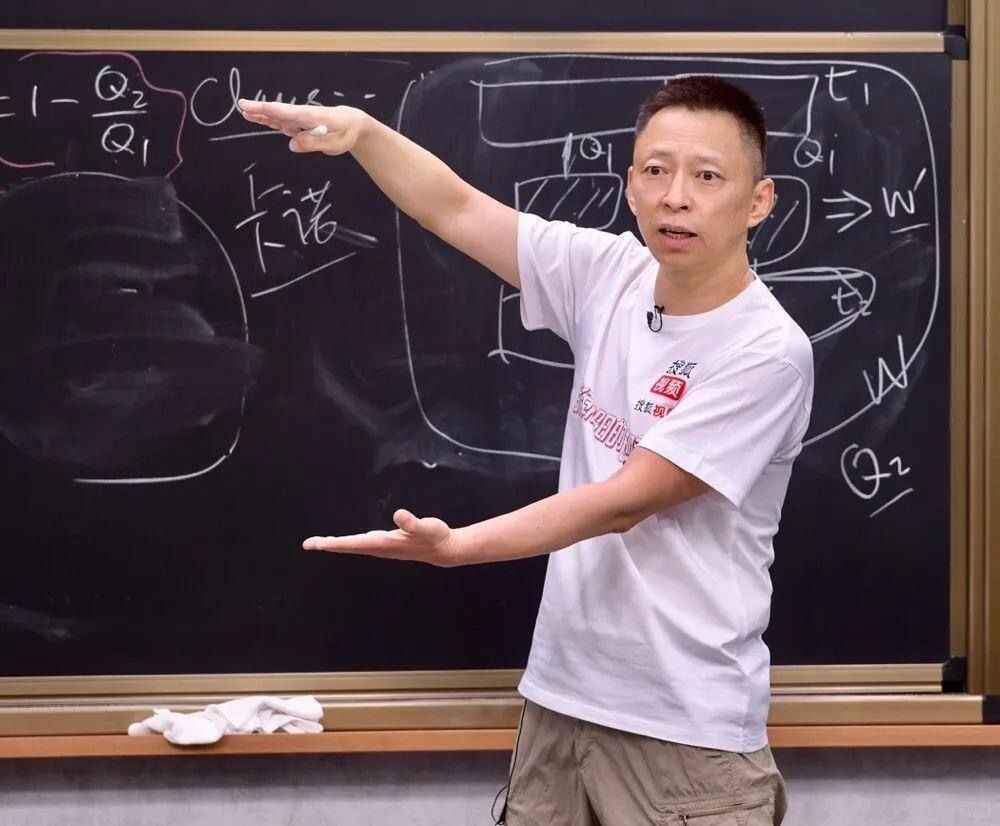
Zhang's career is a microcosm of China's internet development. As a pioneer, he opened the portal era and nurtured a generation of internet talent. However, his loss and fall also offer profound lessons: success can lead to arrogance and missing windows of opportunity. In recent years, he has regained fame with 'Zhang Chaoyang's Physics Class', with over a million viewers per session, over 22,000 minutes of live streaming, and over 4.26 million followers online [7]. His science books have been collected by the National Library of China, earning academic recognition [7]. He proves that being left behind is not terrible; what is terrible is not daring to start again.
Zhang leaves a business proposition: when the era's dividends fade, how does a company hold its ground? When personal balance is lost, how does one find oneself again? He spent ten years proving that being left behind is not terrible; what is terrible is not daring to start again. His physics class success is not accidental but a triumph of long-termism. He no longer plays the 'godfather' but the 'gatekeeper', perfecting one thing. His story shows that true contrarians do not conquer the storm but rediscover themselves in its eye.