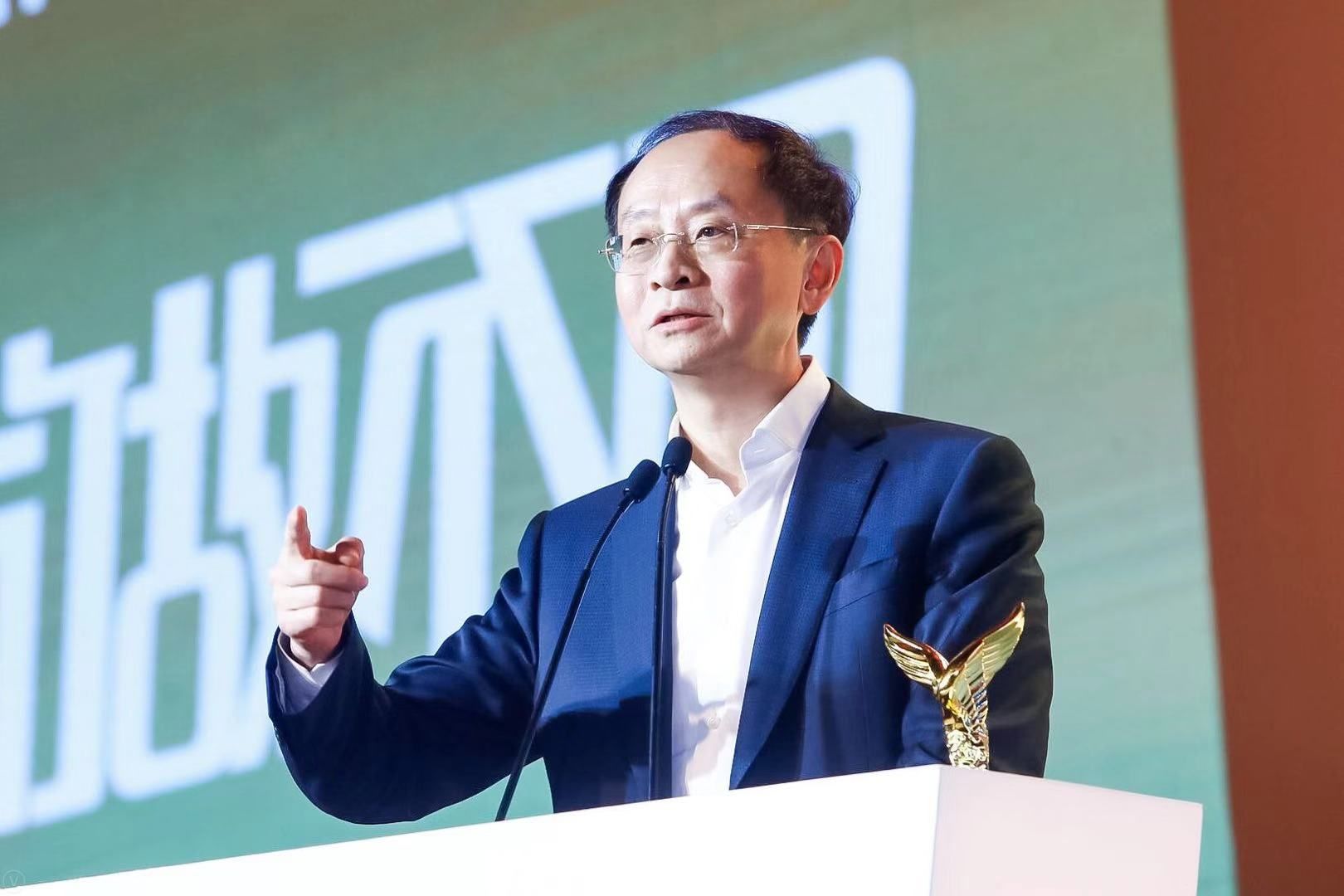
Entrepreneurs must have social responsibility, and the ultimate meaning of wealth is to give back to society.
Zhang Wenzhong is included in the 'Business Contrarian' column not only because of his legendary journey from prisoner to helm of a hundred-billion enterprise, but also because he embodies the deeper meaning of a 'contrarian': under the weight of fate, he chose neither resentment nor despair, but redefined his business life with conviction and action. The archival value of his story lies in documenting how an entrepreneur maintained rationality and dignity in extreme adversity, used technological thinking to transform a traditional industry, and started anew amid overdue justice. His story transcends personal gains and losses, becoming a symbol of the resilience of the entrepreneurial spirit.
Zhang Wenzhong was born in Qingdao, Shandong in 1962. In 1979, he entered Nankai University's mathematics department, later earning a master's in economics and a doctorate in systems science from the Chinese Academy of Sciences, before completing postdoctoral research at Stanford University [1]. In 1994, to promote his self-developed POS system, he opened the first Wumart supermarket in Beijing [1]. At that time, domestic supermarkets relied on manual bookkeeping, and suppliers were skeptical of POS systems; he went door to door, persuading them with data and case studies [1]. In 1995, the Wumart Cuiwei store achieved annual sales exceeding 100 million yuan [1]. In 2003, Wumart listed on the Hong Kong Stock Exchange, becoming the first privately-owned retail IPO in mainland China [2]. By 2006, Wumart held 35% of Beijing's retail market, and Zhang was dubbed 'the Father of Chinese Supermarkets' [1]. In 2006, at the peak of his career, he was detained for investigation; in 2008, he was sentenced to 18 years in the first instance, later reduced to 12 years [3]. In February 2013, he was released early for good behavior [4]. After release, he worked to revive Wumart while appealing his case, submitting a retrial application to the Supreme People's Court in 2016 [3]. On May 31, 2018, the Supreme Court acquitted him [3]. As early as 2015, he had begun preparing a second venture, founding Dmall [5]. In 2024, Dmall listed on the Hong Kong Stock Exchange [6] [7].
Zhang Wenzhong entered retail with a mathematician's rigor, believing technology could transform traditional industries' inefficiencies. He promoted POS systems, persuading suppliers with data, redefining inventory and reconciliation management in Chinese retail [1]. In prison, he persisted in reading and thinking, applied for four retail-related technology patents, and helped a fellow inmate pass the adult college entrance exam [4]. After release, he founded Dmall to drive retail digitalization. Facing frontline employees' resistance, he personally demonstrated the system, emphasizing 'This system is not here to replace you, but to help you' [5]. Dmall reduced picking time from 20 minutes to 5 minutes, tripling online order processing [5]. He led Wumart's acquisition of 70% of B&Q China and 21 stores of Lotte Mart in North China, and participated in the bid for Metro China, diversifying its business format [6]. He stated, 'We don't pursue the largest scale, but to be the most efficient one' [6]. In 2024, Wumart's online orders accounted for 32%, and instant delivery orders 18% [6].
The Zhang Wenzhong case became a landmark case for protecting the property rights of private entrepreneurs in China, and its content was included in the 2018 Work Report of the Supreme People's Court [3]. His acquittal is seen as a milestone in the rule of law, boosting confidence among private entrepreneurs. After release, he not only rebuilt Wumart but also provides digital services to physical retail stores through Dmall, becoming one of the largest retail digitalization service providers in China [7]. He chose to invest in an urban renewal project in his hometown Qingdao, giving back to his roots [6]. His experience has inspired countless entrepreneurs, proving that 'an entrepreneur can be knocked down, but not defeated' [1].
The business proposition Zhang Wenzhong leaves behind is: when institutional setbacks strike, how can entrepreneurs counter systemic risks with individual resilience and rebuild trust and value on the ruins? He spent ten years proving that technological rationality and belief in the rule of law can become the twin wings of rebirth. His significance lies not only in securing judicial justice for private entrepreneurs, but also in pioneering a new path for traditional retail through digitalization. His archive reminds us that the ultimate value of business lies not in wealth accumulation, but in steadfastness in the face of injustice and the responsibility to give back to society.