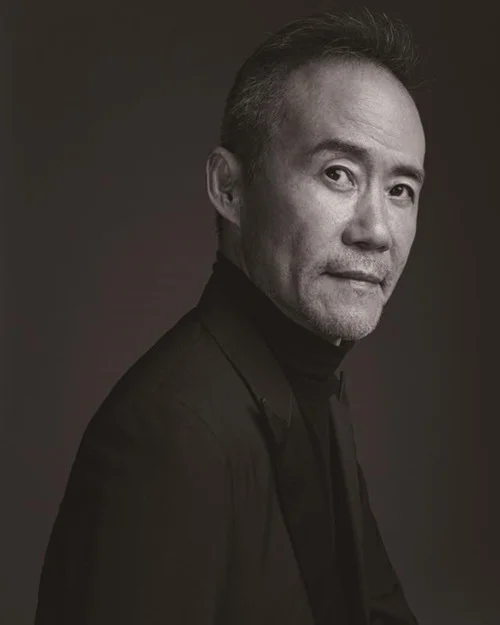
No bribery is the bottom line of Vanke, and also my bottom line.
Wang Shi is included in the 'Business Maverick' column not because of his real estate achievements—that is already consensus—but because of his proactive departure at the peak and his restart afterward. While most entrepreneurs cling to scale and control, he chose to resign at 66, handing the company to a professional management team; in his sixties, he did not linger in the 'real estate godfather' label but turned to carbon neutrality, founded a business school, and climbed Everest again. This constant breaking of the definition of 'success' and persistent exploration of personal possibilities is the core of a 'maverick.' His archival value lies in how an entrepreneur demonstrates through action that true maturity is not about always standing at the summit, but about knowing when to let go and redefining oneself in new fields.
Wang Shi's entrepreneurial journey began in 1984 with a trading company in Shenzhen, initially spanning electronics, retail, and other fields. [1] He keenly captured the opportunity of China's urbanization and housing reform, decisively leading Vanke's pivot to real estate development. [1] In an era when the industry universally pursued high turnover and high leverage, Wang Shi established clear operational bottom lines for Vanke: standardized operations, transparent governance, no bribery, no land hoarding, and product and reputation priority. [1] He insisted on implementing modern enterprise systems and building a professional manager management framework. [1] With a professional and standardized strategy, Vanke gradually grew into a national industry leader, becoming China's most representative benchmark enterprise in real estate. [1] In 1991, Vanke listed on the Shenzhen Stock Exchange, becoming one of the first listed companies. [1] Wang Shi spent 33 years building Vanke into an industry benchmark, and his governance philosophy and long-termism provide a model for later entrepreneurs.
Wang Shi's business philosophy centers on rule consciousness and long-termism. In Vanke's early days, he insisted on no bribery and no land hoarding, which was unconventional in a relationship-driven industry but earned Vanke brand and trust. [1] In 2015, the Bao-Vanke dispute erupted when Baoneng Group became the largest shareholder and proposed to restructure the board, presenting Wang Shi with the most severe challenge of his career. [3] He insisted on safeguarding Vanke's governance structure and corporate culture, emphasizing corporate value and social trust. [3] After nearly two years of confrontation, Shenzhen Metro became a major shareholder, the equity structure was restructured, and the dispute was resolved smoothly. [3] In 2017, at the age of 66, Wang Shi chose to resign, handing Vanke to Yu Liang's team. [3] He believes that the true achievement of an entrepreneur lies not only in building a business empire but also in enabling the enterprise to move forward independently—able to create, to persist, and to let go at the right moment. [3]
Wang Shi's influence transcends Vanke itself. He upheld bottom lines during the industry's wild growth and adhered to principles amid capital waves, setting a benchmark for standardized governance in the industry. [1] After leaving Vanke, he quickly pivoted to carbon neutrality, founding DeepStone Group to promote zero-carbon parks and cooperating with companies like LONGi Green Energy. [4] In 2023, at the age of 72, he summited Everest again, demonstrating his spirit of continuous self-challenge. [5] In 2024, he co-founded the Canal Business School with Feng Lun, bringing together many entrepreneurs to pass on business experience. [7] Wang Shi's identity has transformed from real estate leader to green entrepreneur and business mentor, but his persistence, pragmatism, and courage to break through remain unchanged. His experience provides a valuable reference for Chinese entrepreneurs on advance, retreat, and long-term value.
The business proposition Wang Shi leaves behind is that the value of an entrepreneur lies not in perpetual control, but in enabling the enterprise to move forward independently; the meaning of an individual lies not in clinging to labels, but in constantly redefining oneself. He upheld bottom lines during the industry's wild growth, adhered to principles amid capital battles, handed over the baton gracefully at the peak of his career, and started anew across fields in his sixties. His experience suggests a possibility: the maturity of an entrepreneur is reflected in respect for cycles, reverence for rules, and mastery of advance and retreat. The era's significance he leaves is that success is not one-dimensional; the courage to choose and bear the consequences is the true entrepreneurial spirit.