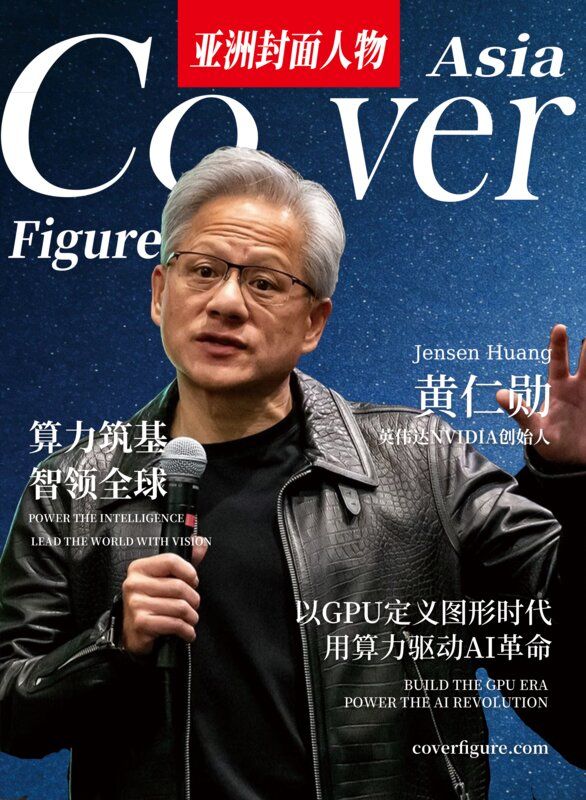
AI Is the Platform Opportunity of This Generation
Jensen Huang is classified as a 'Business Contrarian' because he always bets when others are skeptical. When Wall Street questioned CUDA as a distraction, he persisted; before the AI wave arrived, he had already built the computing infrastructure. His contrarianism is not blind risk-taking but based on deep reasoning about the technological endgame. From graphics chips to the AI computing empire, Huang has proven over three decades that true foresight lies in seeing the direction before consensus forms and enduring the pressure. His archival value lies in documenting how a technical idealist, amid the noise of capital markets, held to his convictions and ultimately led the era.
Huang's entrepreneurial story began in 1993 at a Denny's in California, where he sketched the GPU vision with Chris Malachowsky and Curtis Priem, leading to the founding of NVIDIA. [2] In the early days, the PC graphics market was nascent, but Huang foresaw the immense potential of dedicated graphics processors. In 1999, the GeForce 256 defined the GPU concept, offloading 3D rendering from the CPU and reshaping the gaming industry. [3] Huang did not stop at graphics. In 2006, NVIDIA launched CUDA, enabling general-purpose computing on GPUs, a strategy many analysts dismissed as a distraction. [4] Yet Huang believed in parallel computing and invested heavily in building the CUDA ecosystem. In 2012, AlexNet won the ImageNet competition using NVIDIA GPUs, validating their critical role in deep learning, and NVIDIA became the core hardware provider for AI training. [5] The launch of Tesla P100 in 2016 marked NVIDIA's full entry into AI computing. [6] Since then, from V100 to H100 and the Blackwell architecture, NVIDIA's AI chips have continuously evolved, becoming the de facto standard platform for AI development. In 2023, the ChatGPT-driven AI boom led to surging demand for NVIDIA GPUs, and the company's market cap exceeded $3 trillion in 2024, making it one of the world's most valuable tech companies. [7]
Huang's management style is unique in the tech industry. He advocates flat management, directly overseeing dozens of executives to avoid hierarchical bloat. [1] He often emphasizes that 'the company is only 30 days from going out of business,' a crisis mentality that drives NVIDIA to prepare for every technology cycle. [1] In investing in CUDA, Huang demonstrated strong long-termism: despite initial poor returns, he persisted for years, ultimately building a formidable ecosystem moat. [4] He urges his team to approach each day with a 'day one' mindset, maintaining entrepreneurial urgency. [1] This philosophy of 'moving forward in fear, staying hungry in success' has kept NVIDIA ahead in the AI wave.
Huang's foresight transformed NVIDIA from a gaming chip company into the core supplier of AI infrastructure, with its GPUs becoming essential for global AI development. [7] The CUDA ecosystem has attracted millions of developers, creating an insurmountable moat. [4] In frontier areas like autonomous driving, robotics, and digital twins, NVIDIA continues to expand, showing technological ambition beyond a chip company. [6] Huang himself has become one of the world's wealthiest entrepreneurs, yet he remains low-key, appearing at launches in his signature leather jacket. [1] He reminds the industry that AI is still in its early stages, and the real transformation has just begun. [1]
The business proposition Huang leaves us is how to enter before the inflection point of a technology cycle and persist until harvest. He has shown that when computing power becomes the core resource of the AI era, a chip company's vision can reshape the entire industry. His story reminds us that true innovation often begins with non-consensus, and success belongs to those who dare to move forward in fear. The archive of Huang and NVIDIA is not just a record of commercial success, but a lesson in foresight, resilience, and seizing the opportunities of an era.