Visionary Leaders
They measure the business empire from the commanding heights of the era.
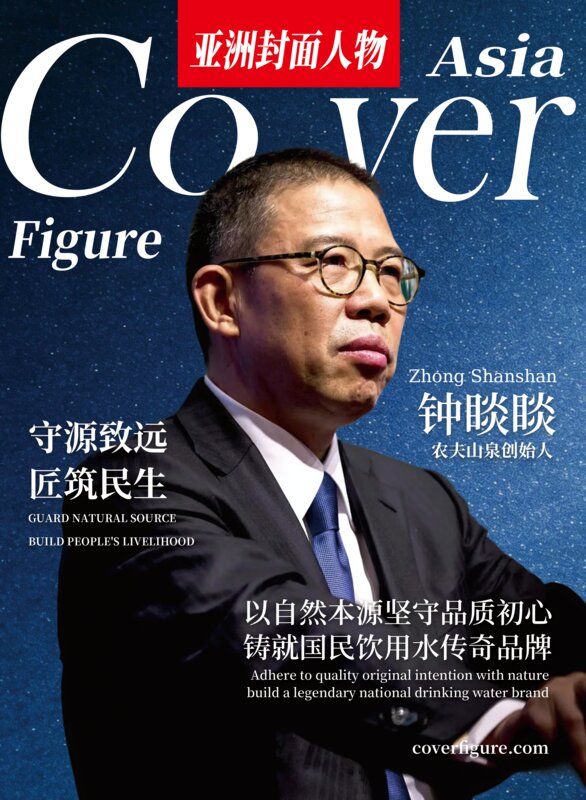
Zhong Shanshan
“Running a business means focusing, and doing one thing well for a lifetime is enough.”
1. Natural water breaks the situation: in the red sea of monopoly, blaze a path that no one dares to take
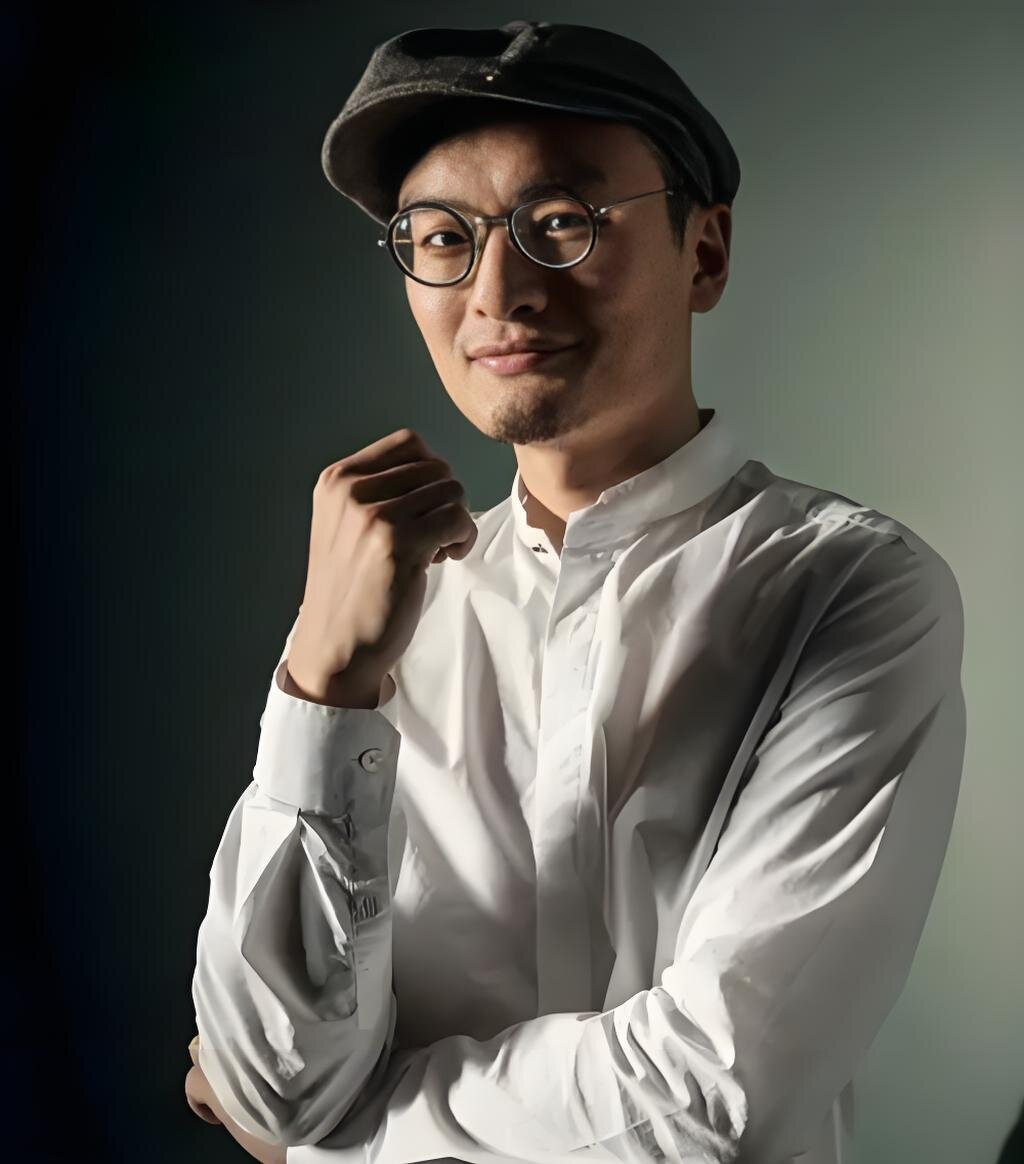
Zhong Shanshan
Asian Cover Figure | Zhong Shanshan: One Bottle of Water, One Vaccine — Three Hard Battles Built a 530 Billion Empire
Asian "Cover Figure" · Vision
Issue No. 034-ACF-GJ-2026
He rarely appears in public, yet commands two hundred-billion-dollar giants and has four times been crowned China's richest man. This low-profile entrepreneur secured the national consumer market with a bottle of water, then spent nearly twenty years cultivating the pharmaceutical sector, successfully breaking foreign vaccine monopolies. From fast-moving consumer goods to biotechnology, Zhong Shanshan reached the summit in two high-barrier industries through solid product strength and long-term commitment, becoming one of the most representative figures in Chinese industry.
I. Breaking Through with Natural Water: Walking a Path No One Dared Take in a Monopolized Red Ocean
Zhong Shanshan's early life was filled with the hardship of starting from the bottom. He worked as a bricklayer and carpenter, struggling at society's lowest levels, experiencing life's full range of flavors. After the college entrance examination was restored, he entered Zhejiang Radio and Television University, and after graduation joined the rural department of Zhejiang Daily as a reporter. Over six years, he was rooted in the grassroots, traveling to villages across Zhejiang — witnessing the most authentic livelihood needs and developing the bold, tenacious character that would define him.
In the late 1980s, as the market economy took off, Zhong quit his stable journalism career and headed to Hainan to start a business. It was a period of repeated failure: he started a newspaper that failed; grew mushrooms that lost everything; sold curtains with no improvement. Setbacks did not break him — they made him more pragmatic and resilient. He later became a regional distributor for Wahaha in Hainan, slowly accumulating his first fortune through solid operations and channel capability, truly understanding the logic of the FMCG industry.
In 1996, Zhong Shanshan founded Nongfu Spring in Zhejiang, formally entering the packaged water market. The drinking water market was already highly consolidated — Wahaha and Robust held dominant shares, both focused on purified water, making the industry highly homogeneous with almost no room for newcomers. The consensus was that new brands could only follow the giants' playbook, competing on price and channels for scraps of market share.
But Zhong chose the completely opposite path. He clearly positioned Nongfu Spring as natural water, emphasizing water sources, health, and quality, and opened the market with the simple, direct slogan "Nongfu Spring is a little sweet." He understood that advertising slogans bring only temporary attention; what retains consumers is the product itself. From the start, he insisted on "building factories at water sources, filling at water sources," searching the country cost-no-object for premium water sources — from Qiandao Lake to Changbai Mountain, from Emei Mountain to Danxia Mountain — ultimately building 15 premium water sources, creating a resource moat others could not replicate.
In 2000, Zhong made a decision that shocked the entire industry. Through a public narcissus experiment, he demonstrated to consumers the difference between purified and natural water, stating plainly that purified water lacks minerals the body needs, and announced that Nongfu Spring would cease all purified water production, making only natural water. This ignited enormous industry controversy. He faced accusations from competitors, criticism for malicious hype and market disruption, and even administrative penalties.
Under tremendous pressure, Zhong did not retreat an inch. He declared publicly that the best marketing is the product itself — without a good product, all the hype is meaningless. He insisted on speaking through products and standards, continuously investing in R&D and production, earning consumer trust through genuine capability. This confrontation with the entire industry ultimately allowed Nongfu Spring to firmly establish its market position, not only breaking the duopoly but driving China's drinking water industry toward natural and healthy directions, redefining public understanding of good water.
II. Slow Innovation: Not Chasing Quick Money, Using Time to Brew a True National Brand
In FMCG, most companies pursue rapid expansion, frequent blockbusters, and price wars to seize market share quickly. But Zhong Shanshan maintained his composure — no aggressive growth targets, no unrealistic sales goals, no bottom-line marketing competitions. All his energy went into product refinement. He believed true brands need time to mature; truly good products are worth waiting for.
In 2011, Nongfu Spring launched Oriental Leaves, one of China's earliest sugar-free bottled teas. In that market environment, sugary drinks dominated, and consumers had low acceptance of mild, sugar-free tea. Sales were mediocre at launch; outside voices questioned whether Zhong understood the market, predicting Oriental Leaves would fail.
Facing external doubt, Zhong did not waver. His judgment: healthy consumption was an irreversible future trend; products with real ingredients and no additives would eventually be recognized. Over the next decade-plus, he neither cut prices for short-term sales nor blindly reformulated to chase the market. Instead, he continuously optimized raw materials, processes, and taste. He repeatedly emphasized internally: "Sales are determined by consumers; the company just needs to make the product well, and growth will come naturally."
As health awareness grew, sugar-free tea became mainstream. Oriental Leaves, with stable quality and long-accumulated reputation, achieved counter-cyclical growth. In 2025, Oriental Leaves revenue surpassed 21.5 billion yuan, overtaking traditional brands to become China's No. 1 ready-to-drink tea. Meanwhile, Nongfu Spring continued to refine its product matrix across water, tea, functional drinks, and juice categories, maintaining steady growth.
In 2025, Nongfu Spring's annual revenue reached 52.5 billion yuan with net profit of 15.8 billion yuan, ranking first in China's beverage industry. From a regional water company to a national beverage brand, Zhong Shanshan proved over nearly thirty years that the core of business competition is not speed or tricks, but product power. True success has never been about chasing trends for temporary wins, but about sinking deep into one thing — doing it thoroughly, doing it to the extreme.
III. Pharma Crossover: 18 Years to Forge One Sword, Breaking Foreign Monopoly, Protecting National Health
Zhong Shanshan's business layout was not confined to FMCG. As Nongfu Spring developed steadily, he quietly crossed into the highly technical biopharmaceutical industry, achieving another remarkable breakthrough.
In 2001, Zhong acquired 95% of Wantai Bio for 17.1 million yuan. Wantai was then a small company mainly in diagnostic reagents with limited competitiveness. But Zhong saw enormous potential in domestic diagnostics and vaccines. He pushed Wantai toward a "diagnostics + vaccines" dual strategy, with focus on the HPV vaccine — long monopolized by foreign brands.
At that time, HPV vaccines were entirely dominated by foreign brands, priced beyond reach of ordinary families, with virtually no domestic R&D capability. Developing an HPV vaccine required massive investment, long timelines, and high risk — few companies were willing to persist. But Zhong was determined: China must have its own HPV vaccine.
He partnered with Xiamen University to build an R&D platform, continuously funding research with one requirement for the team: focus on research, don't be bound by short-term performance pressure. He often said: "As long as the lab lights are on at night, keep the funding coming." Under his support, the team did not rush; they methodically conquered technical challenges one by one.
This persistence lasted eighteen years. In 2019, Wantai's bivalent HPV vaccine was approved — the first domestic HPV vaccine, breaking foreign monopoly, with prices dropping dramatically to make vaccination accessible to ordinary women. In 2025, China's first domestic nine-valent HPV vaccine was approved, making China only the second country globally with independent nine-valent HPV vaccine capability. Related products were exported to 21 countries and regions. From nothing to world-leading, Zhong invested nearly 1 billion yuan and eighteen years of perseverance to complete a difficult and critical breakthrough.
In 2020, Nongfu Spring listed on the Hong Kong Stock Exchange and Wantai Bio on the A-share market. Zhong formally established a dual consumer-pharma business model, both enterprises with solid fundamentals and strong profitability. This crossover not only expanded his commercial empire but set a benchmark for China's biopharmaceutical industry.
IV. The Lone Wolf: Returning to Simplicity, Walking Steadily, Doing What Is Right Long-Term
Commanding two hundred-billion-dollar enterprises and four times China's richest man, Zhong Shanshan maintains a low-key, pragmatic, focused style. He rarely appears publicly, does not attend summits or forums, and does not socialize frequently with business peers — earning him the label "lone wolf of business."
He has his own management philosophy. He disagrees with making decisions purely by data, believing data only reflects the past, not the future; he doesn't care what peers are doing, focusing only on his own products and technology; he is not keen on capital operations, always insisting on creating value through real industry. When facing controversy, he responded directly and candidly, emphasizing that Nongfu Spring's ownership must belong to Chinese people.
Past seventy, he still frequently appears at water sources, factories, and R&D centers. He has always believed that products carry a company's conscience — earnestly making every product well is a company's most fundamental responsibility. He does not pursue inflated scale or capital market narratives; he adheres to the simplest business logic: only by providing good products to consumers can a company endure.
V. Staying True Wins the Way: What an Industrialist Teaches Chinese Business
From a grassroots struggler to a never-say-die entrepreneur to the helmsman of two commercial empires, Zhong Shanshan spent nearly forty years walking a solid, hardcore, non-speculative, non-tricky industrial path. No shortcuts, no concept-hyping, no trend-following — just one bottle of water, one vaccine, three hard battles, building a commercial empire spanning consumer goods and pharma.
His experience tells us: true business vision is not about how loud you are, but how focused; true success is not about how fast, but how steady. In an era pursuing speed and traffic, Zhong Shanshan proved through action: the slowest path is often the most reliable, the clumsiest method often the most effective, and the most focused person often walks the farthest.
Staying true wins the way; focus crowns the king. This is not just Zhong Shanshan's business philosophy — it is Chinese industry's most precious foundation.
Follow

Scan to follow for more stories
Cover ArchiveArchive
View archive file →Every cover publication is registered and kept in the ACF Cover Archive. The code is permanent.

Not Everyone Makes the Cover
Asia Cover Figure · Influencing Those Who Influence