Visionary Leaders
They measure the business empire from the commanding heights of the era.
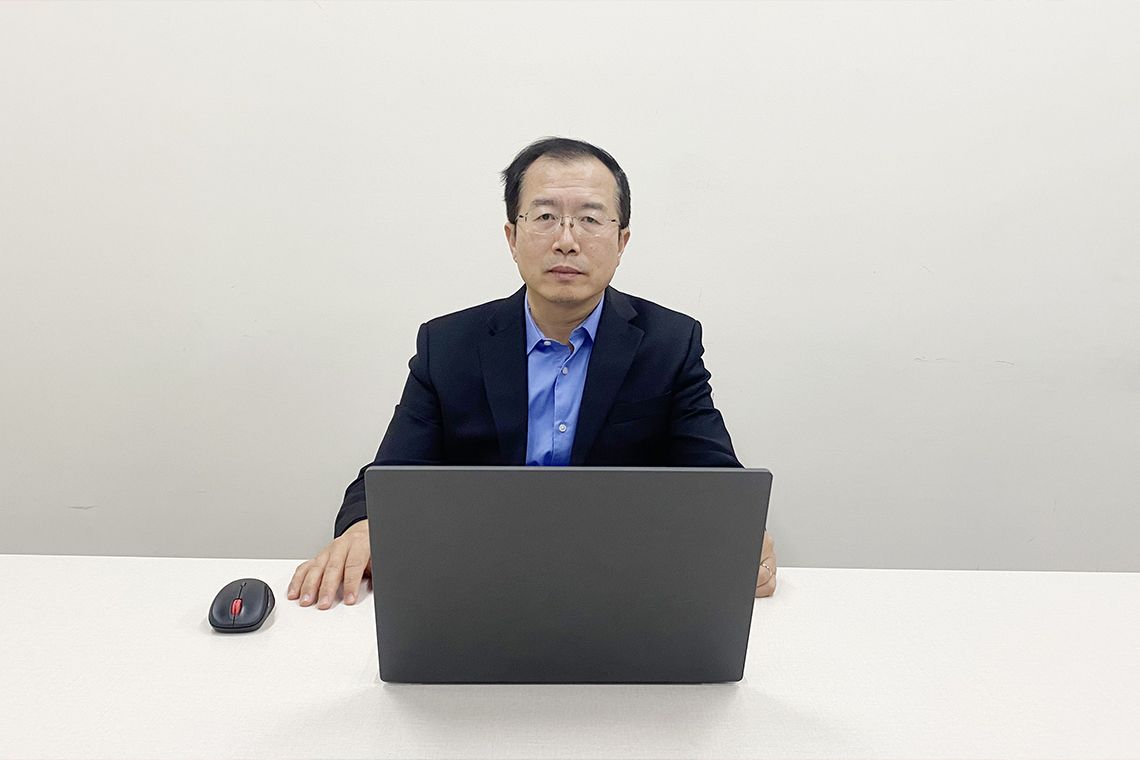
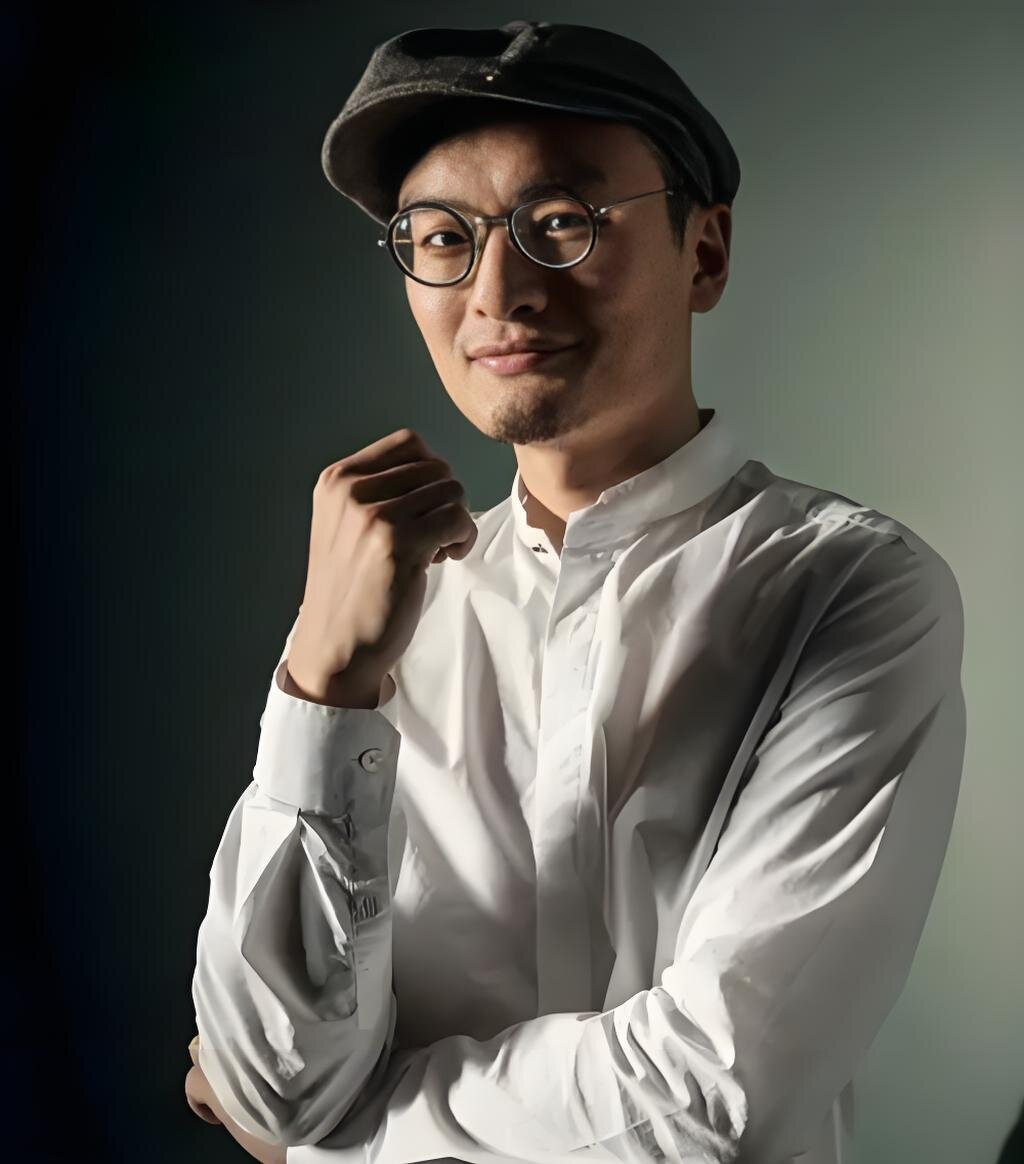
Zhang Xingang
“Breakthroughs in materials science can often drive upgrading of the entire industrial chain.”
Ph.D. from Tsinghua University and Ph.D. in Materials Science from the University of Southern California. When he returned to China to start a business, he was found to have misappropriated 7 million, and when he opened Alto to meet Japanese customers, he was regarded as a "liar". In 2026, his company's stock price surpassed that of Moutai, and his net worth was 8.5 billion. Zhang Xingang: The stupidest fight is the most valuable. On April 17, 2026, the A-share market witnessed history. Yuanjie Technology hit 1,460.08 yuan per share during the session, surpassing Kweichow Moutai and becoming the most expensive A-share stock. The founder of this company, Zhang Xingang, was still worried about a second-hand Alto 13 years ago - that was all he needed to pick up customers at the airport. When the Japanese supplier saw this old car, he thought he had encountered a scammer and was afraid to get in the car. It took him 13 years to go from Alto to "King of Stocks". 1. Studying Abroad and Betrayal: From Tsinghua to USC Zhang Xin was born in 1970. He studied in the Materials Department of Tsinghua University for his undergraduate degree. He then went to the United States for further study and obtained a PhD in Materials Science from the University of Southern California. In 2001, he joined the optical communications company Luminent and was gradually promoted from a grassroots R&D staff to the position of R&D director. In 2007, the company was merged into Source Photonics and he still served as R&D director. His many years of overseas industry experience allowed him to fully accumulate full-process R&D and management experience in optical chips. In 2010, Zhang Xingang returned to China and founded Huahan Jingyuan. Two young people, Qin Yansheng and Qin Weixing, participated in funding to support the project. The daily operations of the company were handed over to the general manager Wang Shuo, who was a classmate of Qin Weixing Primary School. Funding problems arose later. Wang Shuo misappropriated more than 7 million yuan of company funds privately, and the project capital chain was broken. For the first time,
Zhang Xingang
Asian Cover Figure | Zhang Xingang: Picking Up Clients in an Alto, Called a Fraudster — Now Worth 8.5 Billion
Asian "Cover Figure" Magazine · Vision
Issue No. 056-ACF-2026
[Summary]
Tsinghua PhD, USC PhD in Materials Science. Returned to China to start a business, had 7 million embezzled by a childhood friend, picked up Japanese clients in an Alto and was treated as a "fraudster." In 2026, his company's stock price surpassed Moutai, and his net worth reached 8.5 billion yuan. Zhang Xingang: The dumbest persistence is the most valuable.
On April 17, 2026, China's A-share market witnessed history. Sourcephotonics (Yuanjie Technology) touched 1,460.08 yuan per share intraday, surpassing Kweichow Moutai to become the highest-priced stock on the A-share market.
Yet just 13 years earlier, the company's founder Zhang Xingang was worrying about a second-hand Alto — his only "impressive" vehicle for picking up clients at the airport.
Japanese suppliers, seeing the old car, briefly suspected they'd encountered a scam and refused to get in.
From Alto to "Stock King" — it took him 13 years.
I. Study and Betrayal: From Tsinghua to USC
Born in 1970, Zhang Xingang completed his undergraduate studies in materials science at Tsinghua University before pursuing a PhD in Materials Science at the University of Southern California. In 2001, he joined optical communications company Luminent, rising from entry-level R&D to R&D Director. When the company merged into Source Photonics in 2007, he continued as R&D Director. Years of overseas experience gave him complete mastery of the full optical chip R&D and management process.
In 2010, Zhang Xingang returned to China and founded Huahan Jingyuan, with childhood friends Qin Yansheng and Qin Weixing participating as investors. Day-to-day operations were managed by general manager Wang Shuo, who was Qin Weixing's elementary school classmate. Wang Shuo subsequently misappropriated over 7 million yuan in company funds, rupturing the project's capital chain and forcing the first entrepreneurial venture to end.
Years of technical expertise couldn't hold him back — it was a breach of trust by someone close that cut short his first attempt.
Technology didn't stop him; trust did.
His first venture, he lost to the people he trusted most.
II. Second Venture: The Alto and an 8 Million Yuan Interest-Free Loan
In 2013, Zhang Xingang established Source Photonics (Yuanjie Technology) in Xianyang, Shaanxi Province, launching his second optical chip venture. Childhood friends Qin Yansheng and Qin Weixing once again came to his aid, providing an 8 million yuan interest-free loan — no written agreement, no interest terms, sustained entirely by mutual trust.
In the startup's early days, cash flow was extremely tight. The company's only official vehicle was an old second-hand Alto. When a Japanese supplier visited for an on-site inspection, the company sent the Alto to pick them up at the airport. Seeing the humble vehicle, the Japanese side immediately became suspicious, judging that the counterparties lacked operational credibility and might be running a commercial scam, and hesitated for a long time before boarding.
While most chip companies in the industry adopted the asset-light Fabless model, focusing solely on chip design and outsourcing wafer fabrication and packaging/testing, Zhang Xingang made a differentiated choice, insisting on a full-chain IDM (Integrated Device Manufacturing) model covering chip design, epitaxial growth, wafer fabrication, and packaging/testing.
"Over a hundred core processes — you need to master every single one yourself." In an industry where everyone chased asset-light rapid turnover, he voluntarily took on the pressure of asset-heavy, long-term investment.
Outsiders' skepticism and dire circumstances couldn't break him.
Starting from an Alto, he charged toward breaking the "chokehold."
He chose an Alto, but controlled every single component.
The Alto carries three layers of deeper metaphor: first, the asset-heavy model — while peers chased Fabless like sports cars, Zhang's IDM chain was the Alto, slower but fully self-controlled; second, anti-bubble pragmatism — in an era of PPT concepts, the unglamorous Alto represented rejecting vanity and rooting in the real economy; third, the spirit of domestic substitution — during years when domestic optical chips were constrained by foreign supply chains, this Alto ferrying overseas supplier meetings carried the conviction of attacking core technology with humble hardware.
III. 5G Breakthrough: 25G Chips and STAR Market Listing
In 2018, Source Photonics' self-developed 25G DFB laser chip passed full verification by leading clients, making it the first domestic company to achieve large-scale production of this specification, successfully entering the 5G communications infrastructure track and filling a domestic gap.
In 2020, Huawei HiSilicon completed a strategic investment in Source Photonics, acquiring a 4.36% stake, providing important industry endorsement. In December 2022, Source Photonics listed on the STAR Market (stock code 688498), officially entering public capital markets.
Industry cycle fluctuations immediately surfaced. In 2023, global telecom equipment demand contracted, pressuring revenue and profit. In 2024, demand remained sluggish, and the company fell back into losses. The 5G track brought a window of growth, but a single communications business couldn't withstand cyclical downturns.
The 5G wave — he caught it. But waves stop.
Listing wasn't the finish line — it was the starting gun for a new long race.
IV. AI Computing Explosion: The Counterattack
As the AI computing industry entered a rapid expansion cycle, global data center high-speed optical interconnect hardware demand grew exponentially. Source Photonics adjusted its business focus, pivoting fully to the data center high-speed optical chip track.
2025 operational data showed a dramatic reversal: data center business achieved 393 million yuan in revenue, a 719% year-on-year increase; this segment's share of total revenue surged from 3.2% to 65%, becoming the core growth pillar. Total annual revenue reached 601 million yuan, up 138.5%; net profit attributable to parent reached 191 million yuan, up 3,212.62%, completely reversing consecutive losses and achieving a full operational turnaround.
In March 2026, Source Photonics filed for Hong Kong Stock Exchange listing, initiating dual-market capital planning, leveraging AI computing tailwinds to broaden long-term financing channels and accelerate high-speed optical chip expansion and advanced process R&D.
The AI wave — he had waited many years for it.
Not luck — technology that was forged into existence.
V. Crowned Stock King: From Alto to Hundred-Billion Market Cap
On April 17, 2026, Source Photonics' stock surged to 1,460.08 yuan intraday, closing at 1,445 yuan, surpassing Kweichow Moutai as the A-share market's highest-priced stock. Within twelve months, the stock price accumulated a gain of over 12 times, with total market capitalization exceeding 135 billion yuan.
Regarding shareholding structure, Zhang Xingang directly held 12.39% of company shares, corresponding to a peak holding value of approximately 16.7 billion yuan. The 2026 Hurun Global Rich List showed his net worth at 8.5 billion yuan. Looking back at the complete entrepreneurial journey — from the Alto that was mistaken for a scam, to leading an optical chip listed company whose stock price led the A-share market — over a decade he endured capital losses, client skepticism, and industry-wide losses.
Addressing supply-demand dynamics, Zhang Xingang offered an objective assessment: "AI demand growth is exponential, but capacity expansion is linear." Explosive computing demand won't synchronously match production capacity buildout; long-term technical reserves and orderly expansion are the core support for stably meeting market demand.
From Alto to "Stock King" — 13 years.
The dumbest persistence is the most valuable.
Epilogue
In 2026, Zhang Xingang is 56 years old.
His academic path stretched from Tsinghua to USC, with years of overseas R&D management. His entrepreneurial path launched twice — the first ended when 7 million was embezzled; the second began with an Alto picking up clients who thought he was a fraudster. Through self-developed 25G communications chips he seized the 5G opportunity, then with data center optical chips he caught the AI computing wave, ultimately leading his company's stock to the top of the A-share market.
Thirteen years of industrial cultivation proved that seemingly clumsy long-term technical assault ultimately transforms into core competitive advantage. The Alto of his early days was long replaced, but the spirit of starting from zero and relentlessly grinding through technology — that Alto spirit remains embedded in the enterprise's operations and R&D systems.
The Alto can be replaced, but the grit cannot be swapped.
True counterattack isn't overnight wealth — it's standing back up after 13 years on the cold bench.
Follow

Scan to follow for more stories
Cover ArchiveArchive
View archive file →Every cover publication is registered and kept in the ACF Cover Archive. The code is permanent.
Not Everyone Makes the Cover
Asia Cover Figure · Influencing Those Who Influence