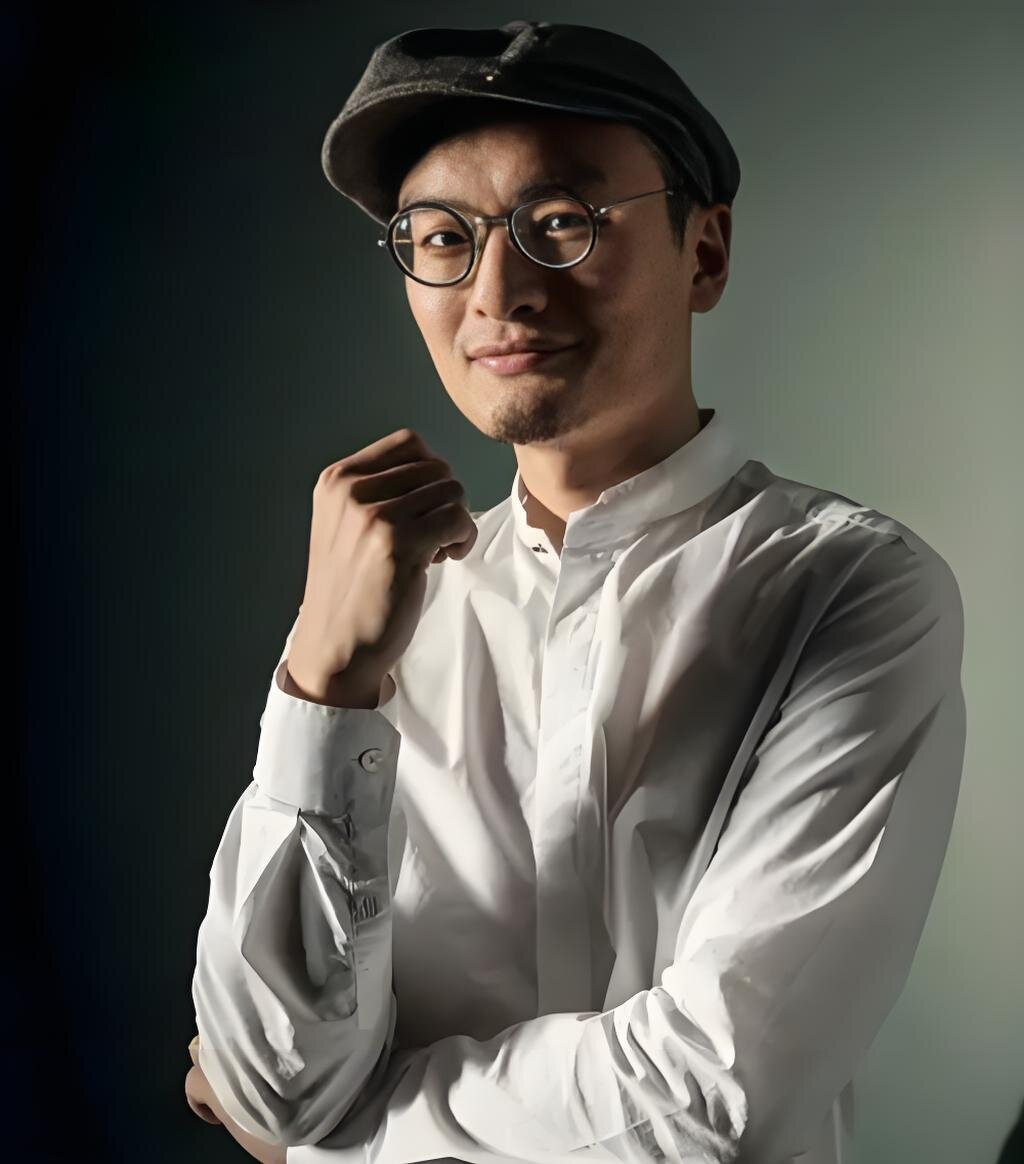
The world is far more complex than we imagine, and so am I.
Frank Wang is included in the 'Vision' column not merely because he dominates the global consumer drone market—though that is a fact. His archival value lies in how a technical idealist, in a seemingly niche field, achieved perfection through vertical integration and continuous iteration, thereby defining industry standards. He does not chase trends but believes in the penetrating power of technology; he shuns publicity yet has established global influence through his products. This vision—technology as faith, products as medium—is what this column seeks to preserve.
Frank Wang was born in Hangzhou in 1980 and developed a strong interest in aviation models, particularly remote-controlled helicopter flight control. In 2003, he left East China Normal University and enrolled at HKUST, studying robotics under Professor Li Zexiang, which laid the technical foundation for his future entrepreneurship. [1] In 2006, while still a graduate student, Wang and classmates registered DJI Innovations in Shenzhen, starting in a small apartment and focusing on helicopter flight control systems. [1] In 2009, DJI launched its first commercial helicopter flight controller, the XP 3.1; in 2010, the team identified multi-rotor drones as the future direction. [1] In 2011, the WooKong-M multi-rotor flight control system was released; in 2012, the Phantom 1 integrated aerial photography drone launched; in 2013, the Phantom 2 Vision with integrated gimbal camera was introduced. [1] Since then, DJI has continuously iterated on flight control, gimbal, image transmission, and camera technologies, forming a vertically integrated system. [1] According to public reports, DJI's revenue reached a significant scale by 2016; by 2025, industry analysts estimate continued revenue and profit growth. [2] DJI employs over 10,000 people, with a high proportion of engineering staff and numerous patents. [1]
Frank Wang's business philosophy emphasizes independent R&D and vertical integration. DJI started with flight control systems and expanded to gimbals, image transmission, and cameras, forming a complete technical loop. [1] This vertical integration reduces costs and ensures product performance leadership. In 2018, DJI discovered supply chain management issues involving significant amounts; Wang mentioned this in internal communications and stated the company strengthened internal controls. [3] Media reports indicate DJI made management adjustments afterward. [3] Wang has rarely appeared publicly in recent years; in an extended interview in April 2026, he stated that his focus over the past decade was on products and internal management. [4] DJI faces policy challenges in the US market, but according to public information, DJI products maintain a high user base in the US. [1]
DJI holds a significant share in the consumer drone market, with products sold in over 100 countries and regions. [1] DJI has not only popularized aerial photography but also expanded drone applications in agriculture, rescue, energy inspection, and surveying. [1] Industry analysts estimate continued revenue and profit growth for DJI in 2025. [2] DJI's success is seen as a typical case of Chinese technological innovation and Shenzhen's entrepreneurial ecosystem. [1] Wang himself remains low-key, focusing on products and internal management, and his management style and strategic choices have drawn industry attention. [4]
Frank Wang's legacy poses a business question: how to balance engineering idealism with commercial reality in a technology-driven industry. DJI's success demonstrates that when a company invests long-term in core technology and builds vertical integration barriers, it can gain pricing power and influence globally. However, with intensifying geopolitical and market competition, DJI faces new challenges. Wang's archive reminds us that true vision lies not in scale, but in adherence to the essence of technology and the pursuit of product perfection.