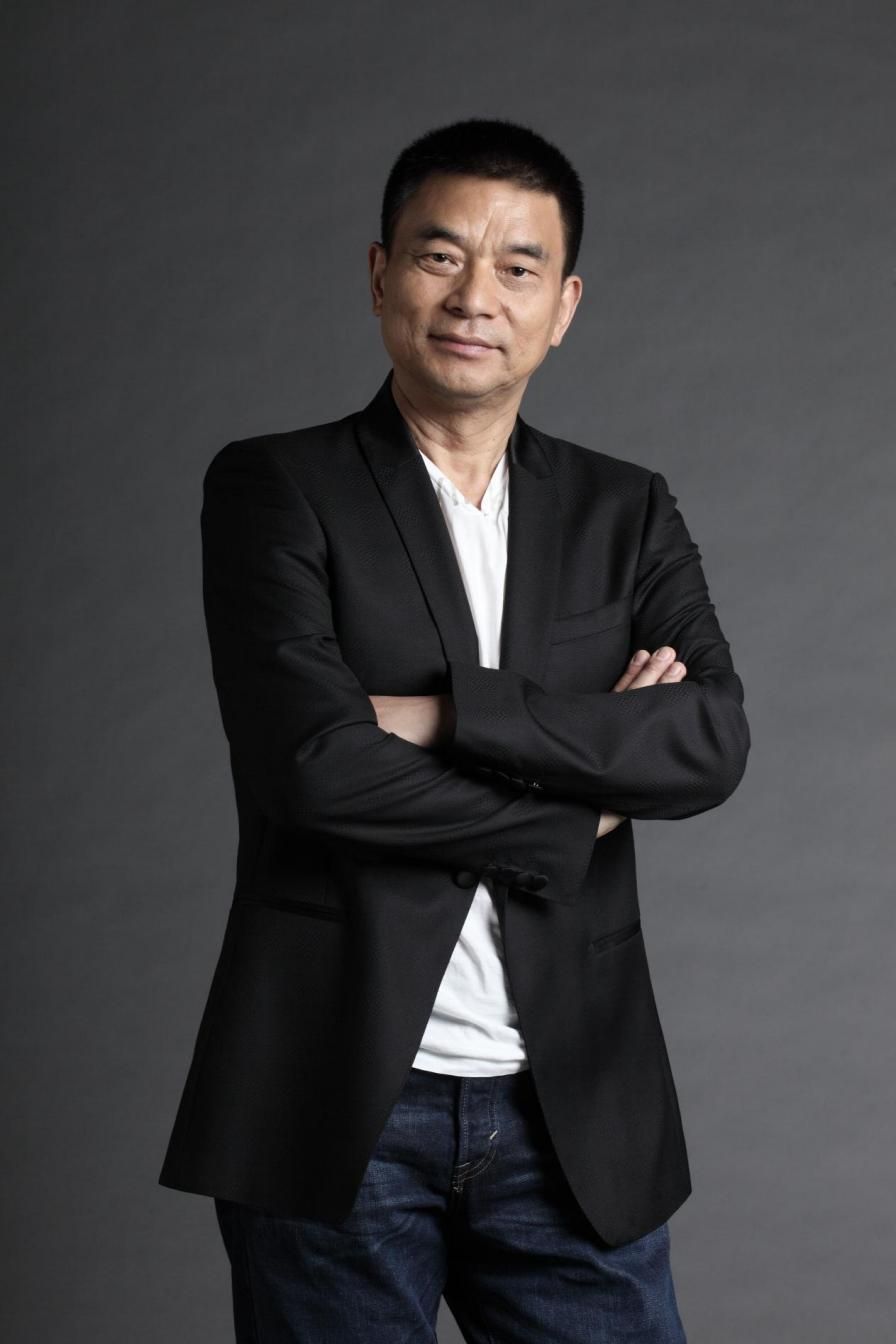
Farming requires patience. Good business, like good food, takes time.
Editor's introduction: Liu Yonghao is included in the 'Perspective' section not because of the scale of his enterprise, but because he has spent four decades validating a counter-trend business logic: in an era where 'fast, precise, ruthless' is the mantra, he chose to deeply cultivate the most unglamorous track of agriculture with the slowest pace, ultimately traversing cycles to reach the Fortune Global 500. His archival value lies in providing a sample of 'slowness'—when everyone is chasing trends, how he used resolve to resist temptation and long-termism to build moats. This perspective is not innate but forged through countless choices.
Liu Yonghao's entrepreneurial journey began in 1982 when he and his three brothers resigned from public office and founded Yuxin Breeding Farm on their balcony with 1,000 yuan, starting with quail breeding. [1] [2] They adopted an ecological circular farming model, pushing quail output to number one nationally, surpassing traditional powerhouses like Germany, France, and Japan, earning the title 'World Quail King.' [1] [2] In 1986, Liu witnessed farmers queuing to buy imported feed in Shenzhen, prompting his pivot to feed production. [1] [3] He invested 4 million yuan in R&D, launching 'Hope No.1' piglet feed in 1989, which matched imported products in performance at half the price. [1] [3] In 1992, Hope Group was established, becoming the first national private enterprise without a regional name in China. [1] [4] After the brothers split in 1995, Liu formed New Hope Group and listed a subsidiary on the A-share market in 1998. [1] [4] Since then, New Hope Group has grown into a comprehensive enterprise group focused on agriculture and food, with operations worldwide. [1] [6]
Liu Yonghao's core business philosophy is 'following the trend, half a step faster,' emphasizing adapting to the times while avoiding recklessness. [1] [5] For over four decades, he has remained committed to the agricultural main business, resisting temptations from real estate, finance, and internet bubbles, earning a reputation as an 'island' in the business tide. [1] [5] In feed production, he broke the import monopoly through independent R&D, winning the market with cost-effective products. [1] [3] In management, he emphasizes stability and long-termism, stating that 'farming requires patience; good business, like good food, takes time.' [1] [5] This philosophy has guided his entrepreneurial journey, enabling New Hope Group to maintain steady growth through multiple economic cycles and eventually enter the Fortune Global 500. [1] [6]
Liu Yonghao's impact extends beyond business achievements to his role as a model for the development of China's private economy. [1] [7] In 1994, he took the lead in initiating the 'Glory Project,' promoting private enterprises' participation in poverty alleviation, earning honors such as 'Reform Pioneer.' [1] [7] In intergenerational succession, he cultivated his daughter Liu Chang through over a decade of grassroots experience, who took over as chairman in 2013, and he retired from the board in 2025, completing a rare smooth transition for a private enterprise. [1] [8] New Hope Group entered the Fortune Global 500 in 2021, with annual revenue exceeding 100 billion yuan and global operations. [1] [6] Liu's story is seen as a model of long-termism, proving that in the most unglamorous industries, painstaking effort can achieve world-class results. [1] [5]
The business proposition Liu Yonghao leaves behind is: in a commercial world dominated by capital and speed, is adhering to industry and long-termism still a path to greatness? He answered affirmatively with the rise of New Hope Group. His significance lies in proving that Chinese private enterprises can achieve world-class success in the most traditional industries through continuous innovation and steady management, and smoothly complete intergenerational succession. His story demystifies 'fast' and pays tribute to 'slow.'