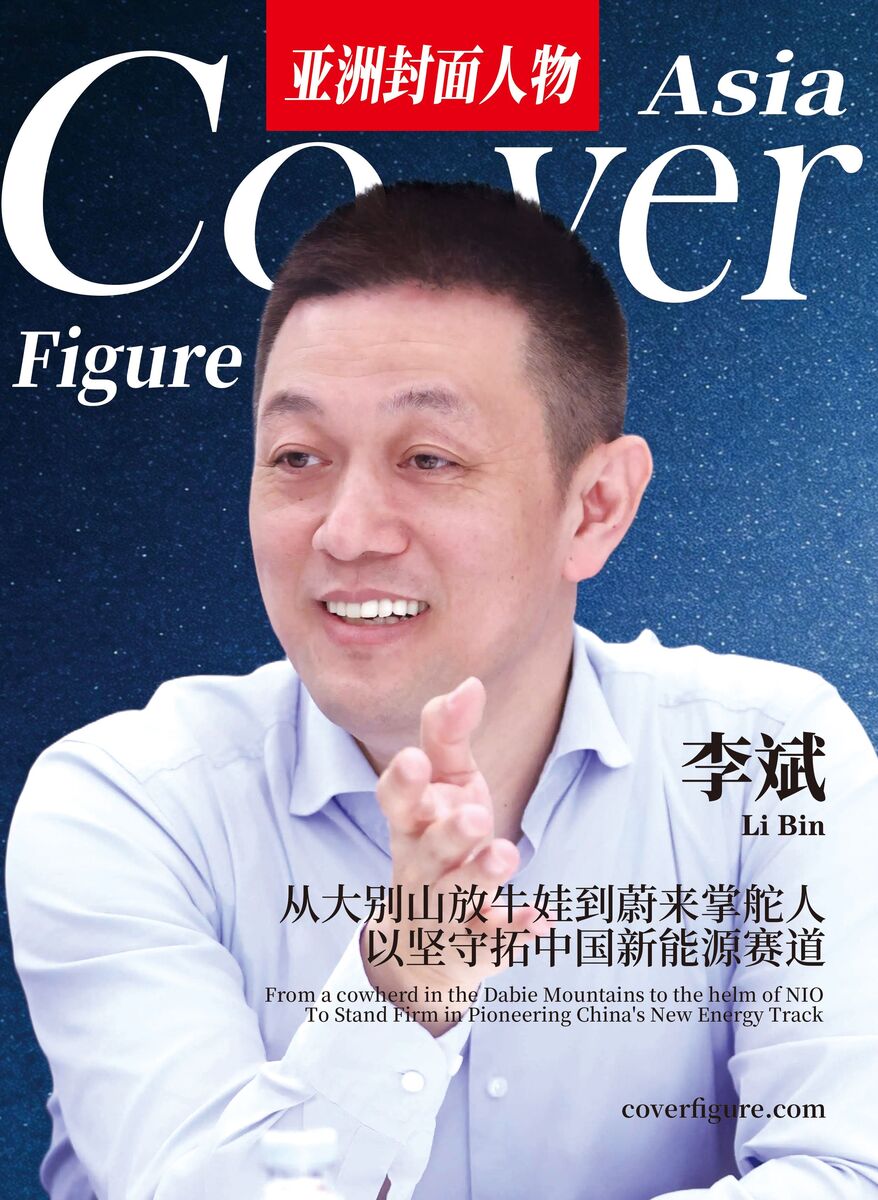
We are not just building a car; we are creating a mobile living space.
Li Bin is included in the 'Vision' section not only because he is a pioneer of China's premium EVs, but also because he consistently chose the hardest yet right path amid industry skepticism and existential crises. From a cowherd in the Dabie Mountains to a Peking University graduate, from internet entrepreneur to leader of a new EV force, his every turn has been at a historical inflection point. He insisted on the battery-swap model, investing heavily when few believed, and eventually built a nationwide network. He proposed the 'user enterprise' concept, turning users into a brand moat. Li Bin's vision lies in his judgment of the industry's endgame and his commitment to long-term value over short-term gains. His archival value is to record how an entrepreneur turned the impossible into possible through conviction and resilience.
Li Bin's entrepreneurial journey began in 1996 when he seized the early internet opportunity, co-founding Nanji website for domain registration, earning 200,000 yuan monthly. He later participated in the precursor to Dangdang but chose to exit to focus on his own software business. In 2000, he founded Bitauto, focusing on the automotive vertical, securing $9.5 million in investment. In 2001, the internet bubble burst, leading to shareholder withdrawal and partner departures; Li Bin personally took on 4 million yuan in debt and led the team through. During SARS in 2003, online business turned a corner, and Bitauto became profitable in 2004, listing on the NYSE in 2010. In 2014, Li Bin founded NIO to build a premium Chinese EV brand. NIO initially launched the EP9 supercar to prove Chinese automotive technology, followed by the ES8 production car, and firmly committed to the battery-swap model. In 2019, NIO faced a funding crisis but was rescued by a 7 billion yuan strategic investment from Hefei in 2020. Since then, NIO has expanded its swap network and launched a second brand, Onvo, building a multi-brand matrix. [1]
Li Bin's business philosophy centers on long-termism and user orientation. He firmly believes the battery-swap model is the ultimate solution for EV charging, despite initial skepticism, and has built a nationwide network. NIO also champions the 'user enterprise' concept, placing users at the core of operations, building brand loyalty through community engagement and premium service. The 2019 crisis was a key battle; Li Bin led NIO out of the dark hour with Hefei's strategic investment and user support. Since then, NIO has expanded its swap network and integrated stations into grid regulation, enabling peak shaving and valley filling, turning stations into 'mini power plants' in cooperation with State Grid and China Southern Power Grid, completing over 740 million kWh of regulation. Li Bin emphasizes R&D, investing over 10 billion yuan annually to drive innovation. [1]
Li Bin's contribution to China's NEV industry lies in pioneering premium smart EVs and the battery-swap model. He not only built NIO but also promoted the establishment of swap standards and the proliferation of charging networks, influencing industry thinking on energy replenishment. NIO's user-enterprise philosophy has also prompted a re-evaluation of customer relationships. Despite profitability pressures and competition, Li Bin persists in long-term R&D investment, multi-brand strategy, and globalization, providing a model for China's automotive transformation. His entrepreneurial journey and resilience inspire a new generation of founders. [1]
Li Bin leaves a business proposition: how to balance long-termism with survival pressure in a rapidly evolving industry. NIO's battery-swap model is asset-heavy and slow to yield returns, but once the network reaches scale, it becomes an insurmountable moat. He proved that Chinese automakers can not only build premium cars but also define new charging standards. Li Bin's persistence offers an alternative path: not chasing trends, but creating them. His significance lies in turning the swap concept into reality over a decade, integrating it into the national energy strategy, and providing new thinking for the long-term development of China's NEV industry.