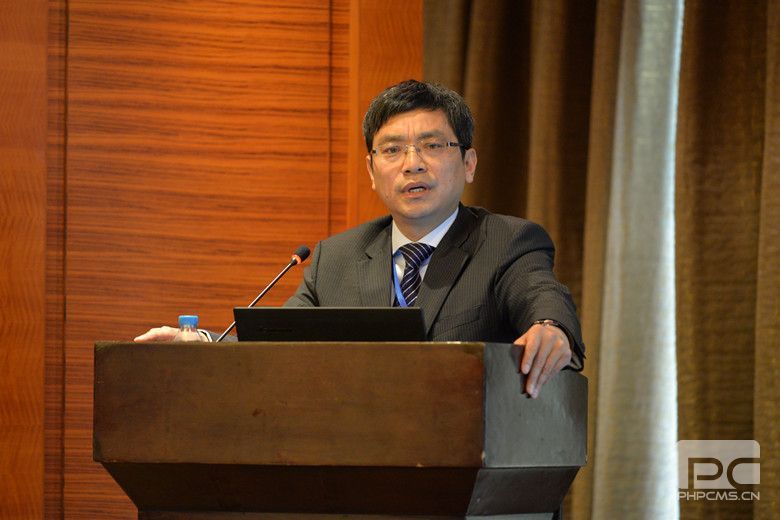
Huang Yanping is included in the 'Pattern' section not because he invented a new technology, but because he chose the most difficult yet independent path under the dual pressures of global technology blockade and widespread industry skepticism. A note in 2009 led him from mature supercritical water reactor research to a field deemed 'infeasible'; over 16 years, he sat on the bench, tackled tough problems, and with 49 failures and tons of scrap, brought the world's first commercial unit to life. His pattern lies in his clear judgment of the technological endgame—unwavering in the face of external denial, unyielding in the face of short-term difficulties. This courage and perseverance in blazing trails in uncharted territory is precisely the archival value this column seeks to preserve.
Huang Yanping had long been engaged in supercritical water reactor research, accumulating solid experience in traditional power generation technology. In 2009, a handwritten note from Sun Yufa, an academician of the Chinese Academy of Engineering, led him to the new track of supercritical CO2 power generation. At that time, there was almost no mature research system in China, and R&D in many countries had stalled, with the industry generally believing the technology was not feasible. At the start, the team consisted only of Huang and one graduate student, building the research system from scratch. Facing industry skepticism, he stuck to his judgment and began a 16-year effort. In 2017, an overseas visit encountered a technology blockade, with core equipment placed on a control list, which instead strengthened the team's resolve for independent development. From 2018 to 2019, technical problems emerged during whole-machine verification, but after repeated troubleshooting, the team achieved MW-class full-power stable operation, overturning the overseas experts' claim that China could not build a unit above 100 kW. In 2021, the 49th process test succeeded, breaking through the core heat exchanger technology. At the end of 2023, 'Super Carbon One' entered the construction phase, and on December 20, 2025, it officially entered commercial operation with an 85% increase in efficiency. [1] [2] [3] [4] [6]
Huang Yanping's research philosophy centers on 'sitting on the bench'. He often says: 'To do scientific research, you have to sit on the bench, and truly valuable results take time to accumulate.' [8] Facing industry skepticism and overseas blockade, he insisted that 'just because others can't do it doesn't mean we can't', leading the team to deconstruct equipment principles from scratch and explore process parameters. During 829 days of intensive work, the team completed 27 overall scheme optimizations, iterated 218 versions of welding parameters, experienced 49 failures, and scrapped several tons of waste materials before breaking through the core heat exchanger technology. He paid attention to team morale, comforting young engineers when they shed tears after failures, stabilizing the pace, and emphasizing 'keep trying, never give up halfway'. This resilience and pragmatism were key to the success of 'Super Carbon One'. [4] [8]
The successful commercial operation of 'Super Carbon One' not only achieved breakthroughs of 85% higher efficiency, 50% more net power output, and half the footprint, but also provided a new path for China's energy transition. According to industry estimates, if the technology is widely adopted in the national steel industry, the annual additional clean power generation would be equivalent to one-eighth of the Three Gorges Dam's annual output, offering significant low-carbon development value. Under the overseas technology blockade, Huang's team achieved full-chain independent development from scratch, filling multiple international gaps, such as the world's first MW-class supercritical CO2 turbine dry gas seal technology. His experience is seen as a model of independent innovation in Chinese scientific research, inspiring more researchers to blaze trails in uncharted territories. [6] [7]
Huang Yanping's 16 years prove that true technological breakthroughs often emerge from the neglected bench. The business proposition he leaves behind is: in an era of deglobalization and frequent technology blockades, how can Chinese enterprises achieve breakthroughs in key core technologies through independent innovation? His experience offers an answer—not relying on external introduction, not fearing industry skepticism, but with long-termist determination, step by step in the no-man's-land. 'Super Carbon One' is not just a generator set; it embodies the independent innovation spirit of Chinese researchers. This archive records not only a scientist's 16 years, but also a microcosm of a nation's transition from catching up to leading in energy technology.