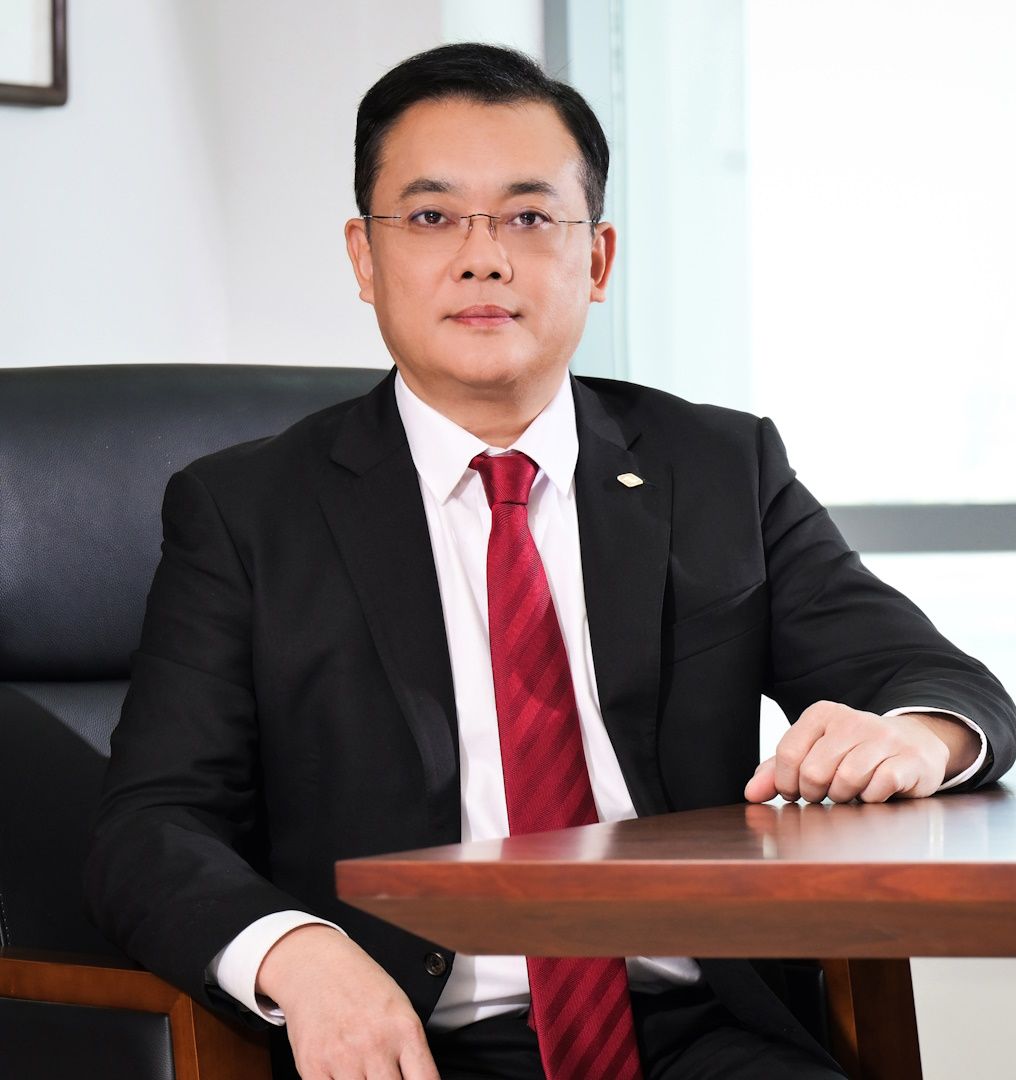
Cao Hui is included in the 'Pattern' section not because he is the son of the Glass King, but because he redefined the meaning of a successor through his actions. In an era when many rely on family background, he chose to work anonymously in the workshop, spending six years understanding the foundation of manufacturing; in the crisis of the anti-dumping lawsuit, he stepped forward and used legal means to protect corporate rights; at the height of his career, he chose to leave the family business to start his own, proving his ability. These choices reflect a pattern that transcends personal gains and losses: he refuses to live in the shadow of his father's generation, instead infusing new vitality into the family business through pragmatism and responsibility. The archival value lies in showing how a successor earns respect and drives transformation through self-validation.
Cao Hui's career began in 1989 when he entered Fuyao's production workshop as an ordinary employee, earning 300 yuan per month, working anonymously for six years and rising from frontline worker to workshop director. [1] He was then transferred to Hong Kong to develop the sales market, building channels from scratch and staying for another six years. [1] In 2001, Fuyao faced an anti-dumping lawsuit in the US; Cao Hui led the team to the US to respond, hiring professional lawyers, and won after three years, with the US Department of Commerce significantly reducing the tariff in its final ruling. [2] In 2006, he left Fuyao to found Sanfeng Group independently, building the team and business from scratch, achieving nearly 700 million yuan in revenue within three years and maintaining profitability. [3] In 2018, his father Cao Dewang acquired Sanfeng Group for 224 million yuan, paving the way for Cao Hui's return to Fuyao. [4] After returning, he started as Vice Chairman and gradually took over core business, officially becoming Chairman in 2025. [5] [6]
Cao Hui's business philosophy is rooted in grassroots experience. He firmly believes that the essence of manufacturing is to strive for excellence, with no shortcuts. [7] Six years in the workshop gave him a deep understanding of products and quality; six years in Hong Kong taught him how customers and channels work. [1] Facing the anti-dumping lawsuit, he chose to respond head-on, using legal means to protect rights, reflecting a philosophy of not fearing challenges and upholding the rule of law. [2] Three years of independent entrepreneurship proved he could stand without the family platform, showing determination to forge his own path. [3] After returning to Fuyao, he proposed the 'Glass + Data Interface' strategy to upgrade traditional glass to smart interactive products, aligning with trends of automotive intelligence and new energy. [6] He respects his father's philanthropic plans and insists on carving his own life path. [7]
Cao Hui is regarded as the most 'low-key' successor, having hidden his identity and worked in the workshop for six years, earning respect through hard work. [1] He led the team to win the anti-dumping lawsuit, standing tall for Chinese manufacturing on the international stage and enhancing the image of Chinese entities. [2] The success of his independent venture proved his personal capability and earned him the reputation of 'not relying on his father'. [3] After returning to Fuyao, he drove technological innovation; in the first three quarters of 2025, Fuyao achieved revenue of 33.3 billion yuan, net profit growth of nearly 30%, and cash flow growth of 57%. [6] He maintains a simple lifestyle and often visits the workshop frontline, seen as a inheritor of the industrial spirit. [7] His experience provides a model for family business succession: true inheritance is not about inheriting wealth, but the ability and responsibility to carry on the business. [7]
Cao Hui's career leaves a profound business proposition: the succession of a family business is not a simple transfer of power, but the forging of capability and the continuation of spirit. His six years in the workshop, six years in Hong Kong, and three years of entrepreneurship proved that he could not only maintain the foundation but also break new ground. His 'Glass + Data Interface' strategy integrates traditional manufacturing with smart technology, pointing the way for Fuyao's future. His story tells us that true inheritance is about enabling the next generation to have the ability to carry on the business, not to enjoy the fruits of others' labor. In the era of manufacturing transformation and upgrading, Cao Hui's pragmatic spirit and innovative vision provide valuable lessons for those who follow.