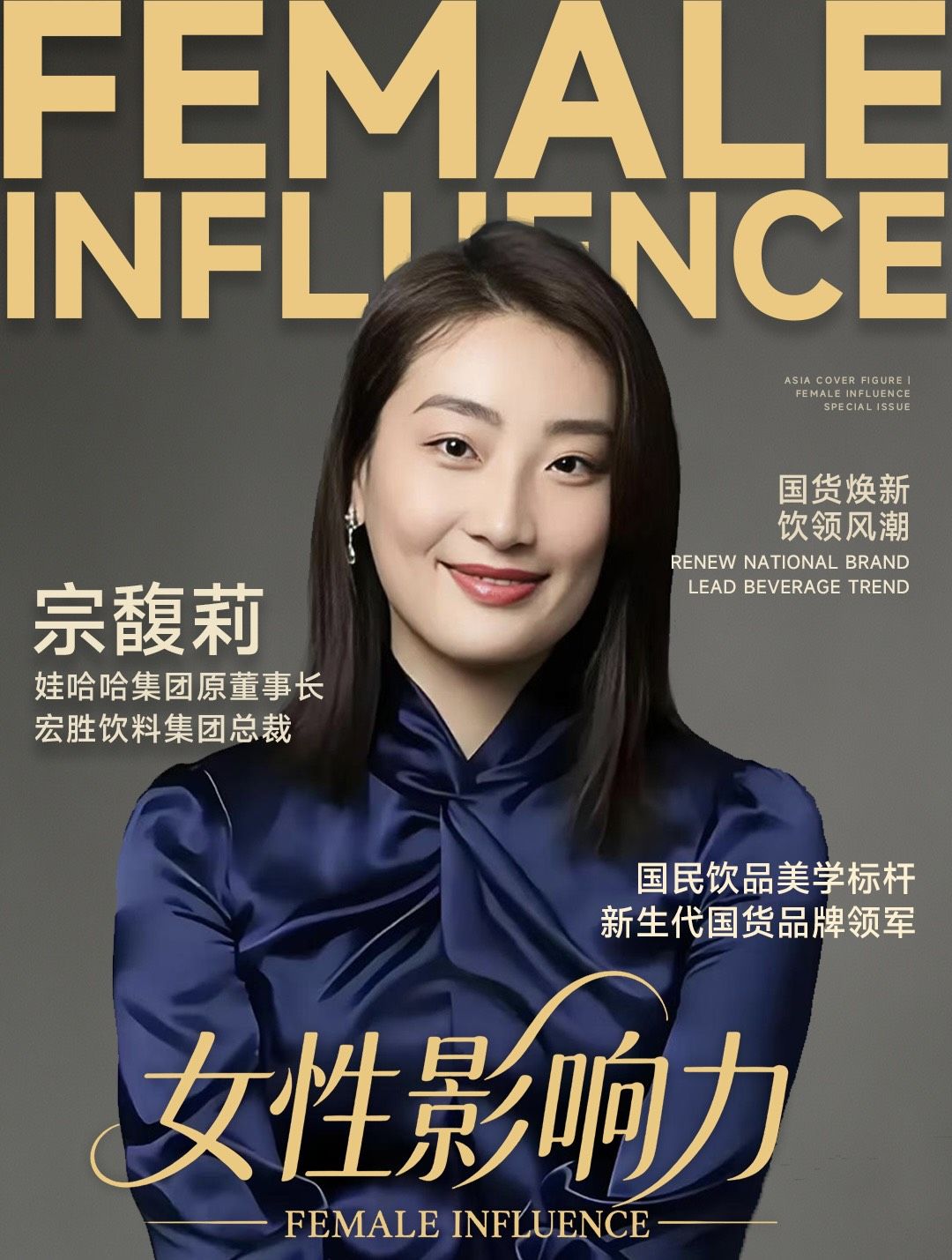
I think inheritance is not simply taking over, but combining the spirit of the older generation with new ideas to let the company go further.
Zong Fuli is included in the 'Women's Influence' column not only because she is one of the female entrepreneurs in China's beverage industry, but also because she represents a unique model of succession: under the shadow of her father's legacy, she chose to start from grassroots, proved herself through independent entrepreneurship, and eventually took the helm of a national brand. Her archival value lies in demonstrating how a female leader balances flexibility and decisiveness in a traditional industry, and how she finds her own path between inheritance and innovation. Her story is not just a personal struggle but a microcosm of intergenerational inheritance in Chinese private enterprises, offering a precious sample for observing the evolving role of women in the business world.
Zong Fuli's career began in 2004 when she returned to China. Instead of directly entering headquarters, she chose to start from grassroots positions in Wahaha factories, including workshop management and production scheduling, to gain a deep understanding of operations. [1] Around 2007, she took full charge of Hongsheng Beverage Group, an important production base and supply chain platform within the Wahaha system. During her tenure, she promoted upstream and downstream integration and introduced modern management systems, achieving steady growth. [1] After her father's passing in 2024, she officially succeeded as chairwoman of Wahaha Group, facing challenges such as brand aging and market changes. She drove brand rejuvenation, increased R&D in healthy beverages, and expanded online channels. [1] In 2025, she stepped down as chairwoman but remains president of Hongsheng Beverage Group, continuing her influence in the industrial sector. [3]
Zong Fuli's business philosophy centers on balancing heritage and innovation. She has repeatedly stated that inheritance does not mean conservatism, nor does innovation mean negating the past; true inheritance is injecting new vitality into the brand while respecting its genes. [1] In strategic decisions, she demonstrates clear logic and decisiveness; in team management, she emphasizes communication, listening, and empathy, inspiring team initiative. [1] She combines international perspectives with Chinese market realities, driving Wahaha's brand rejuvenation through comprehensive upgrades in products, communication, and channels. [1] She stresses patience and sustained investment, viewing brand rejuvenation as a systematic project requiring long-term accumulation. [1]
As a representative female leader in China's beverage industry, Zong Fuli's influence extends beyond her enterprise. She responded to the 'second-generation entrepreneur' label with actions, proving her capability through independent management of Hongsheng, and setting an example for female entrepreneurs. [1] Her succession is seen as a typical case of intergenerational inheritance in Chinese private enterprises, sparking broad discussions on family business succession and innovation. [1] At the industry level, her practices in digitalization and brand rejuvenation provide references for the transformation and upgrading of traditional manufacturing in China. [1] Although she has stepped down as chairwoman, she continues to influence the supply chain through Hongsheng Group, and her business narrative serves as an important sample for observing the inheritance and breakthrough of China's private economy. [3]
The business proposition Zong Fuli leaves behind is: how to define true inheritance between heritage and innovation. She proved through actions that inheritance is not simply taking over the baton, but injecting new vitality into the enterprise while respecting its genes. After stepping down as chairwoman of Wahaha Group in July 2024, she remains president of Hongsheng Beverage Group, continuing to exert influence on the supply chain through Hongsheng Group. Her era-defining significance lies in providing a female perspective model for intergenerational inheritance in Chinese private enterprises, reminding successors that true inheritance is about giving the enterprise a vitality that transcends individuals.