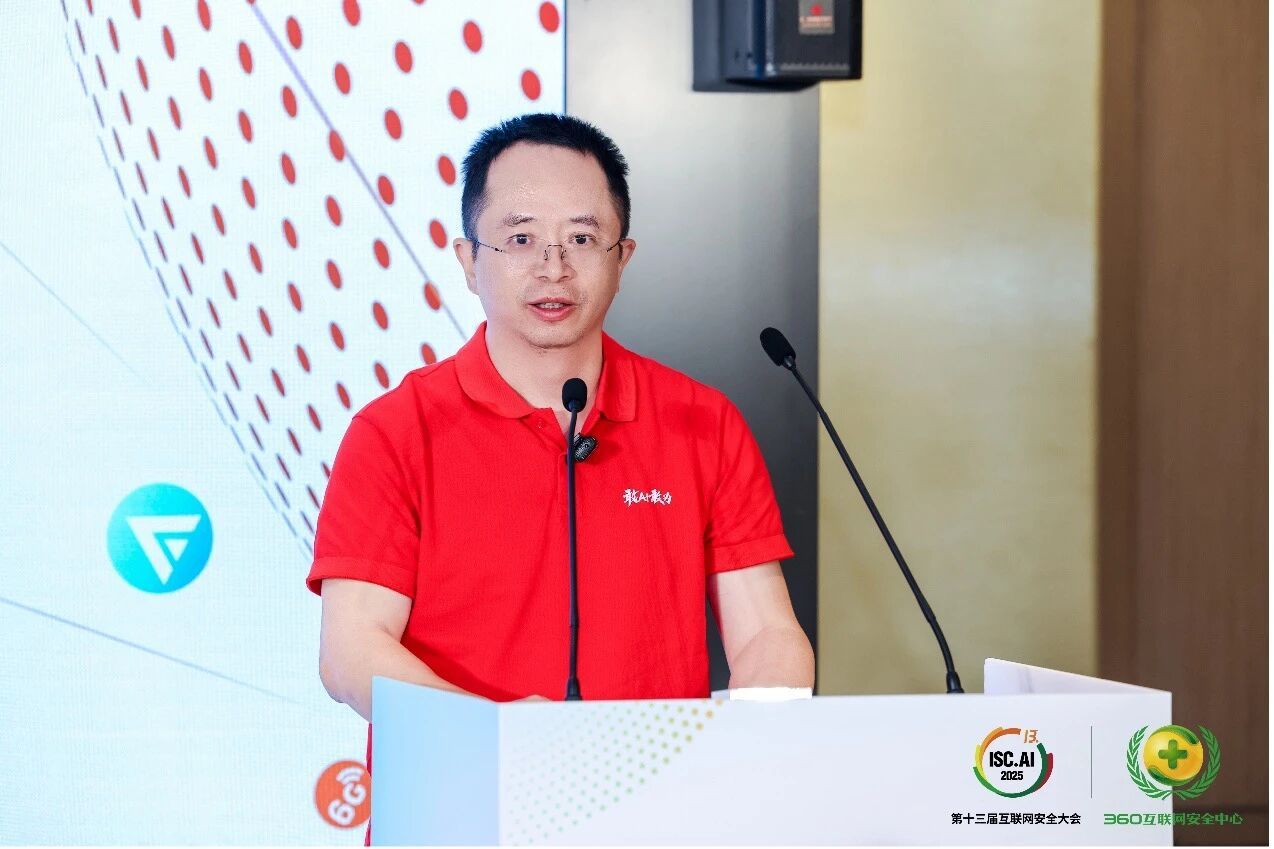
We do security not to make money, but to safeguard the cybersecurity of this country.
Zhou Hongyi is included in the 'Business Contrarian' column because he accomplished a rare self-negation and strategic pivot. In the PC era, he disrupted the industry with a 'free' model, becoming a high-profile 'disruptor'; but in the mobile internet era, that successful logic became a shackle. He chose to admit the obsolescence of the old map at his most glorious moment, cutting non-core businesses and pivoting fully to government and enterprise security. This courage to negate the past and rebuild on ruins is the core trait of a 'contrarian'. His archival value lies in documenting how an entrepreneur transformed from a 'destroyer' to a 'builder', and how he found a new value anchor after the traffic dividend faded.
Zhou Hongyi was born in 1970 in Zhumadian, Henan, and graduated from Xi'an Jiaotong University. He joined Founder Group in 1995 and founded 3721 in 1998, providing Chinese internet navigation services, which was acquired by Yahoo in 2004, after which he served as President of Yahoo China. [1] [2] In 2006, he founded Qihoo 360 and launched free antivirus software, disrupting the traditional security industry with a 'free' model and rapidly accumulating a massive user base. [3] In 2011, Qihoo 360 was listed on the NYSE, with a market value exceeding $10 billion at one point. [4] In 2018, 360 returned to A-shares via a backdoor listing, with a market value exceeding 440 billion RMB at one point. [5] However, with the advent of the mobile internet era, 360's consumer business faced growth bottlenecks, and Zhou Hongyi began to contemplate transformation.
Zhou Hongyi's business philosophy is deeply influenced by his 'disruptor' identity. In the PC era, he broke the lucrative pattern of the antivirus industry through a free model, but this also made him enemies among peers, forming a 'belligerent' public image. However, when the mobile internet wave arrived, he realized that 'disruption' itself had become a shackle, and the company needed to shift from 'destruction' to 'construction'. In 2019, he made a key decision: to transfer Qi'anxin equity for 3.731 billion yuan, fully focusing on the government and enterprise security market. [6] This decision meant he dismantled the traffic empire he had built, turning to a B2B track requiring long-term technical accumulation. He proposed a security ecosystem strategy of 'co-construction, sharing, empowerment, and investment', emphasizing deep technical cultivation. [7] Zhou Hongyi believes that the essence of cybersecurity is confrontation, with the focus on the B2B side, in national and industrial infrastructure. He has driven 360 to research AI security, connected vehicle security, and other frontier fields, emphasizing that 'security is the bottom line of the digital world'. [8]
Zhou Hongyi's transformation has had a profound impact on China's cybersecurity industry. He has led 360 from a consumer internet giant to a key force in national cybersecurity, with claims that 360 discovered 99% of national-level cyber attacks. [7] In 2024, 360's security large model successfully detected an attack by the APT-C-60 group exploiting a zero-day vulnerability, demonstrating its capability in advanced threat detection. [8] Despite controversy over his 'belligerent' style, there is no denying his critical role in advancing cybersecurity technology and maturing the government and enterprise security market. His contrarian journey offers lessons for other entrepreneurs facing transformation: true growth begins with a thorough skepticism and abandonment of one's own successful model.
The business proposition Zhou Hongyi leaves behind is: when disruption becomes path dependency, how can a company achieve self-transcendence? His transformation proves that true growth begins with a thorough skepticism and abandonment of one's own successful model. From 'red-shirted cannon' to 'invisible armor', he let go of traffic and controversy, and took up technology and service. His contrarian journey offers inspiration for entrepreneurs facing difficulties at turning points: only by daring to negate the past self can one rebuild a more solid future on the ruins.