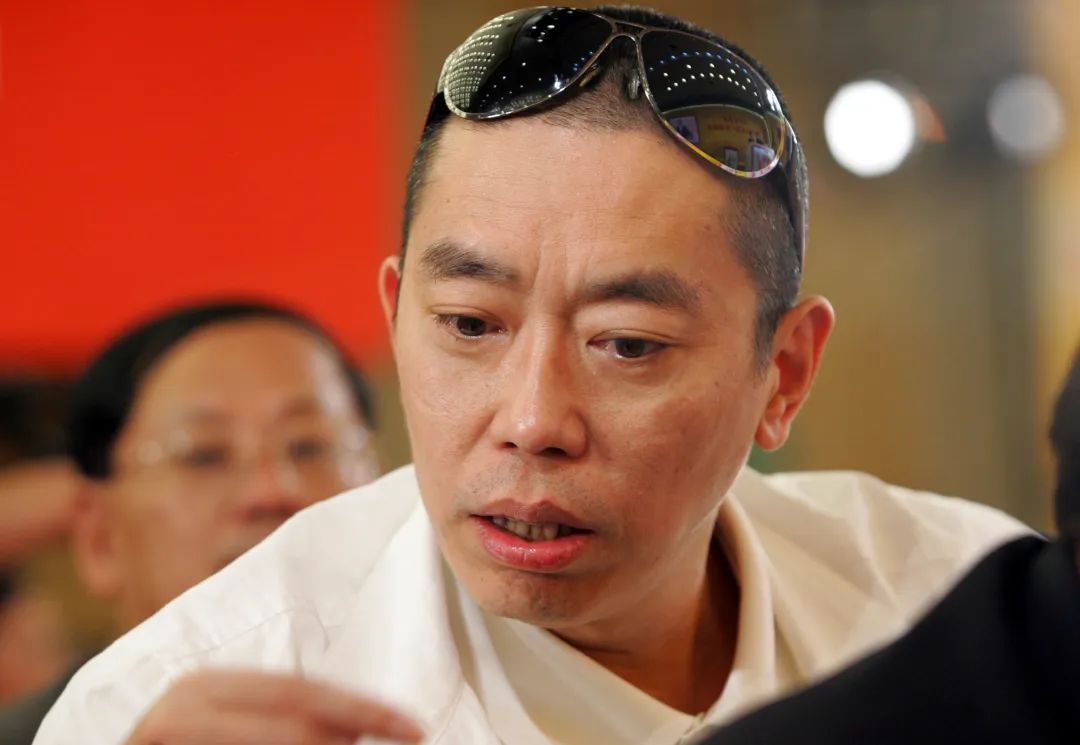
It's not scary to fall down. What's scary is not being able to stand up again.
Shi Yuzhu is included in the 'Business Maverick' column because his experience perfectly embodies the word 'contrarian': from peak to valley, and then back to the peak, each turn went against the prevailing trend. His archival value lies in not only providing profound lessons about ambition and its costs, but also demonstrating how to achieve self-redemption through self-reflection and responsibility in desperate situations. His story is not a simple success story, but a living textbook on business common sense, risk reverence, and responsibility bottom lines. The chief editor believes that Shi Yuzhu's contrarian path provides a mirror for all entrepreneurs, reflecting the traps behind success and the possibility of rebirth after failure.
Shi Yuzhu's entrepreneurial career is an epic of ups and downs. In 1989, he started with 4,000 yuan and developed the Giant Chinese Card, quickly capturing the market with technical advantages. Within a few years, he built Giant Group into a vast empire spanning software, computers, health products, and real estate. [2] In 1992, the Giant Building project began, with the floor count raised from 18 to 70 stories, aiming to become 'China's tallest building', but the funding relied entirely on self-owned funds and pre-sales, lacking risk control. [4] In 1997, the cash flow broke, Giant Group collapsed, and Shi Yuzhu was burdened with 250 million yuan in debt, becoming the nation's notorious 'number-one debtor'. [5] However, he did not sink; instead, he chose silent self-reflection. In 1998, he borrowed 500,000 yuan to make a comeback, entering the health product market with Nao Baijin, and gradually repaid his debts with a steady strategy. [6] In 2004, he founded Giant Interactive, launched 'Zheng Tu', and in 2007, took the company public on the NYSE, completing a business reversal. [8] [9]
Shi Yuzhu's failure and rebirth profoundly shaped his business philosophy. In his early days, he fell to the bottom due to blind expansion and disregard for risk, which made him deeply realize the importance of cash flow safety and business fundamentals. [5] In the operation of Nao Baijin, he insisted on small-scale piloting, validating before replicating, and prioritizing profitability over expansion, with strict control over costs, receivables, channels, and inventory. [6] He no longer pursued grand narratives, but returned to the essence of business, focusing on real user needs. In the development of 'Zheng Tu', he immersed himself in the player community, understood their needs, and created a product that met market expectations. [8] The core of his philosophy is: respect risk, hold the bottom line, and go steady to go far. This transformation turned him from a reckless and adventurous entrepreneur into a steady and rational businessman.
Shi Yuzhu's business career has had a profound impact on the Chinese business community. His failure warned of the dangers of blind expansion and ignoring risk, becoming a cautionary tale in business schools. [5] His rebirth demonstrated the power of responsibility and accountability: after repaying 250 million yuan in old debts, he redefined the bottom line of entrepreneurial responsibility and won social respect. [7] His story has inspired countless entrepreneurs, proving that failure is not scary, but the fear of facing it and standing up again is. He is called a 'business maverick' not only because he returned from the valley, but also because he adhered to integrity and bottom lines in adversity. His experience has been widely reported and studied, becoming an unignorable chapter in Chinese business history. [10]
The business proposition Shi Yuzhu leaves behind is: how to find a balance between rapid growth and risk control? He answered with half a lifetime of turbulence—respect common sense and hold the bottom line. His significance to the era is that he proved Chinese entrepreneurs can stand up again after falling, and reshaped business ethics through the act of repaying debts. His story reminds successors that success is not the end, but a new test; failure is not the end of the world, but the starting point of rebirth. Shi Yuzhu's archive not only records one person's business life, but also records the self-correction of Chinese business civilization after wild growth.