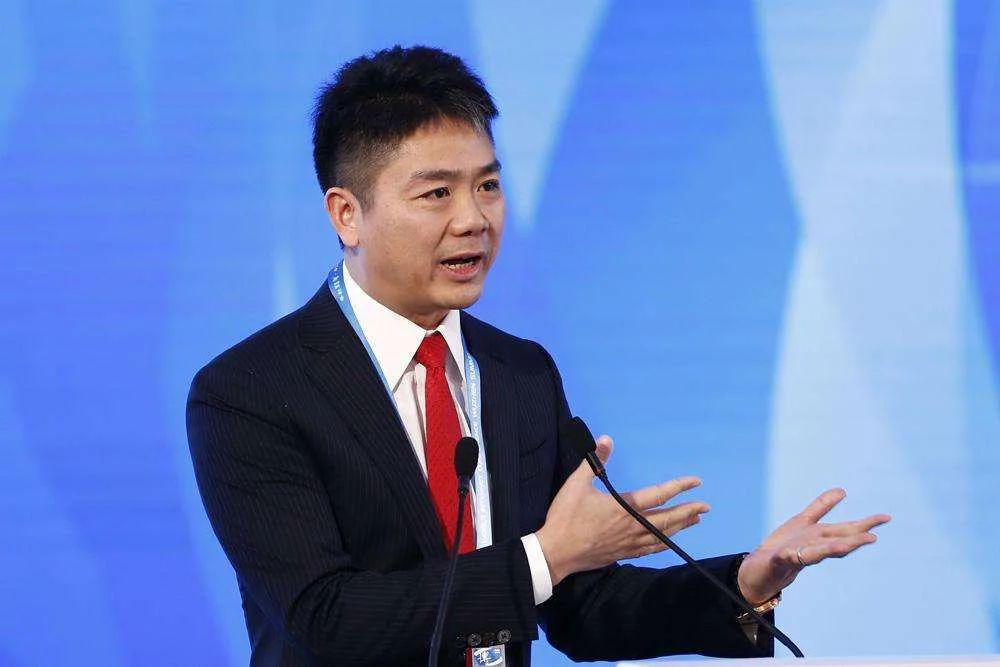
If I lead JD.com to failure, it is my personal failure, but I will never let my JD brothers down.
Liu Qiangdong is included in the 'Business Contrarian' column because he consistently chooses the path of greatest resistance. From starting with 12,000 yuan in 1998, to building logistics against all advice in 2007, to betting on food delivery with massive losses in 2025, he has repeatedly defied industry norms, yet proven the value of asset-heavy and long-term strategies. His archival value lies in offering a model of 'bearing weight' in an internet era that prizes lightness and speed, demonstrating how infrastructure accumulation can ride through cycles. His story is not about speed but about endurance and resolve.
In 1998, Liu Qiangdong started with 12,000 yuan renting a 4-square-meter stall in Zhongguancun, Beijing, selling optical discs and magneto-optical products. Amid widespread counterfeits, he insisted on clear pricing and no fakes, building customer trust. [1] The SARS epidemic in 2003 halted offline business, prompting a shift online; JD's multimedia platform launched in 2004. [1] In 2007, against all advice, he built his own logistics, investing heavily in warehousing and delivery networks, which later became JD's core strength. [2] In 2014, JD listed on NASDAQ with a market value exceeding $26 billion. [3] After a personal scandal in 2018, he stepped back, but returned to the frontline in 2022. [4] [5] In 2025, JD's revenue exceeded 1.3 trillion yuan, yet new business lost 46.6 billion yuan; he remains committed to the asset-heavy path. [6]
Liu's business philosophy centers on choosing the heaviest path. When the industry favored asset-light models, he insisted on building logistics, believing delivery speed and reliability are the bedrock of service quality. [2] He repeatedly emphasizes supply chain as JD's underlying logic, with all businesses revolving around it. [5] In 2025, he bet on food delivery, despite a 46.6 billion yuan loss, viewing it as strategic investment to strengthen the moat, not mere cash burn. [6] He advocates long-termism, rejecting short-term traffic blitzes, and focuses on the long-term value of infrastructure. [7] For employee welfare, he plans to invest 22 billion yuan over five years to build 'Brother's Home' housing, stabilizing the frontline team. [8]
Liu's asset-heavy strategy has shaped JD's unique business rhythm and influenced competition in China's e-commerce industry. The self-built logistics system not only improved user experience but also raised industry service standards. [2] His long-termism stands out in an internet industry often chasing quick returns. [7] In 2025, despite huge losses in new businesses, JD's retail main business profit hit a record high, showing the stability of its core operations. [6] He plans to build the world's first fully unmanned delivery station, exploring the future of smart logistics. [7] Liu's journey proves that choosing the heaviest path, though slow, can lead further, making him a quintessential example of a business contrarian.
Liu Qiangdong leaves a business proposition: in a fast-iterating industry, is asset-heavy still a reliable moat? In 27 years, he grew from 12,000 yuan to 1.3 trillion in revenue, bet 46.6 billion on food delivery, and defined e-commerce service standards with self-built logistics. His significance lies in proving the power of long-termism in business; even under short-term pressure, the compounding of infrastructure will eventually show. His story reminds future entrepreneurs: true contrarians are not those who never fall, but those who, after falling, pick up a heavier load and continue.